THE CLASSIC COLLECTION✦My diaries, being a personal narrative of events 1888-1914, Part 2 (1900-1914)CLASSIC FREE BOOKS
My diaries, being a personal narrative of events 1888-1914, Part 2 (1900-1914)
Wilfrid Scawen Blunt
THE CLASSIC COLLECTION · 1712
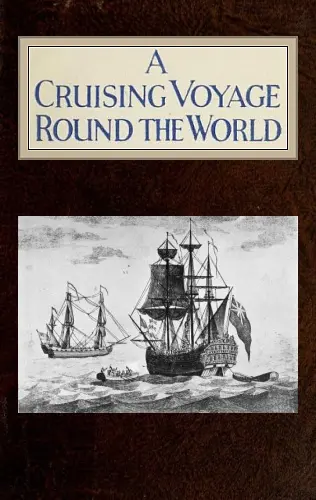
"A Cruising Voyage Round the World" by Woodes Rogers is a historical account written in the early 18th century. The book chronicles Rogers's remarkable voyage on two ships, the "Duke" and "Dutchess", as they set out to explore the South Seas and engage in privateering during a time of intense maritime competition and conflict. The narrative not only details the expedition's adventures and challenges but also provides insight into the life and character of Rogers, a significant figure in British maritime history. The opening of "A Cruising Voyage Round the World" introduces Captain Woodes Rogers as he prepares for a notable expedition in 1708, aiming to disrupt the lucrative South Sea trade dominated by France and Spain. His foresight leads him to gather a skilled crew, including the experienced Captain William Dampier, and organize two ships to sail from Bristol. The narrative unfolds with the preparations for the journey, the initial challenges faced by the crew—including mutiny and illness—and their eventual encounters with treasure ships and capture of prizes, setting the stage for a dramatic tale of adventure, resilience, and naval exploits that highlights the spirit of the age.
Introduction adapted from the source catalogue; source summaries may be automatically generated.
Free to read · English · 160,581 words · No account needed
MAKE TIME FOR A GOOD BOOK
On by default. Untick to stop anonymous reading totals. Each page counts after 10 seconds in view. How this works.
Anonymous counting is on unless you have switched it off.
[15] A piece-of-eight was equivalent in value to 4s. 6d.
[16] Anson emulated Rogers by capturing the galleon in 1743.
[17] She was named Nuestra Señora de la Incarnacion Disenganio, and was of 400 tons burden. Her Commander was Don John Pichberty, by birth a Frenchman, and brother-in-law of the French Governor in Hispaniola.
[18] The Spanish prisoners were released, including the Commander, Pichberty, and after providing them with provisions, they were despatched to Acapulco, and “parted very friendly.”
[19] The actual value of the plunder is stated in a contemporary petition to have amounted to £800,000 (Mariner’s “Mirror,” 1924, p. 377). Two large silver candlesticks taken during the cruise are now in Bristol Cathedral.
[20] Cooke, “Voyage to the S. Sea,” i, 345, and Introduction to vol. i. The shares were apportioned as follows: Captain 24 shares, Second Captain 20, First Lieutenant 16, Master and Surgeon 10, Pilot 8, Boatswain, Gunner and Carpenter 6, Cooper 5, Midshipmen 4, Quartermasters 3, Sailors 2-1/2, Landsmen 1-1/2.
[21] It is interesting to note that the South Sea Company was incorporated in 1711, under the title of “The Governor & Company of the Merchants of Great Britain, trading to the South Seas & other parts of America.”
[22] Rogers’s original log book was, in 1828, in the possession of Gabriel Goldney, Mayor of Bristol, whose ancestor helped to fit out the expedition.
[23] B.M. Sloane MSS. 4044, fol. 155. See also his “Voyage,” p. 307.
[24] “Polit. State of Gt. Britain,” xiv, 1717, p. 295.
[25] Public Record Office: C.O. 23, 12.
[28] Addison, “Works,” 1856, vi, 496. Anson in 1740 complained bitterly that his land forces consisted of pensioners from Chelsea.
[29] Ibid., 500.
[30] Aitken, “Life of Steele,” ii, 162.
[31] “Polit. State,” xv, 447.
[32] For a copy of this proclamation, see Dow; “Pirates of New
England,” pp. 381-2.
[33] Johnson, C., “General History of the Pirates,” 1726, ii, p. 274.
[34] Johnson, “Pirates,” 1726, ii, 363.
[35] In February of the following year Vane was shipwrecked near the Bay of Honduras. He was captured soon after, taken to Jamaica, tried, convicted and executed.
[36] Polit. State, xvi, 551.
[37] Ibid., 551.
[38] Johnson, “Pirates,” 1726, ii, pp. 273-7.
[39] Johnson, 1726, ii, p. 336.
[40] Following on his reprieve Rounsivell worked for some time ashore, but afterwards served in a Privateer. Here he distinguished himself by refusing to escape in a small boat, when the ship was wrecked, and remained with his captain to the last (Johnson, ii, 308-9).
[41] Public Record Office, C.O. 23, 13.
[43] B.M. Add. MSS. 5145, C. ff. 123-6.
[44] Adam Cardonnel, one of the proprietors of the Bahama Islands.
[45] A reference evidently to the ducking-stool.
[46] John Sansome, a schoolfellow of Steele, and his assistant in the Fish Pool Scheme. Rogers had met him at the Tennis Coffee House in November, 1717.
[49] I.e. Charles Vane. See ante p. xxix.
Your reading position is saved on this browser. Take it to another device with a library code. Reading pages adapt to text, rather than matching a printed edition.
BEHIND THE BOOK
This eBook is for the use of anyone anywhere in the United States and most other parts of the world at no cost and with almost no restrictions whatsoever. You may copy it, give it away or re-use it under the terms of the Project Gutenberg License included with this eBook or online at www.gutenberg.org. If you are not located in the United States, you will have to check the laws of the country where you are located before using this eBook. Read the source licence.
The original source file, including credits and licence, is retained by this library. Request an original-format copy at no charge. Please include the book title and Project Gutenberg identifier #55538.
KEEP YOUR CURIOSITY GOING
Wilfrid Scawen Blunt
Wilfrid Scawen Blunt

E. W. (Edgar Watson) Howe
Cécile Tormay

Moritz Busch
John L. Ransom