THE CLASSIC COLLECTION✦The queen of the isleCLASSIC FREE BOOKS
The queen of the isle
May Agnes Fleming
THE CLASSIC COLLECTION · 1881
"A Changed Heart" by May Agnes Fleming is a novel written in the late 19th century. The story unfolds in the foggy coastal town of Speckport, introducing readers to a society filled with various characters, including the ambitious Miss Jeannette McGregor, who hosts a bustling soirée. The narrative hints at themes of social status and romantic entanglements, focusing on the lives and relationships of the town's elite, particularly that of the captivating Nathalie Marsh and her interactions with gentlemanly figures like Captain Cavendish and Charley Marsh. At the start of the novel, readers are immersed in the lively atmosphere of Miss McGregor's gathering on a foggy evening. As guests arrive, the scene is filled with chatter, laughter, and the excitement surrounding a series of tableaux performances that involve the local youth. We meet various characters, including the talkative Miss Jo Blake, who has a penchant for gossip, and the charming Captain Cavendish, who has remarkable interest in Nathalie. The interactions serve to establish social dynamics and hint at potential romantic conflicts, setting the stage for a rich narrative focused on love, ambition, and the complexities of life in Speckport.
Introduction adapted from the source catalogue; source summaries may be automatically generated.
Free to read · English · 165,254 words · No account needed
MAKE TIME FOR A GOOD BOOK
On by default. Untick to stop anonymous reading totals. Each page counts after 10 seconds in view. How this works.
Anonymous counting is on unless you have switched it off.
"She was saved almost by a miracle. A passing boat heard the splash and her cry for help, and rowed to the spot. They saw her as she arose, and saved her, and one man on board recognized her. The man's name was Captain Locksley. Do you remember it?"
"Locksley!" cried Val. "Captain Frank Locksley of the 'Southern Cross?' Know him? Yes, as well as I know you! He was over head and ears in love with Nathalie, himself."
"Yes, I know. He recognized her, and would have returned with her to the shore; but she positively refused to go. She would die, she cried out, if she did not get away from this horrible place. Captain Locksley took her on board of his ship. There was a woman there, the wife of the steward, and she took charge of the poor, deranged girl. Captain Locksley sailed that night. He was off on a three-years' voyage; but on his way he was to touch at New York. The evening before they reached that city, he made an offer of his hand to the poor girl he had saved. He knew her story. He loved her and pitied her; but she refused. She only wanted to be away from Speckport. She would remain in New York. One place was as good as another, and a great city the best of all; but her lot was dust and ashes. She would never marry, she told him. Captain Locksley had a cousin, the wealthy manager of a fashionable Broadway theater, and, as a favor, the manager consented to receive Nathalie into his corps. Her rôle was a very simple one--walking lady at first, coming on only to stare at the audience at first. But my poor girl's beauty, though the shadow only of the brightness that had been, made her rise. She took minor parts, and they made her sing when they found what a superb voice she possessed. Her voice, the manager told me once, might make her fortune--at least it would have made the fortune of any other woman; but my darling had lost life, and with it all ambition. She never would be a good actress, but the audience looked at her a great deal; and the mournful melody of her voice, whether she talked or sang, had a charm for all. It paid the manager; so he kept her, and doled out her weekly pittance, and she took it uncomplainingly. I have sometimes wondered since how it was no one from Speckport ever saw and recognized her; but, I dare say, if they did, they would merely set it down as an odd chance resemblance. They were all so certain of her death, and then the false name and the disguising stage-dresses helped to baffle them. It was at the theater I first met her. They took my dramas when I turned dramatist, and I was always there. She attracted me from the beginning. She interested me strongly the first time I saw her, and I found myself pitying her somehow without knowing anything about her. I could not cease thinking of her after. The pale face and mournful blue eyes haunted me wherever I went. I found out she was called Miss Johnson, and that she lodged in a shabby house in a shabby street; and that was all any one heard. But of my own knowledge I knew she was good and fair, and that great sorrow, not sin, had darkened her young life. Why it was I loved her, I never could tell. It way my fate, I suppose; for my struggles were vain, and only left me more helplessly entangled. The manager laughed at me; my friends talked of acts of lunacy and genteel private lunatic asylums for me; but it was all useless. I loved her, and was not to be laughed out of it, and one night the truth broke from me. I begged her to tell me who she was and to become my wife; but she refused. She refused, Blake, to do either; but she was very gentle and womanly saying the cruel words. She was very grateful to me, she said, my poor dear! but she could not be unjust enough to take me at my word. The fancy for her would soon leave me. She was not worthy to be the wife of any good man. I must forget her. I must never speak to her like this again. Blake, I went home that night in a sort of despair. I hated and despised myself for my pitiful weakness. I tried to conquer myself, and failed miserably. I could not stay away from the theater. I could not forget her. I could not do anything I ought to do. I went to the house where she lodged, and found out all they knew about her there. It was very little; but it was all good. I made the manager tell me again what his cousin, Captain Locksley, had told him of her, and I ascertained that Captain Locksley was an honorable and truthful man. He had said she had undergone a great deal of trouble, and had met with heavy reverse of fortune, but that she was the best and purest of beings, and he trusted his cousin would always be her true friend. He told him he had long loved her, and that he had asked her to be his wife, and she had refused. I knew, therefore, there was nothing worse than worldly misfortune in the past life of the woman I had loved. Once again I sought her out, and implored her to leave her hard life and be my wife, keeping her past life secret if she chose; and once again I was refused.
Your reading position is saved on this browser. Take it to another device with a library code. Reading pages adapt to text, rather than matching a printed edition.
May Agnes Fleming
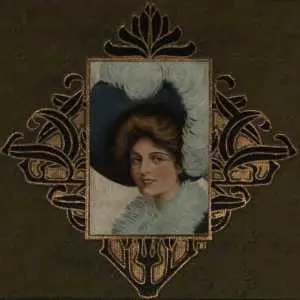
May Agnes Fleming
May Agnes Fleming
May Agnes Fleming
BEHIND THE BOOK
This eBook is for the use of anyone anywhere in the United States and most other parts of the world at no cost and with almost no restrictions whatsoever. You may copy it, give it away or re-use it under the terms of the Project Gutenberg License included with this eBook or online at www.gutenberg.org. If you are not located in the United States, you will have to check the laws of the country where you are located before using this eBook. Read the source licence.
The original source file, including credits and licence, is retained by this library. Request an original-format copy at no charge. Please include the book title and Project Gutenberg identifier #41672.
KEEP YOUR CURIOSITY GOING
Coulson Kernahan

Maurice Baring
Frances Wright
Cécile Tormay

Frederic Jesup Stimson

W. H. P. (William Henry Pope) Jarvis