THE CLASSIC COLLECTION✦The queen of the isleCLASSIC FREE BOOKS
The queen of the isle
May Agnes Fleming
THE CLASSIC COLLECTION · 1881
"A Changed Heart" by May Agnes Fleming is a novel written in the late 19th century. The story unfolds in the foggy coastal town of Speckport, introducing readers to a society filled with various characters, including the ambitious Miss Jeannette McGregor, who hosts a bustling soirée. The narrative hints at themes of social status and romantic entanglements, focusing on the lives and relationships of the town's elite, particularly that of the captivating Nathalie Marsh and her interactions with gentlemanly figures like Captain Cavendish and Charley Marsh. At the start of the novel, readers are immersed in the lively atmosphere of Miss McGregor's gathering on a foggy evening. As guests arrive, the scene is filled with chatter, laughter, and the excitement surrounding a series of tableaux performances that involve the local youth. We meet various characters, including the talkative Miss Jo Blake, who has a penchant for gossip, and the charming Captain Cavendish, who has remarkable interest in Nathalie. The interactions serve to establish social dynamics and hint at potential romantic conflicts, setting the stage for a rich narrative focused on love, ambition, and the complexities of life in Speckport.
Introduction adapted from the source catalogue; source summaries may be automatically generated.
Free to read · English · 165,254 words · No account needed
MAKE TIME FOR A GOOD BOOK
On by default. Untick to stop anonymous reading totals. Each page counts after 10 seconds in view. How this works.
Anonymous counting is on unless you have switched it off.
The house-warming at Redmon was such a house-warming as Speckport never saw before; for, as Mr. Blake with his customary good sense remarked, "When Mrs. P. Wyndham did that sort of thing, she did do it." In the luminous darkness of the September evening, the carriages of the guests drove through the tall iron gates up the back avenue, all aglow with red, and blue, and green lamps, twinkling like tropical fireflies among the trees. The whole front of the beautiful villa blazed with illumination, and up in the gilded gallery the musicians were filling the scented air with delicious melody. It was not Redmon, this; it was fairy-land; it was a scene out of the Arabian Nights, and the darkly-beautiful lady in ruby velvet and diamonds, welcoming her friends, was the Princess Badelbradour, lovely enough to turn the heads of a brigade of poor Aladdins. Society went through the house that night, and had the eyes dazzled in their heads by the blinding radiance of light, and the glowing coloring and richness of all. The ladies went into raptures over Mrs. Wyndham's rooms, and the literary people cast envious eyes over the book-lined library, with its busts of poets, and pictures of great men, dead and gone. There was a little room opening off this library that seemed out of keeping in its severe plainness with the magnificence of the rest of the house--a bare, severe room, with only one window, looking out upon the velvety sward of the lawn at the back of the villa; a room that had no carpet on the floor, and very little furniture, only two or three chairs, a baize-covered writing-table, a leather-covered lounge under the window, a few pictures of dogs and horses, a plaster head of John Milton, a selection of books on swinging shelves, a bureau, a dressing-table, a lavatory, a shaving-glass, and a sofa-bedstead. Except the servants' apartments, there was nothing at all so plain as this in the whole house; and when people asked what it was, they were told by Mrs. Hill, who showed the house, that it was Mr. Wyndham's room. Yes, this was Mr. Wyndham's room, the only room in that house he ever entered, save when he went to dinner, or when visitors required his presence in the drawing-room or library. His big dog Faust slept on a rug beside the table, his canaries sung to him in their cages around the window, he wrote in that hard leathern armchair beside the green-baize table, he lay on that lounge under the open window in the golden breeze of the September weather, and smoked endless cigars; late into the night his lamp glimmered in that quiet room; and when it went out after midnight, he was sleeping the sleep of the just on the sofa-bedstead. The servants at Redmon talked, as servants will talk, about the palpable estrangement between master and mistress, about their never meeting, except at dinner, when there always was company; for Mrs. Wyndham breakfasted in the boudoir and Mr. Wyndham never ate luncheon. He was quite hermit-like in his habits, this pale, inscrutable young author--one glass of wine sufficed for him--he was out of bed and at work before the stable-boys or scullery-maids were stirring, and his only extravagance was in the way of cigars. From the day he had married Olive Henderson until this, he had never asked or received one stiver of her money; he had more than sufficient of his own for his simple wants and his mother's, and had Olive been the hardest virago of a landlady, she could hardly have brought in a bill against him, even for board and lodging, for he more than repaid her for both. He was always courteous, genial, and polite to her--too polite for one spark of her affection; always deferring to her wishes, and never attempting in the smallest iota to interfere with her caprices, or thwart her desires, or use his husbandly authority. She was in every way as much her own mistress as she had ever been; so much so that sometimes she wondered, and found it impossible to realize that she was really married. No, she was not married; these two had never been united either in heart or desire; they were bound together by a compact never mentioned now. What had he gained by this marriage? Olive sometimes wonderingly asked herself. He told her, or as good as told her, he wanted her for her money; but now that money was at his disposal, and he never made use of it. What had he married her for?
Your reading position is saved on this browser. Take it to another device with a library code. Reading pages adapt to text, rather than matching a printed edition.
May Agnes Fleming
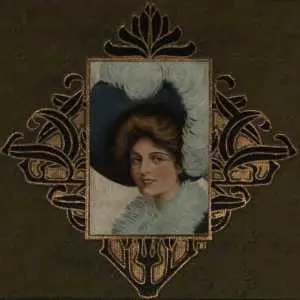
May Agnes Fleming
May Agnes Fleming
May Agnes Fleming
BEHIND THE BOOK
This eBook is for the use of anyone anywhere in the United States and most other parts of the world at no cost and with almost no restrictions whatsoever. You may copy it, give it away or re-use it under the terms of the Project Gutenberg License included with this eBook or online at www.gutenberg.org. If you are not located in the United States, you will have to check the laws of the country where you are located before using this eBook. Read the source licence.
The original source file, including credits and licence, is retained by this library. Request an original-format copy at no charge. Please include the book title and Project Gutenberg identifier #41672.
KEEP YOUR CURIOSITY GOING
Coulson Kernahan

Maurice Baring
Frances Wright
Cécile Tormay

Frederic Jesup Stimson

W. H. P. (William Henry Pope) Jarvis