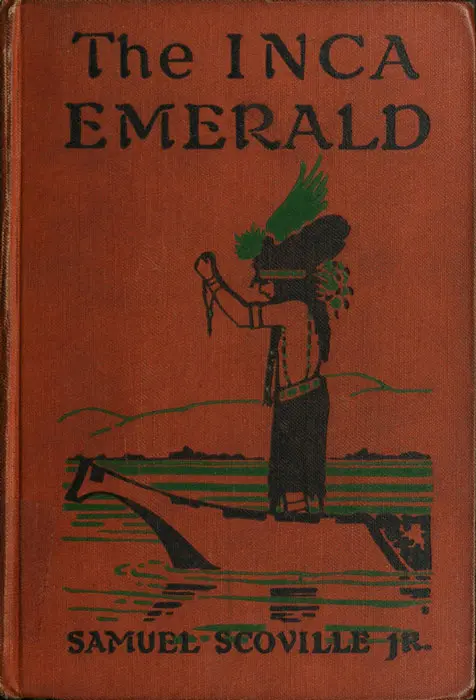
The Inca Emerald
Samuel Scoville
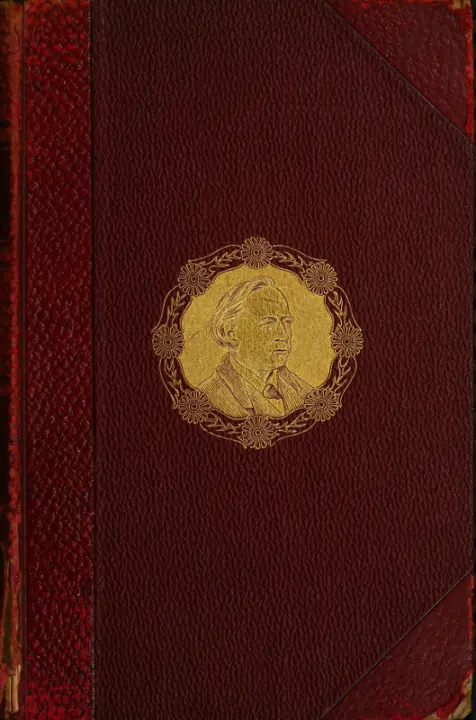
THE CLASSIC COLLECTION · 1888
"A Biography of Rev. Henry Ward Beecher" by Wm. C. Beecher and Rev. Samuel Scoville is a historical account written in the late 19th century. This biography recounts the life and influential career of Henry Ward Beecher, a prominent preacher and social reformer known for his passionate advocacy against slavery and his significant role in American religious life. The narrative captures not only Beecher's personal journey but also the societal transformations he engaged with throughout his life. The opening of the biography introduces readers to Beecher’s ancestry and his family's background, highlighting the strong moral and intellectual influences of both his father, Lyman Beecher, a noted preacher, and his mother, Roxana Foote. The authors detail the early environment in which Henry was raised, emphasizing both the personal qualities he inherited and the familial context that shaped his future perspectives and ambitions. Through rich descriptions of his childhood experiences in the picturesque town of Litchfield, the narrative sets the stage for understanding how these early influences would later fuel his passions and drive him in his efforts for reform and social justice.
Introduction adapted from the source catalogue; source summaries may be automatically generated.
Free to read · English · 279,799 words · No account needed
MAKE TIME FOR A GOOD BOOK
On by default. Untick to stop anonymous reading totals. Each page counts after 10 seconds in view. How this works.
Anonymous counting is on unless you have switched it off.
A few quotations from this speech will not only give an idea of the line of Mr. Beecher’s argument, but, by retaining the interruptions as indicated by the reports in the next day’s papers, will also to some extent show the conditions under which the speech was delivered.
“For more than twenty-five years I have been made perfectly familiar with popular assemblies in all parts of my country except the extreme South. There has not for the whole of that time been a single day of my life when it would have been safe for me to go south of Mason and Dixon’s line in my own country, and all for one reason: my solemn, earnest, persistent testimony against that which I consider to be the most atrocious thing under the sun—the system of American slavery in a great, free republic. [Cheers.] I have passed through that early period when right of free speech was denied to me. Again and again I have attempted to address audiences that, for no other crime than that of free speech, visited me with all manner of contumelious epithets; and now since I have been in England, although I have met with greater kindness and courtesy on the part of most than I deserved, yet, on the other hand, I perceive that the Southern influence prevails to some extent in England. [Applause and uproar.] It is my old acquaintance; I understand it perfectly [laughter], and I have always held it to be an unfailing truth that where a man had a cause that would bear examination he was perfectly willing to have it spoken about. [Applause.] And when in Manchester I saw those huge placards, ‘Who is Henry Ward Beecher?’ [laughter, cries of ‘Quite right,’ and applause], and when in Liverpool I was told that there were those blood-red placards, purporting to say what Henry Ward Beecher had said, and calling upon Englishmen to suppress free speech—I tell you what I thought; I thought simply this: ‘I am glad of it.’ [Laughter.] Why? Because if they had felt perfectly secure that you are the minions of the South and the slaves of slavery, they would have been perfectly still. [Applause and uproar.] ... And, therefore, when I saw so much nervous apprehension that if I were permitted to speak [hisses and applause]—when I found they were afraid to have me speak [hisses, laughter, and ‘No, no’]; when I found that they considered my speaking damaging to their cause [applause]; when I found that they appealed from facts and reasonings to mob law [applause and uproar], I said: No man need tell me what the heart and secret counsel of these men are. They tremble and are afraid. [Applause, laughter, hisses, ‘No, no,’ and a voice: ‘New York mob.’] Now, personally, it is a matter of very little consequence to me whether I speak here to-night or not. [Laughter and cheers.] But one thing is very certain—if you do permit me to speak here to-night you will hear very plain talking. [Applause and hisses.] You will not find a man [interruption]—you will not find me to be a man that dared to speak about Great Britain 3,000 miles off, and then is afraid to speak to Great Britain when he stands on her shores. [Immense applause and hisses.] And if I do not mistake the tone and the temper of Englishmen, they had rather have a man who opposes them in a manly way [applause from all parts of the hall] than a sneak that agrees with them in an unmanly way. [Applause and ‘Bravo.’] Now, if I can carry you with me by sound convictions, I shall be immensely glad [applause]; but if I cannot carry you with me by facts and sound arguments, I do not wish you to go with me at all; and all that I ask is simply FAIR PLAY. [Applause, and a voice: ‘You shall have it, too.’] Those of you who are kind enough to wish to favor my speaking—and you will observe that my voice is slightly husky, from having spoken almost every night in succession for some time past—those who wish to hear me will do me the kindness simply to sit still and to keep still; and I and my friends the Secessionists will make all the noise. It is just as important to have customers educated, intelligent, moral, and rich out of Liverpool as it is in Liverpool. [Applause.] They are able to buy; they want variety, they want the very best; and those are the customers you want. That nation is the best customer that is freest, because freedom works prosperity, industry, and wealth. Great Britain, then, aside from moral considerations, has a direct commercial and pecuniary interest in the liberty, civilization, and wealth of every people and every nation on the globe. [Loud applause.] You have also an interest in this, because you are a moral and a religious people. [‘Oh! oh!’ laughter, and applause.] You desire it from the highest motives; and godliness is profitable in all things, having the promise of the life that is, as well as of that which is to come; but if there were no hereafter, and if man had no progress in this life, and if there were no question of civilization at all, it would be worth your while to protect civilization and liberty, merely as a commercial speculation. To evangelize has more than a moral and religious import—it comes back to temporal relations. Wherever a nation that is crushed, cramped, degraded under despotism is struggling to be free, you, Leeds, Sheffield, Manchester, Paisley, all have an interest that that nation should be free. When depressed and backward people demand that they may have a chance to rise—Hungary, Italy, Poland—it is a duty for humanity’s sake, it is a duty for the highest moral motives, to sympathize with them; but beside all these there is a material and interested reason why you should sympathize with them. Pounds and pence join with conscience and with honor in this design. Now, Great Britain’s chief want is—what? They have said that your chief want is cotton. I deny it. Your chief want is consumers. [Applause and hisses.] ... Now, there is in this a great and sound principle of political economy. [‘Yah! yah!’ from the passage outside the hall, and loud laughter.] If the South should be rendered independent—[at this juncture mingled cheering and hisses became immense; half the audience rose to their feet, waving hats and handkerchiefs, and in every part of the hall there was the greatest commotion and uproar.] You have had your turn now; now let me have mine again. [Loud applause and laughter.] It is a little inconvenient to talk against the wind; but, after all, if you will just keep good-natured—I am not going to lose my temper; will you watch yours? [Applause.] Besides all that, it rests me, and gives me a chance, you know, to get my breath. [Applause and hisses.] And I think that the bark of those men is worse than their bite. They do not mean any harm—they don’t know any better. [Loud laughter, applause, hisses, and continued uproar.] What will be the result if this present struggle shall eventuate in the separation of America, and making the South [loud applause, hisses, hooting, and cries of ‘Bravo!’] a slave territory exclusively [cries of ‘No, no,’ and laughter], and the North a free territory—what will be the first result? You will lay the foundation for carrying the slave population clear through to the Pacific Ocean. There is not a man that has been a leader of the South any time within these twenty years that has not had this for a plan. Never have they for a moment given up the plan of spreading the American institutions, as they call them, straight through towards the West, until the slave who has washed his feet in the Atlantic shall be carried to wash them in the Pacific. [Cries of ‘Question!’ and uproar.] There! I have got that statement out, and you cannot put it back. [Laughter and applause.] ... Now, here are twelve millions of people, and only one-third of them are customers that can afford to buy the kind of goods that you bring to market. [Interruption and uproar.] My friends, I saw a man once, who was a little late at a railway station, chase an express-train. He did not catch it. [Laughter.] If you are going to stop this meeting you have got to stop it before I speak; for after I have got the things out you may chase as long as you please—you will not catch them. [Laughter and interruption.] But there is luck in leisure; I’m going to take it easy. [Laughter.] Two-thirds of the population of the Southern States to-day are non-purchasers of English goods. [A voice, ‘No, they are not,’ ‘No, no,’ and uproar.] And if by sympathy or help you establish a slave empire, you sagacious Britons [‘Oh! oh!’ and hooting]—if you like it better, then, I will leave the adjective out [laughter, hear, and applause]—you will be busy in favoring the establishment of an empire from ocean to ocean that should have fewest customers and the largest non-buying population. [Applause; ‘No, no.’] ... It was the South that obliged the North to put the tariff on. [Applause and uproar.] Just as soon as we begin to have peace again and can get our national debt into a proper shape, as you have got yours [laughter], the same cause that worked before will begin to work again; and there is nothing more certain in the future than that the American is bound to join with Great Britain in the world-wide doctrine of free-trade. [Applause and interruption.] Here, then, so far as this argument is concerned, I rest my case, saying that it seems to me that in an argument addressed to a commercial people it was perfectly fair to represent that their commercial and manufacturing interests tallied with their moral sentiments; and as by birth, by blood, by history, by moral feeling, and by everything, Great Britain is connected with the liberty of the world, God has joined interest and conscience, head and heart, so that you ought to be in favor of liberty everywhere. [Great applause.] There! I have got quite a speech out already, if I do not get any more. [Hisses and applause.] ...
Your reading position is saved on this browser. Take it to another device with a library code. Reading pages adapt to text, rather than matching a printed edition.
Samuel Scoville
Samuel Scoville

Samuel Scoville
BEHIND THE BOOK
This eBook is for the use of anyone anywhere in the United States and most other parts of the world at no cost and with almost no restrictions whatsoever. You may copy it, give it away or re-use it under the terms of the Project Gutenberg License included with this eBook or online at www.gutenberg.org. If you are not located in the United States, you will have to check the laws of the country where you are located before using this eBook. Read the source licence.
The original source file, including credits and licence, is retained by this library. Request an original-format copy at no charge. Please include the book title and Project Gutenberg identifier #55330.
KEEP YOUR CURIOSITY GOING

David Patterson (Spirit) Hatch

David Patterson (Spirit) Hatch

David Patterson (Spirit) Hatch
Cécile Tormay

Moritz Busch
John L. Ransom