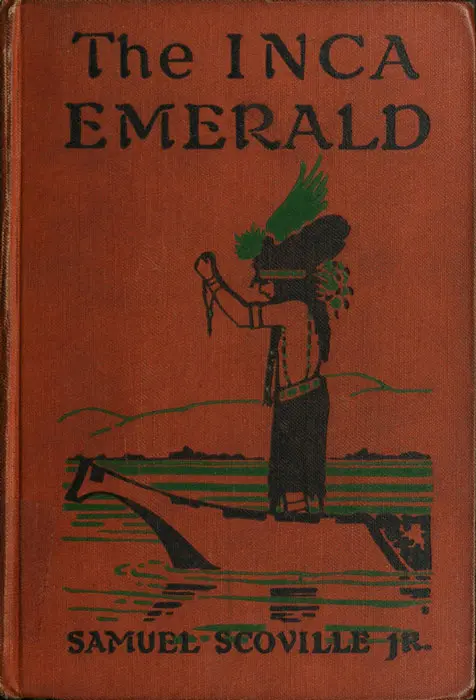
The Inca Emerald
Samuel Scoville
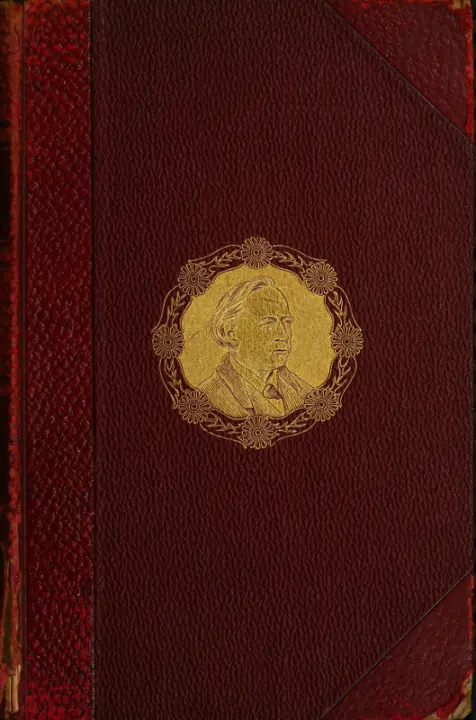
THE CLASSIC COLLECTION · 1888
"A Biography of Rev. Henry Ward Beecher" by Wm. C. Beecher and Rev. Samuel Scoville is a historical account written in the late 19th century. This biography recounts the life and influential career of Henry Ward Beecher, a prominent preacher and social reformer known for his passionate advocacy against slavery and his significant role in American religious life. The narrative captures not only Beecher's personal journey but also the societal transformations he engaged with throughout his life. The opening of the biography introduces readers to Beecher’s ancestry and his family's background, highlighting the strong moral and intellectual influences of both his father, Lyman Beecher, a noted preacher, and his mother, Roxana Foote. The authors detail the early environment in which Henry was raised, emphasizing both the personal qualities he inherited and the familial context that shaped his future perspectives and ambitions. Through rich descriptions of his childhood experiences in the picturesque town of Litchfield, the narrative sets the stage for understanding how these early influences would later fuel his passions and drive him in his efforts for reform and social justice.
Introduction adapted from the source catalogue; source summaries may be automatically generated.
Free to read · English · 279,799 words · No account needed
MAKE TIME FOR A GOOD BOOK
On by default. Untick to stop anonymous reading totals. Each page counts after 10 seconds in view. How this works.
Anonymous counting is on unless you have switched it off.
“It is said that the North is fighting for Union, and not for emancipation. The North is fighting for Union, because we never shall forget the testimony of our enemies. They have gone off declaring that the Union in the hands of the North was fatal to slavery. [Loud applause.] There is testimony in court for you. [A voice, ‘See that,’ and laughter.] We are fighting for the Union, because we believe that preamble which explains the very reason for which the Union was constituted. I will read it. ‘We’—not the States—‘We, the people of the United States, in order to form a more perfect NATION’ [uproar]—I don’t wonder you don’t want to hear it [laughter]—‘in order to form a more perfect NATION, establish justice, assure domestic tranquillity [uproar], provide for the common defence, promote the general welfare, and secure the blessings of LIBERTY [‘oh! oh!’] to ourselves and our posterity, ordain and establish this Constitution of the United States of America.’ [A voice: ‘How many States?’] It is for the sake of that justice, that common welfare, and that liberty for which the National Union was established, that we fight for the Union. [Interruption.] Because the South believed that the Union was against slavery, they left it. [Renewed interruption.] Gentlemen, I have travelled in the West ten or twelve hours at a time in the mud knee-deep. It was hard toiling my way, but I always got through my journey. I feel to-night as though I were travelling over a very muddy road; but I think I shall get through. [Cheers.] ... In the first place, I am ashamed to confess that such was the thoughtlessness [interruption], such was the stupor of the North [renewed interruption]—you will get a word at a time; to-morrow will let folks see what it is you don’t want to hear—that for a period of twenty-five years she went to sleep, and permitted herself to be drugged and poisoned with the Southern prejudice against black men. [Applause and uproar.] ... When I was twelve years old my father hired Charles Smith, a man as black as lampblack, to work on his farm. I slept with him in the same room. [‘Oh! oh!’] Ah! that don’t suit you. [Uproar.] Now, you see, the South comes out. [Loud laughter.] I ate with him at the same table; I sang with him out of the same hymn-book [‘Good’]; I cried when he prayed over me at night; and if I had serious impressions of religion early in life, they were due to the fidelity and example of that poor humble farm-laborer, black Charles Smith. [Tremendous uproar and cheers.] ... There is another fact that I wish to allude to—not for the sake of reproach or blame, but by way of claiming your more lenient consideration—and that is, that slavery was entailed upon us by your action. [Hear, hear.] Against the earnest protests of the colonists the then government of Great Britain—I will concede not knowing what were the mischiefs—ignorantly, but in point of fact, forced slave-traffic on the unwilling colonists. [Great uproar, in the midst of which one individual was lifted up and carried out of the room amidst cheers and hisses.] ... We do not agree with the recent doctrine of neutrality as a question of law. But it is past, and we are not disposed to raise that question. We accept it now as a fact, and we say that the utterance of Lord Russell at Blairgowrie [applause, hisses, and a voice, ‘What about Lord Brougham?’], together with the declaration of the government in stopping war-steamers here [great uproar and applause], has gone far towards quieting every fear and removing every apprehension from our minds. [Uproar and shouts of applause.] And now in the future it is the work of every good man and patriot not to create divisions, but to do the things that will make for peace. [‘Oh! oh!’ and laughter.] On our part it shall be done. [Applause and hisses, and ‘No, no.’] On your part it ought to be done; and when, in any of the convulsions that come upon the world, Great Britain finds herself struggling single-handed against the gigantic powers that spread oppression and darkness [applause, hisses, and uproar], there ought to be such cordiality that she can turn and say to her first-born and most illustrious child, ‘Come!’ [Hear, hear, applause, tremendous cheers, and uproar.] I will not say that England cannot again, as hitherto, single-handed manage any power [applause and uproar]; but I will say that England and America together for religion and liberty [a voice, ‘Soap, soap,’ uproar, and great applause] are a match for the world. [Applause; a voice, ‘They don’t want any more soft soap.’]”
Your reading position is saved on this browser. Take it to another device with a library code. Reading pages adapt to text, rather than matching a printed edition.
Samuel Scoville
Samuel Scoville
Samuel Scoville
BEHIND THE BOOK
This eBook is for the use of anyone anywhere in the United States and most other parts of the world at no cost and with almost no restrictions whatsoever. You may copy it, give it away or re-use it under the terms of the Project Gutenberg License included with this eBook or online at www.gutenberg.org. If you are not located in the United States, you will have to check the laws of the country where you are located before using this eBook. Read the source licence.
The original source file, including credits and licence, is retained by this library. Request an original-format copy at no charge. Please include the book title and Project Gutenberg identifier #55330.
KEEP YOUR CURIOSITY GOING

David Patterson (Spirit) Hatch

David Patterson (Spirit) Hatch

David Patterson (Spirit) Hatch
Cécile Tormay

Moritz Busch
John L. Ransom