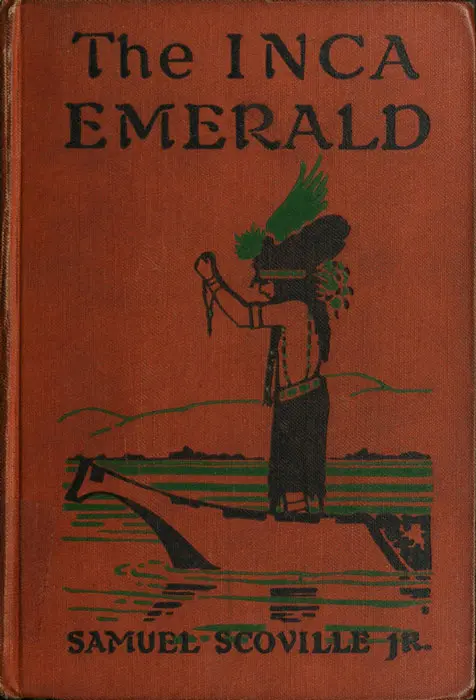
The Inca Emerald
Samuel Scoville
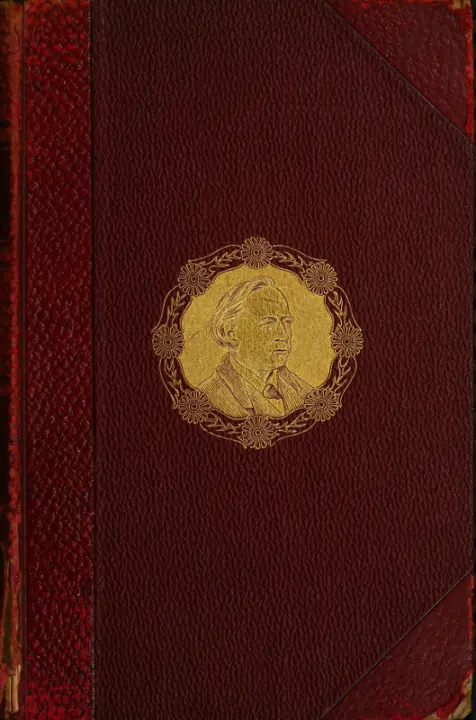
THE CLASSIC COLLECTION · 1888
"A Biography of Rev. Henry Ward Beecher" by Wm. C. Beecher and Rev. Samuel Scoville is a historical account written in the late 19th century. This biography recounts the life and influential career of Henry Ward Beecher, a prominent preacher and social reformer known for his passionate advocacy against slavery and his significant role in American religious life. The narrative captures not only Beecher's personal journey but also the societal transformations he engaged with throughout his life. The opening of the biography introduces readers to Beecher’s ancestry and his family's background, highlighting the strong moral and intellectual influences of both his father, Lyman Beecher, a noted preacher, and his mother, Roxana Foote. The authors detail the early environment in which Henry was raised, emphasizing both the personal qualities he inherited and the familial context that shaped his future perspectives and ambitions. Through rich descriptions of his childhood experiences in the picturesque town of Litchfield, the narrative sets the stage for understanding how these early influences would later fuel his passions and drive him in his efforts for reform and social justice.
Introduction adapted from the source catalogue; source summaries may be automatically generated.
Free to read · English · 279,799 words · No account needed
MAKE TIME FOR A GOOD BOOK
On by default. Untick to stop anonymous reading totals. Each page counts after 10 seconds in view. How this works.
Anonymous counting is on unless you have switched it off.
It would be impossible for tongue or pen adequately to describe the scenes at the meeting. The great hall was packed to the crushing point. The mob was out in force, with lungs in good working order and a disposition to use them to the best advantage.
Manchester and Glasgow were love-feasts in comparison.
We give an attempt at description from one of the Liverpool papers:
“For several days before the meeting it was understood that efforts would be made to create a disturbance.
“For some moments before the time fixed for the commencement of the proceedings, cat-calls, groans, cheers, hisses, etc., were freely indulged in, and it was evident that a strong force of the pro-Southern (or at least of the anti-Beecher) party had congregated in front of the gallery and at the lower end of the body of the hall. The début of the Rev. Mr. Beecher was, judging from the frequently manifested impatience of the audience, awaited with intense interest. Several occupants of seats in the upper gallery loudly insisted upon somebody bringing him out; and when the reverend gentleman did step on the platform, the enthusiasm of his friends and the indignation of his opponents were almost indescribable. Cheer rolled after cheer with deafening effect, and, in the brief pauses between each hurrah, hisses fell upon the ear with a sound like that of a falling torrent. The uproar was maintained so long that the chairman, Mr. Robertson, determined not to await the abatement of the storm, but to try to subdue it by a few judicious words. He was only partly successful until he appealed to the audience as Englishmen to stand up for fair play and not to withhold justice from a stranger.
“Mr. Beecher’s introduction surprised though it did not disconcert that gentleman. He was evidently prepared for some opposition; but he could hardly have expected that his appearance at the front of the platform, would rouse one portion of the audience to a high state of enthusiasm, and cause the other portion to approach almost a state of frenzy. For some time it was doubtful whether the celebrated Abolitionist would be allowed to speak; but those who sat near the reverend gentleman, and observed his firmly-compressed lips and imperturbable demeanor, saw at once that it would require something more than noise and spasmodic hisses to cause Mr. Beecher to lose heart. He stood calmly at the edge of the platform, a representation of ‘patience smiling at grief,’ and a simile of sincerity, battling tacitly but successfully with opposition. One of the two must sooner or later give way, and no one who scrutinized Mr. Beecher’s features could imagine that he would be the first to become tired. At last there was a lull; clergymen and ladies ceased to wave their umbrellas and handkerchiefs, the torrent of hisses became less perceptible, and the chairman made another appeal to the meeting for fair play to Mr. Beecher. His assurance that an opportunity would be offered, after Mr. Beecher had concluded his address, to persons who wished to ask the reverend gentleman questions, was not very favorably received, and a series of disturbances ensued. Cries of ‘Turn him out!’ were heard in various parts of the hall, and efforts were made to eject some members of the unruly party. When the scuffling had partly subsided, the chairman expressed his determination to preserve order by calling in, if necessary, the aid of the police. This announcement produced something like order, and Mr. Beecher took up the advantage and commenced his address. The interruptions were incessant, while a scene prevailed the equal of which has seldom been witnessed in Liverpool. ‘Three cheers for Jeff. Davis!’ was a proposal which once more met with a hearty response from a portion of the audience; and as the admirers of the Confederate President were loath to cease their expressions of approval, Mr. Beecher composedly sat down on the low parapet of the platform and awaited a calm, at the same time apologizing to the reporters for causing them to be so long detained. At one time, about a score of persons were speaking in various parts of the hall, and Mr. Beecher, as a last resource, said that if the meeting would not hear him he would address the reporters. From the gallery were suspended placards on which the words, ‘Who is Henry Ward Beecher?’ were conspicuous; and, taken all in all, the scene was one of complete disorder. Mr. Beecher repeatedly declared that it was not new to him; but he admitted that his struggle for an hour and a half against the prevailing disorder had caused his voice to fail. So far, indeed, had his voice suffered that he was compelled, in concluding, to declare that he could not answer any questions unless perfect order prevailed. He did reply, in comparative peace, to one or two written interrogatories; but, the disturbance being renewed, Mr. Beecher sat down.”
Your reading position is saved on this browser. Take it to another device with a library code. Reading pages adapt to text, rather than matching a printed edition.
Samuel Scoville
Samuel Scoville
Samuel Scoville
BEHIND THE BOOK
This eBook is for the use of anyone anywhere in the United States and most other parts of the world at no cost and with almost no restrictions whatsoever. You may copy it, give it away or re-use it under the terms of the Project Gutenberg License included with this eBook or online at www.gutenberg.org. If you are not located in the United States, you will have to check the laws of the country where you are located before using this eBook. Read the source licence.
The original source file, including credits and licence, is retained by this library. Request an original-format copy at no charge. Please include the book title and Project Gutenberg identifier #55330.
KEEP YOUR CURIOSITY GOING

David Patterson (Spirit) Hatch

David Patterson (Spirit) Hatch

David Patterson (Spirit) Hatch
Cécile Tormay

Moritz Busch
John L. Ransom