THE CLASSIC COLLECTION✦An outlaw’s diary: the CommuneCLASSIC FREE BOOKS
An outlaw’s diary: the Commune
Cécile Tormay
THE CLASSIC COLLECTION · 1914
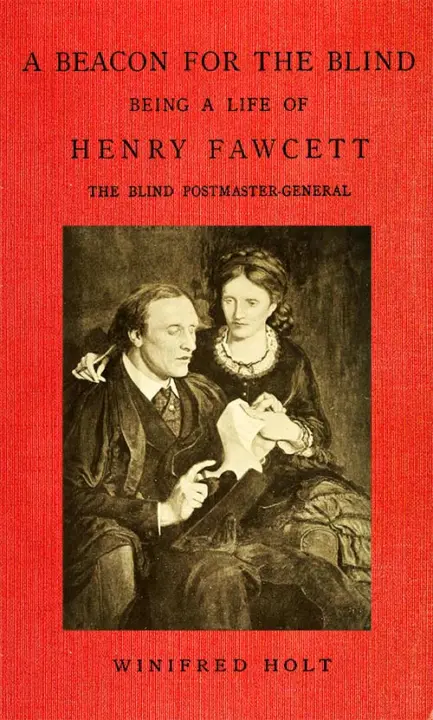
"A Beacon for the Blind: Being a Life of Henry Fawcett, the Blind Postmaster-General" by Winifred Holt is a biographical account written in the early 20th century. The book chronicles the inspiring life of Henry Fawcett, a man who overcame his blindness to become a prominent political figure and postmaster-general in England. It explores his resilience, personal challenges, and contributions to society, aiming to highlight the power of the human spirit in facing adversity. The opening of the narrative sets the stage for Fawcett’s life story by detailing the circumstances of his birth and early influences. It introduces readers to his father, William Fawcett, a passionate reformer and mayor of Salisbury, who laid a foundational ethos of public service and political activism. The narrative unfolds with Fawcett's childhood experiences, showcasing his initial curiosity and intelligence, which foreshadow his later intellectual pursuits. The introduction captures the essence of Fawcett's journey, detailing his gradual rise in political circles, his love for nature, and his growing ambitions, all while subtly hinting at the challenges that blindness would later impose on his life.
Introduction adapted from the source catalogue; source summaries may be automatically generated.
Free to read · English · 78,452 words · No account needed
MAKE TIME FOR A GOOD BOOK
On by default. Untick to stop anonymous reading totals. Each page counts after 10 seconds in view. How this works.
Anonymous counting is on unless you have switched it off.
Cambridge, boat race, 212;
Fawcett as a Fellow in, 33, 59, 60, 75-91, 104, 112;
Fawcett as a professor in, 105-115, 126, 138, 153, 156, 227, 250,
267, 299, 309, 321, 331;
Fawcett as an undergraduate in, 25-33;
Fawcett contests, 106, 152, 153;
Fawcett on society in, 89;
position of women at, 136, 291;
the Union, 32.
Campbell, Lady, 69.
—— Robert, xv.
—— Sir Francis, xv;
his work for the blind, 66, 69, 70.
Cardin, Mr. postal official, 276.
Cards, Fawcett plays, 56, 302.
Carlyle, Thomas, on political economy, 117.
Cattle-plague, Fawcett on the, 165.
Chamberlain, Joseph, Fawcett votes against, 211.
Charles II., King, 194.
Chartism, 20.
Chesterfield, Lord, 87.
Chetwynd, Mr. postal official, 276.
Children’s Acts, Fawcett on the, 165.
Choate, Hon. J. H., xv.
Church rates, abolition of, 148, 152.
Cicero, quoted, 18.
Cima di Jazzi, Fawcett climbs, 57.
Civil Pension List, 282.
Clarendon, Fawcett at, 309.
Clarke of Cambridge, 107.
Clifford, M. & F., 319.
—— Professor, Fawcett on, 281.
Club for Workmen, Fawcett, 121.
Cobden, Richard, apostle of Free Trade, 8, 19;
Fawcett on, 159;
visits Fawcett, 88.
Common Lands, Fawcett’s defence of, 185, 194-213, 289, 303.
Commons Preservation Society, the, Fawcett as member of, ix, 194, 196, 199, 200, 208, 211, 213, 266.
Congreve’s rockets, 14.
Cooper, Mary, marries William Fawcett, 5.
Co-operation, Fawcett advocates, 117-120, 231.
Cornish mines, Fawcett’s, 151.
Corpus Christi Library, 244.
Courtney, Lord, candidate for professorship, 105; his friendship with Fawcett, xv, 167, 192, 288.
Courtney, Lady, xv, 312, 313.
Cowper Temple, Mr., his motion re Epping Forest, 200.
Cox, Harry, Charles and William, 319.
Crimean War, the, 32.
Critchett, oculist, 35.
Cross, Lord, as Home Secretary, 208.
Dale, Sir Alfred, xv.
Darwin, Charles, defended by Fawcett, 94-97;
his friendship with Fawcett, 97, 126, 168.
Delhi, Empire proclaimed in, 236.
Devonshire, Duke of, announces Fawcett’s death, 313;
as Liberal Leader, 235, 252;
as Postmaster-General, 250.
Dickens, Charles, his novels, 139, 310.
Disestablishment, Fawcett on, 106, 153.
Disraeli. See Beaconsfield.
Docwra, originates the penny post, 271.
Doulton, Sir Henry, his memorial to Fawcett, 332.
Downe, Darwin at, 97.
Dryhurst, F. J., Fawcett’s secretary, xv, 265, 268, 306.
Dublin, 167; Trinity College, 177, 178.
East India Company, 17.
Eddy, Charles, 319.
Edinburgh, Duke of, in India, 221.
Edmonston, Mr., opens Queenwood College, 9.
Education, National, Fawcett advocates, 32, 119, 171, 174, 236, 289.
Edward VII., his interest in Fawcett, 292, 317;
in India, 235;
knights Dr. Campbell, 66.
Egyptian question, Fawcett on the, 282, 283.
Electioneering experiences, Fawcett’s, 146-159.
Eliot, George, her interest in Fawcett, 118;
her novels, 92.
Ely Cathedral, 81.
Enclosure Bills, the, 187-91, 201.
Epping Forest, saved for the nation, 187, 194-201.
Evans, F. de Grasse, xv.
Eversley, Lord, as Postmaster-General, 258, 310;
his Bill re Common Lands, 208, 209.
Evolution, Fawcett’s defence of, 94-97.
Exeter Hall, Fawcett at, 239.
Exhibition of 1851, the, 20.
Factory Acts, Fawcett on the, 165, 236, 289.
Your reading position is saved on this browser. Take it to another device with a library code. Reading pages adapt to text, rather than matching a printed edition.
BEHIND THE BOOK
This eBook is for the use of anyone anywhere in the United States and most other parts of the world at no cost and with almost no restrictions whatsoever. You may copy it, give it away or re-use it under the terms of the Project Gutenberg License included with this eBook or online at www.gutenberg.org. If you are not located in the United States, you will have to check the laws of the country where you are located before using this eBook. Read the source licence.
The original source file, including credits and licence, is retained by this library. Request an original-format copy at no charge. Please include the book title and Project Gutenberg identifier #52310.
KEEP YOUR CURIOSITY GOING
Cécile Tormay

Moritz Busch
John L. Ransom
Frances Wright
Cécile Tormay

Mabel Potter Daggett