THE CLASSIC COLLECTION✦An outlaw’s diary: the CommuneCLASSIC FREE BOOKS
An outlaw’s diary: the Commune
Cécile Tormay
THE CLASSIC COLLECTION · 1914
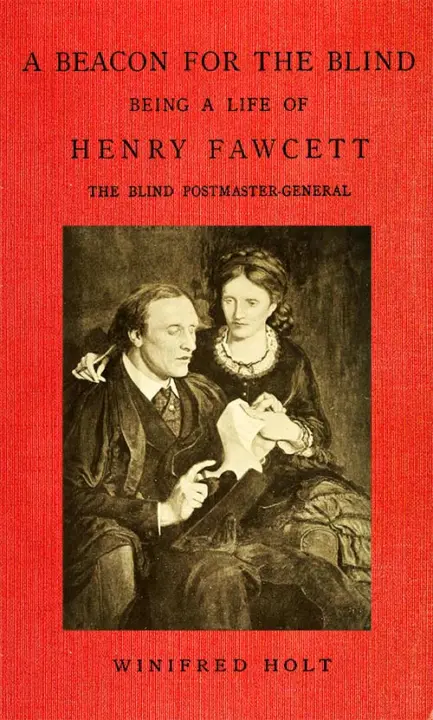
"A Beacon for the Blind: Being a Life of Henry Fawcett, the Blind Postmaster-General" by Winifred Holt is a biographical account written in the early 20th century. The book chronicles the inspiring life of Henry Fawcett, a man who overcame his blindness to become a prominent political figure and postmaster-general in England. It explores his resilience, personal challenges, and contributions to society, aiming to highlight the power of the human spirit in facing adversity. The opening of the narrative sets the stage for Fawcett’s life story by detailing the circumstances of his birth and early influences. It introduces readers to his father, William Fawcett, a passionate reformer and mayor of Salisbury, who laid a foundational ethos of public service and political activism. The narrative unfolds with Fawcett's childhood experiences, showcasing his initial curiosity and intelligence, which foreshadow his later intellectual pursuits. The introduction captures the essence of Fawcett's journey, detailing his gradual rise in political circles, his love for nature, and his growing ambitions, all while subtly hinting at the challenges that blindness would later impose on his life.
Introduction adapted from the source catalogue; source summaries may be automatically generated.
Free to read · English · 78,452 words · No account needed
MAKE TIME FOR A GOOD BOOK
On by default. Untick to stop anonymous reading totals. Each page counts after 10 seconds in view. How this works.
Anonymous counting is on unless you have switched it off.
‘A clergyman came to me one day in the street and asked if I was not Mrs. Fawcett’s sister. I said “Yes,” and then he told me his little story.
‘A friend of his had become blind and had lost hope and courage, and seemed unable to face the disaster; then some one reminded him of Mr. Fawcett, and read his life to him, and the poor man took fresh heart, and met his misfortune bravely. The clergyman added, “I do not know Mrs. Fawcett or any of his family, and could not let slip this chance of telling them what Mr. Fawcett’s example had done for my friend.”’
May his example continue ceaselessly to help, and may this little book make his story more widely known, so that those who sit in darkness may see the light which his keen spirit saw—and seeing, choose the nobler part.
Aberdeen, Fawcett at, 144, 167.
Abolition of Slavery, 5, 76, 77, 120, 157.
Afghanistan, position of, 242-4.
Agriculture, Fawcett on, 169.
Aids to Thrift, Fawcett’s, 276.
Aldeburgh, the Garrett family of, 130, 301;
memorial to Fawcett in, 333.
Alderbury, Fawcett at, 7, 36, 132.
American Civil War, the, Fawcett’s interest in, 101, 124, 145, 155,
157, 162.
Ancient Mariners, the, 85, 86, 262.
Anderson, Dr. Garrett, 334;
her interest in the Post Office, 257.
Anecdotage, Fawcett’s love of, 91, 98, 99, 171.
Angling, Fawcett’s love of, 17, 60-63, 67, 268.
Austen, Jane, novels of, 92.
Australia, Fawcett on future of, 38.
Avebury, Lord, accompanies Fawcett on his honeymoon, 131, 132; his friendship with Fawcett, xiii, xv, 97, 147.
Babylon, 15.
Bach, Fawcett on, 302.
Ballot Act, Fawcett on the, 175.
Balmoral, Fawcett at, 292.
Bateman, Bishop, founder of Trinity Hall, 86.
Beaconsfield, Lord, Fawcett on, 38, 168, 231, 242; leads the Conservative party, 161, 164, 236, 239, 242.
Beck, Dr., master of Trinity Hall, xv.
Bengal, famine in, 236.
Bethnal Green, Fawcett at, 243, 306.
Billiards, Fawcett plays, 27, 28.
Blackheath, Fawcett at, 167.
Blackwood, Sir Arthur, on Fawcett, 279.
Blind, Fawcett’s alms to the, 71;
literature for the, 68.
Blindness, as a spur, 65;
Fawcett on, 45, 66-69, 100, 149, 154, 306.
Blue ribbon, Fawcett on the, 264.
Bombay, honour to Fawcett in, 323.
Bond, Dr. Henry, xv.
Bowles, Richard, 319.
Bradford, Fawcett at, 120, 145.
Braille, never mastered by Fawcett, 51.
Bright, John, advises Fawcett, 146;
advocates peace, 32;
apostle of Free Trade, 8, 19;
Fawcett on, 38, 103, 160;
on the Reform Bill, 162, 164;
revered in America, 102.
Brighton, Fawcett at, 56, 133;
Fawcett contests, 153-9, 166, 170, 227, 230, 232;
Fawcett M.P. for, 126, 131, 139, 159, 166, 168, 170, 174, 222, 225,
227, 320.
Brighton Election Reporter, the, 155.
British Association, the, 168;
at Aberdeen, 144, 167;
at Manchester, 95;
at Oxford, 92.
Brompton Cemetery, 123.
Brougham, Lord, Fawcett on, 145;
introduces Fawcett, 146.
Brown, attendant, 78, 144, 192.
Brown, George, 319.
Browning, E. B., 204.
Bryce, James, Viscount, on Fawcett, vii-xi, xv;
supported by Fawcett, 213.
Buckingham Palace, Fawcett at, 292-295.
Bulgarian atrocities, the, 239-43.
Burke, Edmund, 92, 320.
Burt, Rt. Hon. Thomas, on Fawcett, 232.
Bute, Lord, 308.
Byron, Lord, 48.
Cabmen, Fawcett’s friends among, 198.
Cabul, Fawcett on, 243.
Cairnes, Professor, his friendship with Fawcett, 167, 169, 179.
Calcutta, gratitude to Fawcett in, 222.
Your reading position is saved on this browser. Take it to another device with a library code. Reading pages adapt to text, rather than matching a printed edition.
BEHIND THE BOOK
This eBook is for the use of anyone anywhere in the United States and most other parts of the world at no cost and with almost no restrictions whatsoever. You may copy it, give it away or re-use it under the terms of the Project Gutenberg License included with this eBook or online at www.gutenberg.org. If you are not located in the United States, you will have to check the laws of the country where you are located before using this eBook. Read the source licence.
The original source file, including credits and licence, is retained by this library. Request an original-format copy at no charge. Please include the book title and Project Gutenberg identifier #52310.
KEEP YOUR CURIOSITY GOING
Cécile Tormay

Moritz Busch
John L. Ransom
Frances Wright
Cécile Tormay

Mabel Potter Daggett