THE CLASSIC COLLECTION✦An outlaw’s diary: the CommuneCLASSIC FREE BOOKS
An outlaw’s diary: the Commune
Cécile Tormay
THE CLASSIC COLLECTION · 1914
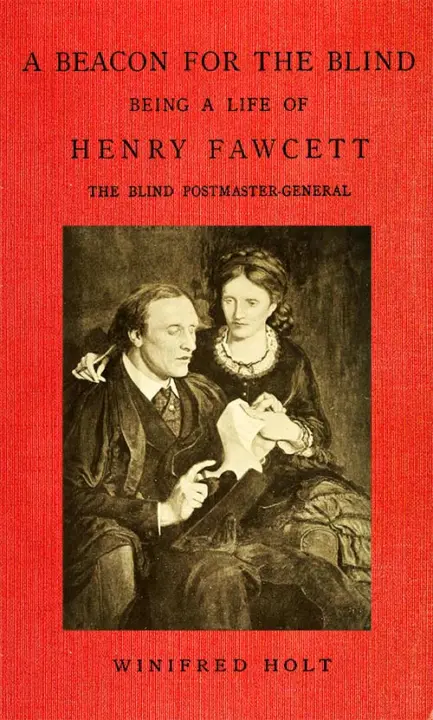
"A Beacon for the Blind: Being a Life of Henry Fawcett, the Blind Postmaster-General" by Winifred Holt is a biographical account written in the early 20th century. The book chronicles the inspiring life of Henry Fawcett, a man who overcame his blindness to become a prominent political figure and postmaster-general in England. It explores his resilience, personal challenges, and contributions to society, aiming to highlight the power of the human spirit in facing adversity. The opening of the narrative sets the stage for Fawcett’s life story by detailing the circumstances of his birth and early influences. It introduces readers to his father, William Fawcett, a passionate reformer and mayor of Salisbury, who laid a foundational ethos of public service and political activism. The narrative unfolds with Fawcett's childhood experiences, showcasing his initial curiosity and intelligence, which foreshadow his later intellectual pursuits. The introduction captures the essence of Fawcett's journey, detailing his gradual rise in political circles, his love for nature, and his growing ambitions, all while subtly hinting at the challenges that blindness would later impose on his life.
Introduction adapted from the source catalogue; source summaries may be automatically generated.
Free to read · English · 78,452 words · No account needed
MAKE TIME FOR A GOOD BOOK
On by default. Untick to stop anonymous reading totals. Each page counts after 10 seconds in view. How this works.
Anonymous counting is on unless you have switched it off.
Fawcett, Henry, his blindness, vii, xiv, 43-71, 111, 149, 154, 229,
240, 251, 306, 326;
his cheerful courage, vii, xi, 44, 273, 305, 309, 325, 334;
his love of riding, viii, 59, 60, 68, 229;
his mental powers, ix, 29, 91, 173;
his endeavours to save Common Lands, ix, 185-214;
his biography, xiii, xv;
his birth, 5;
his early questions on economy, 6, 10, 81;
his schooldays, 6-21;
his love of fishing, 7, 17, 60-63, 67, 104, 268;
influenced by Cobden and Bright, 8, 19;
his diary, 9;
his oratory, 10, 31, 32, 143, 163;
his boyish lectures and essays, 11-17;
in London, 17, 19, 33, 137, 197, 235, 332;
his ambition to enter Parliament, 18, 19, 33, 36-38, 45, 46, 75, 82,
111, 124, 143-59;
as an undergraduate at Cambridge, 25-33;
his friendship with Stephen, 25, 33, 78;
his personal appearance, 25-27, 76, 103, 129, 163, 197, 223;
his skill in games, 27;
his talent for friendship, 29, 31, 84, 85, 132;
his love for political economy, 29, 61, 81, 101;
his anxiety for his health, 30, 52, 268, 307;
advocates national education, 32, 119, 171, 174, 236, 289;
his Fellowship, 33, 78, 82, 87;
studies law, 33;
his eyesight fails, 34-39;
his radicalism, 34, 83, 105, 106, 124, 138, 148, 153, 161, 165, 166,
174-81;
visits Paris, 35;
his ideals, 37, 284;
his interest in social questions, 38, 117, 121-4, 165, 236, 283;
his interest in Indian finance, 38, 166, 177, 217-27, 230, 233,
235-8, 242-6, 331;
is accidentally blinded, 43;
his love of walking, 49, 57, 58, 81, 125, 238;
his tailor, 52, 77;
his memory, 55, 58, 124, 128, 144, 191, 225, 233, 238, 297;
his love of skating, 58, 68, 88, 171, 192, 193, 210;
as Postmaster General, 70, 211, 244, 249-83, 289, 296, 304, 308, 331;
compared with Lincoln, 76, 77, 102, 103, 245, 259, 260;
his love of freedom, 76, 157, 236;
his love of rowing, 85;
evades bores, 89, 192, 296;
his life in Cambridge, 82, 87, 90;
his conversational powers, 91, 98, 129;
his sociability, 91, 98, 144, 171, 292, 295;
addresses the British Association, 92, 144, 167;
defends Darwin, 94;
his love of home life, 97-99, 204, 209-211, 234, 291, 297-9, 303;
his friendship with Mill, 99;
his sympathy with the Federalists, 102, 145, 155;
portraits of, 103, 137;
his Manual of Political Economy, 105, 218, 303, 324;
as Professor of Political Economy, 106-117, 126, 144, 153, 156, 186,
299, 309, 321, 331;
contests Cambridge, 106, 152;
his Free Trade and Protection, 115;
as an M.P., 122, 125, 138, 149, 160-7, 174, 176, 188-192, 232, 265,
299, 304;
elected to the Reform Club, 127;
his marriage, 130-2;
his wife’s companionship, 133, 209, 239, 290-2, 307, 310;
advocates Woman Suffrage, 133, 135-7, 165, 289, 290;
contests Brighton, 139, 153-9, 166, 170, 227, 230, 232;
as M.P. for Brighton, 126, 131, 139, 159, 166, 168, 170, 174, 222,
225, 227, 320;
his love of salt, 140;
his campaign in Southwark, 146-50;
his flutter on the Stock Exchange, 151;
his intractability, 176, 189;
opposes the ministry, 176-81;
his hair cut, 203;
his love of being read to, 204, 239, 307;
as M.P. for Hackney, 230-2, 243, 310;
advocates peace, 242;
his handshaking proclivity, 253, 254;
his temperance, 264;
his sense of fairness, 287;
his chivalry, 289;
his illness, 300;
his honorary degrees, 308;
his death, 311, 312;
tributes to, 312-334.
Fawcett, Mrs., mother of Henry, 5, 44, 98, 107, 160.
—— Mrs. Henry, advocates Woman Suffrage, 133, 135-7;
her accident at Brighton, 133;
her marriage, 130-3;
her necklace from India, 245;
her portrait, 137;
on her husband, 171;
shares her husband’s interests, 209, 239, 290-2, 307, 310;
sympathy shown to, 319-21.
Fawcett, Philippa, daughter of Henry Fawcett, 210, 291, 311.
—— Sarah Maria, sister of Henry Fawcett, 6, 35, 39, 44-51, 107, 161,
204, 222, 297, 303.
—— Thomas Cooper, 6.
—— William, as Mayor of Salisbury, 3-5;
causes his son’s blindness, 43-45;
death of, 318;
encourages his son, 10;
Gladstone’s letter to, 317;
his Cornish mines, 152;
his marriage, 5;
his memory of Waterloo, 3;
his son’s affection for, 298;
sends his son to Cambridge, 21, 25, 33;
supports his son’s elections, 153, 158, 160, 232.
—— —— junior, 6.
—— scholarship, the, 323.
Fearon, Mr. and Mrs., Fawcett lives with, 19, 20.
Fishing, Fawcett’s love of, 17, 60-63, 67, 268.
Flunkeyism, Fawcett on, 139.
Forster family, the, 107.
Fortnightly Review, The, Fawcett’s articles in, 176, 201.
Franchise, Fawcett on the, 135, 153, 158.
Free Trade, Cobden and Bright’s campaign for, 8, 19.
Your reading position is saved on this browser. Take it to another device with a library code. Reading pages adapt to text, rather than matching a printed edition.
BEHIND THE BOOK
This eBook is for the use of anyone anywhere in the United States and most other parts of the world at no cost and with almost no restrictions whatsoever. You may copy it, give it away or re-use it under the terms of the Project Gutenberg License included with this eBook or online at www.gutenberg.org. If you are not located in the United States, you will have to check the laws of the country where you are located before using this eBook. Read the source licence.
The original source file, including credits and licence, is retained by this library. Request an original-format copy at no charge. Please include the book title and Project Gutenberg identifier #52310.
KEEP YOUR CURIOSITY GOING
Cécile Tormay

Moritz Busch
John L. Ransom
Frances Wright
Cécile Tormay

Mabel Potter Daggett