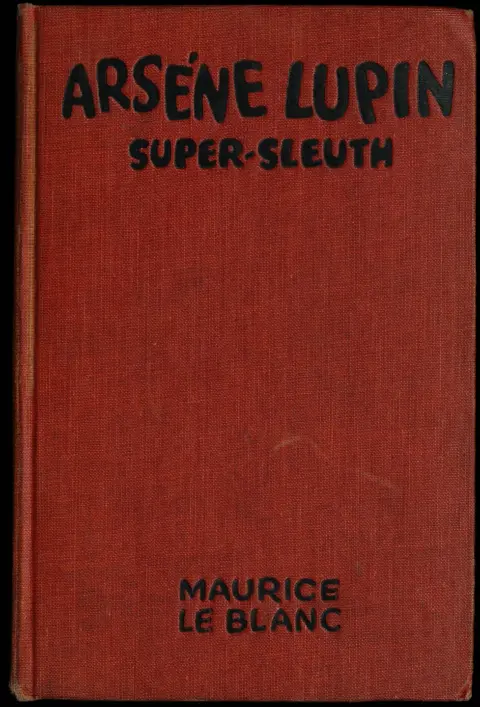
Arsène Lupin, super-sleuth
Maurice Leblanc
THE CLASSIC COLLECTION · 1910
"813" by Maurice Leblanc is a suspenseful detective novel written in the early 20th century. The story revolves around the enigmatic character Arsène Lupin, a gentleman burglar, as he engages in a thrilling game of cat and mouse with the authorities after committing a series of crimes, including a shocking murder. The novel introduces readers to a high-stakes world of intrigue, where Kesselbach, a wealthy man, becomes embroiled in a plot that threatens not only his life but also his ambitions. The opening of "813" sets a tense atmosphere with Mr. Kesselbach discovering that someone has invaded his hotel suite while he was away. Anxious and paranoid, he discusses strange occurrences with his secretary, Chapman, pointing out the peculiarities in their situation. When the mysterious Arsène Lupin makes his dramatic entrance, the tension escalates to a confrontation filled with twists and a daring heist, leaving readers breathless and eager to uncover the secrets surrounding Kesselbach's wealth and ambitions, as well as Lupin's true motives.
Introduction adapted from the source catalogue; source summaries may be automatically generated.
Free to read · English · 109,524 words · No account needed
MAKE TIME FOR A GOOD BOOK
On by default. Untick to stop anonymous reading totals. Each page counts after 10 seconds in view. How this works.
Anonymous counting is on unless you have switched it off.
But what I wish to recall is the enormous part played by Lupin in the conduct of the case and in the incidents appertaining to the preliminary inquiry. As a matter of fact, it was he who managed the inquiry. From the very start, he took the place of the authorities, ordering police-searches, directing the measures to be taken, prescribing the questions to be put to the prisoners, assuming the responsibility for everything.
We can all remember the universal amazement when, morning after morning, we read in the papers those letters, so irresistible in their masterly logic, signed, by turns:
"ARSÈNE LUPIN, Examining-magistrate."
"ARSÈNE LUPIN, Public Prosecutor."
"ARSÈNE LUPIN, Minister of Justice."
"ARSÈNE LUPIN, Copper."
He flung himself into the business with a spirit, an ardor, a violence, even, that was astonishing in one usually so full of light-hearted chaff and, when all was said, so naturally disposed by temperament to display a certain professional indulgence.
No, this time he was prompted by hatred.
He hated Louis de Malreich, that bloodthirsty scoundrel, that foul brute, of whom he had always been afraid and who, even beaten, even in prison, still gave him that sensation of dread and repugnance which one feels at the sight of a reptile.
Besides, had not Malreich had the audacity to persecute Dolores?
"He has played and lost," said Lupin. "He shall pay for it with his
head."
That was what he wanted for his terrible enemy: the scaffold, the bleak, dull morning when the blade of the guillotine slides down and kills. . . .
It was a strange prisoner whom the examining-magistrate questioned for months on end between the four walls of his room, a strange figure, that bony man, with the skeleton face and the lifeless eyes!
He seemed quite out of himself. His thoughts were not there, but elsewhere. And he cared so little about answering!
"My name is Leon Massier."
That was the one sentence to which he confined himself.
And Lupin retorted.
"You lie. Leon Massier, born at Perigueux, left fatherless at the age of ten, died seven years ago. You took his papers. But you forgot his death-certificate. Here it is."
And Lupin sent a copy of the document to the public prosecutor.
"I am Leon Massier," declared the prisoner, once again.
"You lie," replied Lupin. "You are Louis de Malreich, the last surviving descendant of a small French noble who settled in Germany in the eighteenth century. You had a brother who called himself Parbury, Ribeira and Altenheim, by turns: you killed your brother. You had a sister, Isilda de Malreich: you killed your sister."
"I am Leon Massier."
Your reading position is saved on this browser. Take it to another device with a library code. Reading pages adapt to text, rather than matching a printed edition.
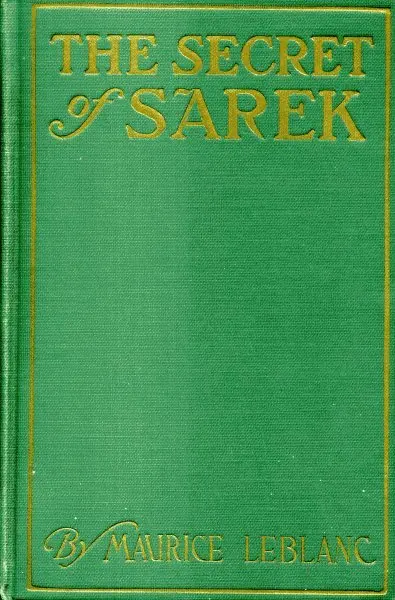
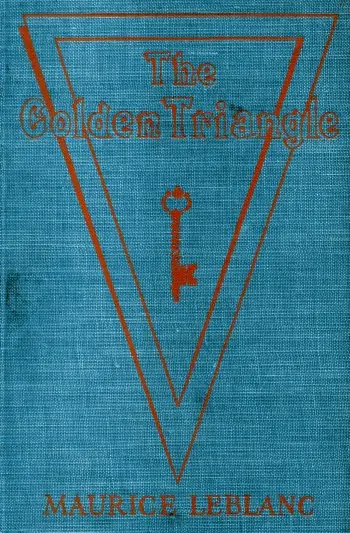
Maurice Leblanc
Maurice Leblanc
Maurice Leblanc

Maurice Leblanc
BEHIND THE BOOK
This eBook is for the use of anyone anywhere in the United States and most other parts of the world at no cost and with almost no restrictions whatsoever. You may copy it, give it away or re-use it under the terms of the Project Gutenberg License included with this eBook or online at www.gutenberg.org. If you are not located in the United States, you will have to check the laws of the country where you are located before using this eBook. Read the source licence.
The original source file, including credits and licence, is retained by this library. Request an original-format copy at no charge. Please include the book title and Project Gutenberg identifier #34758.
KEEP YOUR CURIOSITY GOING
Coulson Kernahan

Maurice Baring
Frances Wright
Cécile Tormay

Frederic Jesup Stimson

W. H. P. (William Henry Pope) Jarvis