THE CLASSIC COLLECTION✦Windmills: A book of fablesCLASSIC FREE BOOKS
Windmills: A book of fables
Gilbert Cannan
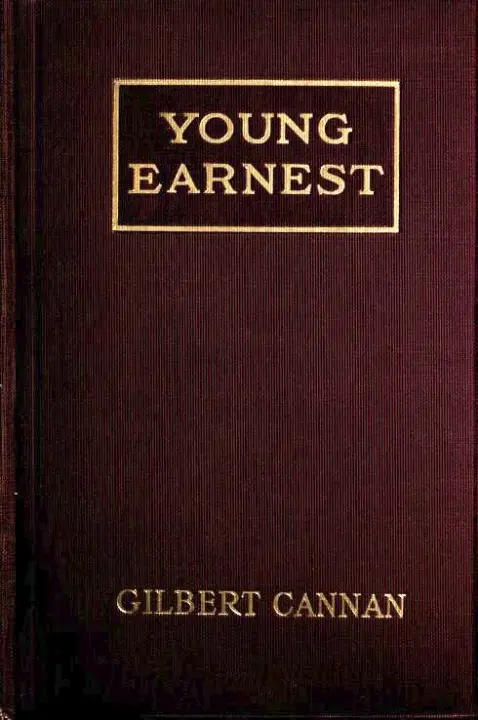
THE CLASSIC COLLECTION · 1915
"Young Earnest: The Romance of a Bad Start in Life" by Gilbert Cannan is a novel written in the early 20th century. The narrative centers around John René Fourmy, a young man navigating the complexities of love, family history, and societal expectations. As he reflects on his relationships, particularly with his father and his romantic interest, Cathleen, we gain insights into his struggles with self-identity and the weight of past experiences. The opening of the novel introduces René as he waits for his beloved, only to be consumed by memories of his father's disgraceful past. As he reminisces about his family dynamics and the love he shares with Cathleen, we see how deeply his father's downfall affects his romantic aspirations. This interplay between past trauma and present longing sets the stage for René's journey, showcasing his romantic ideals juxtaposed with the harsh realities of his upbringing. The opening chapter establishes a poignant tone, hinting at the challenges of reconciling love and societal constraints, as well as the protagonist's evolving self-perception amidst the turbulence of his familial legacy.
Introduction adapted from the source catalogue; source summaries may be automatically generated.
Free to read · English · 94,421 words · No account needed
MAKE TIME FOR A GOOD BOOK
On by default. Untick to stop anonymous reading totals. Each page counts after 10 seconds in view. How this works.
Anonymous counting is on unless you have switched it off.
Et quelle est la femme qui ne chercherait pas à vous rendre
heureux!
HE awoke with a parched mouth and cramped limbs to find himself being shaken and to hear a voice saying:
"Hi, mate, time to wake up. Can't leave you no longer."
"Eh? Is this London?"
"Aye, and London it's been these three hours past. You came in by the five-twenty-five, and I couldn't get you to wake up, I couldn't. You're in the sidings."
René shook himself and clambered down with the red-headed railway porter, and walked with him across the rails through several coaches, back to the station.
"Been ill, mate?"
"No. Why?"
"I never see such a face. Got more than your fair share of bones in it. It was that made me leave you."
"I'm much obliged."
The big clock announced five minutes past eight.
"No luggage?" asked the porter.
"No. No luggage."
"Going to see friends?"
"No."
"You'll excuse me asking, but I don't like letting you go alone with a face like that. D'you know London?"
"No."
"You'll want breakfast."
René realized that he was hungry. The porter took him to a pull-up in a noisy street, filled with the clang of tramcars and the roar and rattle of heavy drays coming from the goods yard. They had coffee and ham and great hunks of bread.
"I never see such a sleeper," said the porter.
"I was tired, I think."
That struck the porter as a good joke. He kept on chuckling to himself
and saying:
"Tired? I should think you was. Tired! He says he was tired!"
Presently he became solemn and leaned across the deal-topped table.
"I can't make you out, mate. I don't know if you're a gent or what. You're from the North. It's easy to see that. What is it? Trouble?"
"Not exactly trouble. Nothing unusual, I mean. It's been going on for
a long time."
"They're not after you, then?"
"Oh, no. No one's after me."
The porter's expression showed both disappointment and relief.
"Is it far to Putney?" asked René.
"It's where the boat-race is," said the porter. "I been there. An hour
in a bus or train."
"I mean--to walk. I'd like to walk. To see London. I've never seen it,
you know."
"It'd be Fulham Road, I fancy, though I don't know those parts well.
Friends at Putney?"
"Someone I know there."
"I see. You'll be going home soon. Return ticket?"
"No. I just wanted to see London. At least, there was a train going to
London."
"Ain't lost your memory, have you, mate?"
"No," said René. "No. I've lost interest in it, that's all."
"Money? Got any money?"
Your reading position is saved on this browser. Take it to another device with a library code. Reading pages adapt to text, rather than matching a printed edition.
Gilbert Cannan
Gilbert Cannan
Gilbert Cannan
Gilbert Cannan
BEHIND THE BOOK
This eBook is for the use of anyone anywhere in the United States and most other parts of the world at no cost and with almost no restrictions whatsoever. You may copy it, give it away or re-use it under the terms of the Project Gutenberg License included with this eBook or online at www.gutenberg.org. If you are not located in the United States, you will have to check the laws of the country where you are located before using this eBook. Read the source licence.
The original source file, including credits and licence, is retained by this library. Request an original-format copy at no charge. Please include the book title and Project Gutenberg identifier #48487.
KEEP YOUR CURIOSITY GOING
Coulson Kernahan

Maurice Baring
Frances Wright
Cécile Tormay

Frederic Jesup Stimson

W. H. P. (William Henry Pope) Jarvis