THE CLASSIC COLLECTION✦Windmills: A book of fablesCLASSIC FREE BOOKS
Windmills: A book of fables
Gilbert Cannan
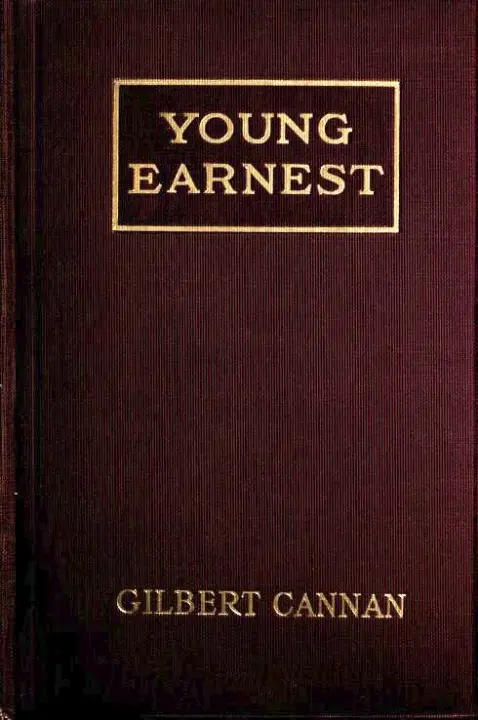
THE CLASSIC COLLECTION · 1915
"Young Earnest: The Romance of a Bad Start in Life" by Gilbert Cannan is a novel written in the early 20th century. The narrative centers around John René Fourmy, a young man navigating the complexities of love, family history, and societal expectations. As he reflects on his relationships, particularly with his father and his romantic interest, Cathleen, we gain insights into his struggles with self-identity and the weight of past experiences. The opening of the novel introduces René as he waits for his beloved, only to be consumed by memories of his father's disgraceful past. As he reminisces about his family dynamics and the love he shares with Cathleen, we see how deeply his father's downfall affects his romantic aspirations. This interplay between past trauma and present longing sets the stage for René's journey, showcasing his romantic ideals juxtaposed with the harsh realities of his upbringing. The opening chapter establishes a poignant tone, hinting at the challenges of reconciling love and societal constraints, as well as the protagonist's evolving self-perception amidst the turbulence of his familial legacy.
Introduction adapted from the source catalogue; source summaries may be automatically generated.
Free to read · English · 94,421 words · No account needed
MAKE TIME FOR A GOOD BOOK
On by default. Untick to stop anonymous reading totals. Each page counts after 10 seconds in view. How this works.
Anonymous counting is on unless you have switched it off.
She decided in her own mind that he was working too hard, and must be taken out of his solitude, which she ascribed to his inability to find his feet socially after being lifted out of his own class, and dumped into hers. Her brother was wanting to get rid of his first small two-cylinder car to buy a new 30-40 h.p. She made him an offer for the little car, and he closed with it and undertook to teach René to drive.
That was not a very difficult matter. Two lessons sufficed, and René was left with the car on his hands and no knowledge of its mechanism.
"But what shall I do if it breaks down?"
"It can't break down," said Kurt. "The magneto can't go wrong. If she stops, clean the sparking plug or put in a new one. It must be that or the jet."
René tried to read a book about motor-cars, but could not apply its technicalities to his own machine. He spent some days in and about and under the car, tracing out the principles on which it worked, and following its transmission of energy from cylinder to clutch, from clutch to gear, gear to back-axle. When he had done that he felt some confidence in driving, came to know the moods of his engine, and to take an extraordinary pleasure in handling it. Every week-end he made some excursion with Kurt or Linda, and sometimes alone. He explored the country for fifty miles round Thrigsby, and discovered to his dismay the vastness of the network of industrial towns, and, to his delight, the loveliness of the still uncontaminated country.
At first the change produced the effect Linda had desired. He had a new energy which enabled him to take the dull work of the week lightly. He seemed to have caught some of Kurt's enthusiasm together with a little of his good humor and tolerance. But these qualities he could not assume without the frankness that nourished them. Soon he was no longer deceived by the counterfeit he had evolved for his wife's satisfaction, and could not evade the fact that his excursions were desired chiefly as an escape from it. Their two habitual lives were organized effectively enough; it was when their lives met that there was insufficiency, fumbling, distrust, evasion. He could not altogether conceal from her the disgust and almost horror that he felt on being faced with the deception he had practiced on himself, and through himself on her. She saw his distress, could not altogether understand, felt that she was giving him too many opportunities to escape from her, and in her turn began to counterfeit an interest in his enthusiasms and to insist on occupying a seat in the car whenever he went away, whether Kurt was with him or not. Kurt had an affectionate pampering way with her, a mere expedient for striking harmony between their different natures, which René as usual, taking seriously, misread as contempt. This, unknown to himself, encouraged the growth of the hatred which he had never allowed to rear its head. . . . And Linda, a little wearied by now of the part of the lover, had begun to play the part of the devoted, settled wife, to throw up round herself as bulwarks her advantages--her charming house, her ample means, her distinguished husband, a man of learning and culture in a commercial atmosphere, leisure among the unleisured. It was only an experiment on her part, but she gave it a thorough trial. When it failed she had her moments of despair. She had felt her husband's withdrawal from her, at least the removal of the deceit which covered it. She was enraged, determined to break him into submission, flung the whole force of her nature into the effort and failed again. Then, to escape boredom, she began to amuse herself with her sufferings. She would lead him on to talk in his inarticulate fashion of what he felt and then play upon his emotions and bring him back abruptly to her own charm, to realize her greater skill and agility in life, her rightness in the business of living and presenting a brave front to the world, and sometimes he would almost admit that she was right, and that, after all, since he could produce nothing definitely superior to her desire, he had better yield and give her those good things that, in their easy circumstances, they were privileged to enjoy--charm and excitement and pleasure. But he could not. Life had always been hard for him. He could not consent to have it easy. All that she fed on turned to bitterness in his mouth.
Your reading position is saved on this browser. Take it to another device with a library code. Reading pages adapt to text, rather than matching a printed edition.
Gilbert Cannan

Gilbert Cannan

Gilbert Cannan
Gilbert Cannan
BEHIND THE BOOK
This eBook is for the use of anyone anywhere in the United States and most other parts of the world at no cost and with almost no restrictions whatsoever. You may copy it, give it away or re-use it under the terms of the Project Gutenberg License included with this eBook or online at www.gutenberg.org. If you are not located in the United States, you will have to check the laws of the country where you are located before using this eBook. Read the source licence.
The original source file, including credits and licence, is retained by this library. Request an original-format copy at no charge. Please include the book title and Project Gutenberg identifier #48487.
KEEP YOUR CURIOSITY GOING
Coulson Kernahan

Maurice Baring
Frances Wright
Cécile Tormay

Frederic Jesup Stimson

W. H. P. (William Henry Pope) Jarvis