THE CLASSIC COLLECTION✦Windmills: A book of fablesCLASSIC FREE BOOKS
Windmills: A book of fables
Gilbert Cannan
THE CLASSIC COLLECTION · 1915
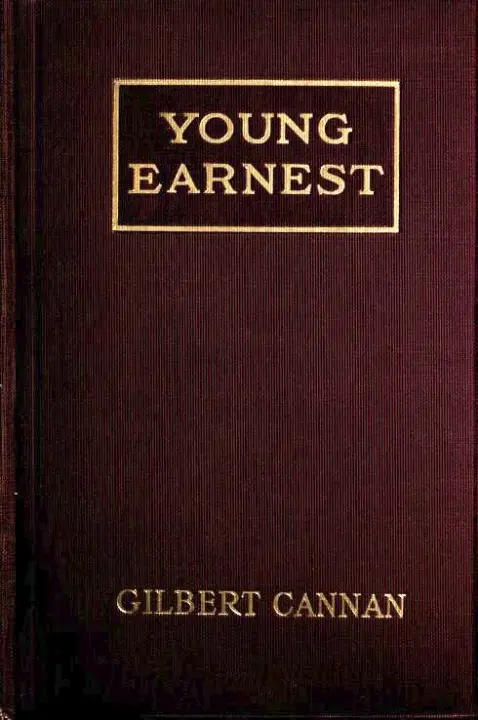
"Young Earnest: The Romance of a Bad Start in Life" by Gilbert Cannan is a novel written in the early 20th century. The narrative centers around John René Fourmy, a young man navigating the complexities of love, family history, and societal expectations. As he reflects on his relationships, particularly with his father and his romantic interest, Cathleen, we gain insights into his struggles with self-identity and the weight of past experiences. The opening of the novel introduces René as he waits for his beloved, only to be consumed by memories of his father's disgraceful past. As he reminisces about his family dynamics and the love he shares with Cathleen, we see how deeply his father's downfall affects his romantic aspirations. This interplay between past trauma and present longing sets the stage for René's journey, showcasing his romantic ideals juxtaposed with the harsh realities of his upbringing. The opening chapter establishes a poignant tone, hinting at the challenges of reconciling love and societal constraints, as well as the protagonist's evolving self-perception amidst the turbulence of his familial legacy.
Introduction adapted from the source catalogue; source summaries may be automatically generated.
Free to read · English · 94,421 words · No account needed
MAKE TIME FOR A GOOD BOOK
On by default. Untick to stop anonymous reading totals. Each page counts after 10 seconds in view. How this works.
Anonymous counting is on unless you have switched it off.
"It will be living in sin. I couldn't live in your house if I knew
that----"
"You prefer George?"
"I--I---- Please don't talk about it any more, René."
"I must. You love me far more than you love George, and yet you prefer to accept a home from him rather than from me."
"Certain things are wrong, René."
"I take my chance of that."
"We aren't given any choice."
"Hell in this world or hell in the next."
"Don't speak lightly of such things, René."
"I saw my father in London."
Mrs. Fourmy let the cards trickle from her hands, and sat staring at him with weary, frightened eyes.
"You are your father over again."
"He told me. Then it was your love or your religion----"
"Don't, René, don't!"
He could not continue. He watched her living again in the agony of the memory, righting with it, fighting it back, stifling the hunger in herself. He rose to leave her. She thought he was already gone, and slipped to her knees in an attitude of prayer.
René went to his room at the back of the house, the exact counterpart of his old den. He cursed that jealous God, that brutal invention of cowardice which has laid waste the western world. His rage only subsided when he came to think of Cathleen. He took paper and pen and wrote to her:
"I seem hardly at all different from the boy who used to write to you. It is almost exactly the same room, the same hour, only now it is my brother and sister-in-law who occupy the big bed in the big front room. The window looks out at the same lighted windows opposite. And I am the same except that I know myself better and am more sure. What an extraordinary phantasmagoria between our parting and our meeting! How worthless and external adventures can be! How worthless and external the more intimate relationships! But without adventure, without mistakes, folly, suffering, how is that discovery to be made? I suppose my brother never could have made it, but he must have had, perhaps even now he has, his moments when his desire tugs against his little round of habits. He would call himself a happy man, and perhaps he is so. Perhaps we all get what we desire. That would be a comfortable creed, and I could believe it were it not for my mother. One is not born of a woman for nothing. Something binds. There is a deeper knowledge than that of the mind. There is in my mother a quality with which I feel at home, free. But she withholds it from me. I feel she hates it in me, as in herself, as in my father. Hard to find anything else in common between them. I told you that story of how she surrendered to him when he came back. It must have been that in her, taken unawares. It had lived without alarm for so long. It had been stirred in her when I came back from Scotland so full of that idiotic love for you--and after that, I can't follow. Too near to it perhaps, or perhaps it is obscured in me by all I have gone through since. But now she baffles me. She has suffered. Yes. We all suffer, but suffering leads to discovery, to joy, or life is altogether barren. She suffers, she must suffer from living here in the dull house, but she takes her suffering and bottles it up, sterilizes it with religion. Her comfort! From the bottom of my heart I hate it. When she is full of what she calls her religion, then I can only bear with her by my inborn knowledge of her, and for that only the more do I detest the poison that has ruined her splendid life. And how it has been exploited, this voluptuous, selfish pleasure which they dare to call prayer and worship, this cowardly refusal to follow suffering withersoever it leads. I cannot be tolerant about it. To thousands I know, it is no more than bridge or bowls to my brother George, a pastime. But with her, and with all who have a capacity for suffering, it is a passionate negation, and to have lived at all must be a horror. You see, I am almost inarticulate about it. I have tried to break through it and failed. She saw, and closed her eyes, as she must have seen time and again. The delight of seeing almost deliberately debased to fear. I wish I were more used to thinking about people, then I could make it more clear. But it doesn't seem much use, for I go on believing in them and liking them and expecting all sorts of things that never come. Oh, the freedom that I find with you, and the thought of you! Everything you understand, and all the differences between us we can just laugh at and use. I must take you to some place where we can build up a healthy life. Now that I have money, I thought for a time that we would go and live in Scotland in my house. (How odd that looks. I really am pleased with my possessions for the first time.) That would not do. There must be work and activity. We'll have a brave time making plans to keep each other and everybody we know happy and keen. No more grubby humbugging, and no more Mitcham Mews. We'll find a way. . . ."
Your reading position is saved on this browser. Take it to another device with a library code. Reading pages adapt to text, rather than matching a printed edition.
Gilbert Cannan

Gilbert Cannan

Gilbert Cannan
Gilbert Cannan
BEHIND THE BOOK
This eBook is for the use of anyone anywhere in the United States and most other parts of the world at no cost and with almost no restrictions whatsoever. You may copy it, give it away or re-use it under the terms of the Project Gutenberg License included with this eBook or online at www.gutenberg.org. If you are not located in the United States, you will have to check the laws of the country where you are located before using this eBook. Read the source licence.
The original source file, including credits and licence, is retained by this library. Request an original-format copy at no charge. Please include the book title and Project Gutenberg identifier #48487.
KEEP YOUR CURIOSITY GOING
Coulson Kernahan

Maurice Baring
Frances Wright
Cécile Tormay

Frederic Jesup Stimson

W. H. P. (William Henry Pope) Jarvis