THE CLASSIC COLLECTION✦Windmills: A book of fablesCLASSIC FREE BOOKS
Windmills: A book of fables
Gilbert Cannan
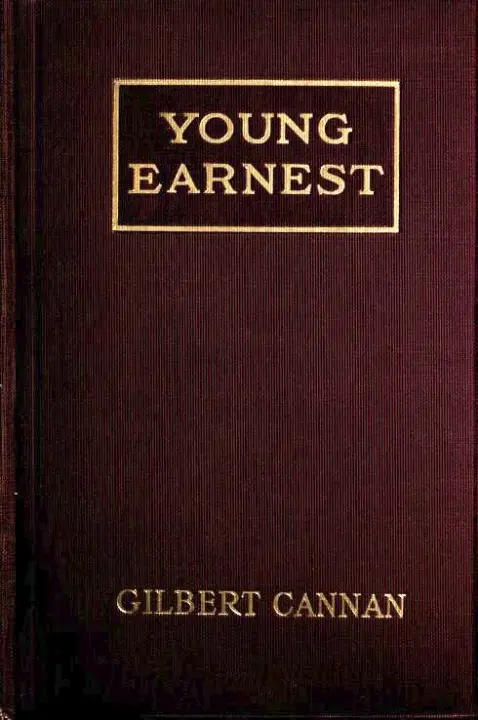
THE CLASSIC COLLECTION · 1915
"Young Earnest: The Romance of a Bad Start in Life" by Gilbert Cannan is a novel written in the early 20th century. The narrative centers around John René Fourmy, a young man navigating the complexities of love, family history, and societal expectations. As he reflects on his relationships, particularly with his father and his romantic interest, Cathleen, we gain insights into his struggles with self-identity and the weight of past experiences. The opening of the novel introduces René as he waits for his beloved, only to be consumed by memories of his father's disgraceful past. As he reminisces about his family dynamics and the love he shares with Cathleen, we see how deeply his father's downfall affects his romantic aspirations. This interplay between past trauma and present longing sets the stage for René's journey, showcasing his romantic ideals juxtaposed with the harsh realities of his upbringing. The opening chapter establishes a poignant tone, hinting at the challenges of reconciling love and societal constraints, as well as the protagonist's evolving self-perception amidst the turbulence of his familial legacy.
Introduction adapted from the source catalogue; source summaries may be automatically generated.
Free to read · English · 94,421 words · No account needed
MAKE TIME FOR A GOOD BOOK
On by default. Untick to stop anonymous reading totals. Each page counts after 10 seconds in view. How this works.
Anonymous counting is on unless you have switched it off.
Then he told himself he was a fool, that only by the unlikeliest chance would she be there to-day. He walked away, but was back again in ten minutes. In another twenty the door opened and the young woman came out. She stood for a moment at the gate. It could not be Cathleen, she was too tall and slender. In his eager hope and curiosity he moved toward her. He was not a yard away from her when she turned and their eyes met. Neither stirred. They were stilled by the wonder of it. A spell was on them, and slowly in both grew the dreadful knowledge that a word or a gesture would break it. In his heart René prayed: "Oh! let it break into happiness," and his will leaped into being and decided that it must be so and he laughed. She said:
"Oh! René!"
It was no echo of the old cry, but the same filled with a new music.
Their hands met in the conventional salute. She said:
"I have been thinking of you so much."
"Much?" said he. "I have been thinking of nothing else. And I was not sure that it was you when you went in just now."
"I saw you, but I didn't recognize you. Rachel told me she had met
you."
"Did she tell you where?"
"I had to dig it out of her. She was very hushed and secret. Rachel is funny. I've been looking at taxi-drivers ever since. They are a very plain lot of men."
"Where do you live now?"
"In Bloomsbury. I am working for my living, you know."
"I'm glad of that, but I shouldn't have thought it necessary."
"My father died."
"I heard that."
"He left nearly all his money to another woman: another family. I suppose he liked them better than us. I had a row with my mother over it. It appears she knew all about it and never minded. Only when it came to her having less money than she thought, she developed a horrid conscience and denounced my father to us. I hadn't thought about such things, but I was fond of my father, and it wasn't fair to vilify him after his death. I didn't understand it in the very least, but I stood up for him, and of course I said a lot of stupid, cruel things. I went to see the other woman. She was quite old, older than mother, rather vulgar, but jolly and warm-hearted and kind, and, from the way she talked, I could see she really did love my father and was very proud of him. You know, he made his own way. His father was a barber in Rickham, in Hertfordshire. She came from there, too. I told mother I had seen her, and she was furious, and said I was too young to know anything about such things. I pointed out that she had told me, and she declared she never imagined that I would understand. Then she put it all down to my taste for low company, meaning you. That annoyed me, and I told her you were a very learned and brilliant person. She said Thrigsby wasn't a real university, and its degrees did not count. You weren't a gentleman, and it was terrible how all the professions were being invaded by little whipper-snappers with a thin coating of book knowledge. So I asked her point-blank why she married my father, and she said he was extremely successful. Father had left us each two hundred pounds. I asked for that, and said I would earn my own living. I should have a year in which to look round. She said no one would ever marry me if I worked. I told her that the little I had learned of her life didn't make me anxious to be married. She became very solemn on that, and told me I couldn't possibly remain unmarried, because I was too pretty. I said I thought women could look after themselves, and obviously other arrangements were possible, and sometimes more profitable. That was an odious thing to say, but we had irritated each other out of all decency, and for vulgarity the other woman was an angel to us. I couldn't stay with my mother; I had said too much. She knew if I stayed it would make it hard for her to play the devoted widow; and also, if she could be the broken-hearted parent, it would give her a good start. She pounced on that, and let me go with her most lugubrious blessing and most ghoulish doubts. She prophesied almost gleefully that I would go to the bad, and helped me along by treating me as if I had already done so. Then I plunged into the wicked world. It was very disappointing. I had been led to suppose that no woman was safe alone. The wicked world has absolutely disregarded me. Occasionally some miserable little man or pale-faced boy has sidled up to me in the street and said, 'Excuse me, miss'--or 'Haven't we met before?' They don't alarm me. I say I won't excuse them or that I haven't met them, and they look very comically cast down, and say 'Beg pardon' and shuffle off. Sometimes I am so sorry for them that I feel inclined to run after them and tell them to cheer up, because it's quite easy to find affection if you only set about it the right way. They think it's adventure they want, but it isn't. It's only affection, some sort of human contact. I understood that, because I too was lonely. But those poor little men were so dull. I can't bear being dull, and I hate to see it in others; I hate to see them settling down to it. That's what mother wanted me to do. I might have done it, too, if father hadn't died. You know it seems quite pleasant to flirt and spend money, and find a husband and go on flirting and spending money. I'd never seen anyone die before, and it did make me feel ashamed. All of us were changed by it for a little. We became very shy of each other, and wanted to be nice, and began to talk about the things we really thought and felt inside ourselves. Then all that slipped away, and we were just the same as before until we talked about father's money, and then we were all angry. I suppose I hadn't quite recovered from the strain of his death, because all that hurt me, and I could only think that I had really loved him, and might have loved him much more if things had been somehow different. And then when I saw that kind, common woman it opened up another kind of life going on apart from money and position and amusement, all the things we were so proud of. It horrified me at first, of course. It is dreadful because it is secret. In itself-- Well, anyhow, the only other thing in my life that was the least bit like it and could stand against it was my absurd little affair with you in Scotland. So you see, I had begun to think of you even before Rachel met you."
Your reading position is saved on this browser. Take it to another device with a library code. Reading pages adapt to text, rather than matching a printed edition.
Gilbert Cannan

Gilbert Cannan

Gilbert Cannan
Gilbert Cannan
BEHIND THE BOOK
This eBook is for the use of anyone anywhere in the United States and most other parts of the world at no cost and with almost no restrictions whatsoever. You may copy it, give it away or re-use it under the terms of the Project Gutenberg License included with this eBook or online at www.gutenberg.org. If you are not located in the United States, you will have to check the laws of the country where you are located before using this eBook. Read the source licence.
The original source file, including credits and licence, is retained by this library. Request an original-format copy at no charge. Please include the book title and Project Gutenberg identifier #48487.
KEEP YOUR CURIOSITY GOING
Coulson Kernahan

Maurice Baring
Frances Wright
Cécile Tormay

Frederic Jesup Stimson

W. H. P. (William Henry Pope) Jarvis