
Neka, the boy conjuror
Edward Stratemeyer
THE CLASSIC COLLECTION · 1897
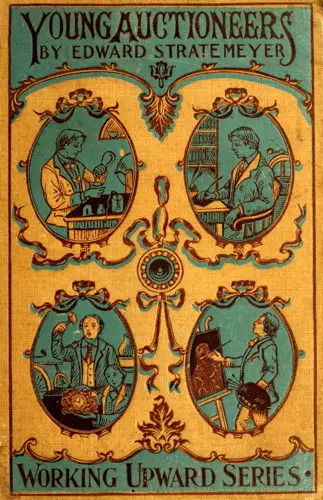
"Youth Auctioneers; Or, The Polishing of a Rolling Stone" by Edward Stratemeyer is a juvenile fiction novel written in the late 19th century. The story revolves around Matt Lincoln, a homeless yet resourceful teenager who becomes involved with the world of auctioneering after a series of setbacks in his life, including the loss of family and financial stability. He forms a partnership with Andrew Dilks, a former assistant auctioneer, as they embark on an adventurous journey to sell goods and make a living on the road. At the start of the narrative, readers are introduced to Matt Lincoln attending an auction sale, where he witnesses an unfair accusation against a young lady named Ida Bartlett. This sets the stage for Matt's character as someone who stands up for what is right. Following the auction incident, Matt learns about the world of traveling auctioneers from Andrew Dilks, which sparks his interest in joining this business. The opening chapters delve into Matt's past, his determination to pursue a more promising future, and the challenges he faces as he attempts to carve out a place for himself in an unfamiliar profession. The action quickly escalates, including a dramatic encounter at the auction house and a fire at the stable, demonstrating Matt's courage and adaptability as he prepares to hit the road with his new partner.
Introduction adapted from the source catalogue; source summaries may be automatically generated.
Free to read · English · 59,347 words · No account needed
MAKE TIME FOR A GOOD BOOK
On by default. Untick to stop anonymous reading totals. Each page counts after 10 seconds in view. How this works.
Anonymous counting is on unless you have switched it off.
"Those negroes!" gasped Matt, struggling to rise from amid the wreckage of the door. "Come on, don't wait, for they are three to two, and they are just drunk enough to be as ugly as sin!"
He caught Andy by the arm, and before the latter could ask for a further explanation, hurried him up the hill toward the wagon.
The negroes came out of the cottage and made after them, but only for a short distance. Then they came to a sudden halt, and after a brief consultation, hurried back to the cottage.
"What do you suppose they went back for--pistols and razors?" questioned Andy, as they reached the turn-out, and he unhitched Billy from the tree to which he had been tied.
"No, they are afraid we are going after the police," returned Matt, springing up to the seat. "Every one of that crowd ought to be in jail this minute!" he went on bitterly.
"What did they do to you?"
"Nearly robbed me!" And in a few brief words he related what had
happened to him.
"Well, do you want to go back to Easton and make a complaint?" asked
Andy, when he had finished.
"No, I am sick of having to do with the police, Andy. All I want is to
be let alone."
"That's my sentiment, Matt. We are out for business--and money--not
trouble."
Andy sprang up beside Matt, and it was soon decided by the partners to continue on the road until another house should appear. They looked back, but saw nothing more of the negroes, and then started off.
They passed through a bit of woods and down a long hill. Here they found a neat farmhouse, where a pleasant enough woman was sitting upon the doorstep, knitting socks.
"This is one road, but it is not the best road," replied the woman, in reply to Andy's question regarding the way to Bethlehem. "But now you are this far, you had better keep on, for it will be harder to turn back."
"How far is it to the town?"
"Not over a mile and a half."
"And is the road fairly good from here?"
"Oh, yes; you can get along very well."
"Then we will continue," returned Andy. "By the way," he went on, "do
you know anything of the negroes that live in the cottage back a
ways?"
The woman's face lost its smile and she sighed.
"Yes, I know them only too well," she replied. "They have stolen so many of our chickens and so much garden truck that my husband is going to make a complaint against them. I wish they would leave the neighborhood."
Your reading position is saved on this browser. Take it to another device with a library code. Reading pages adapt to text, rather than matching a printed edition.
Edward Stratemeyer

Edward Stratemeyer
Edward Stratemeyer

Edward Stratemeyer
BEHIND THE BOOK
This eBook is for the use of anyone anywhere in the United States and most other parts of the world at no cost and with almost no restrictions whatsoever. You may copy it, give it away or re-use it under the terms of the Project Gutenberg License included with this eBook or online at www.gutenberg.org. If you are not located in the United States, you will have to check the laws of the country where you are located before using this eBook. Read the source licence.
The original source file, including credits and licence, is retained by this library. Request an original-format copy at no charge. Please include the book title and Project Gutenberg identifier #31140.
KEEP YOUR CURIOSITY GOING
Coulson Kernahan

Maurice Baring
Frances Wright
Cécile Tormay

Frederic Jesup Stimson

W. H. P. (William Henry Pope) Jarvis