THE CLASSIC COLLECTION✦An outlaw’s diary: the CommuneCLASSIC FREE BOOKS
An outlaw’s diary: the Commune
Cécile Tormay
THE CLASSIC COLLECTION · 1903
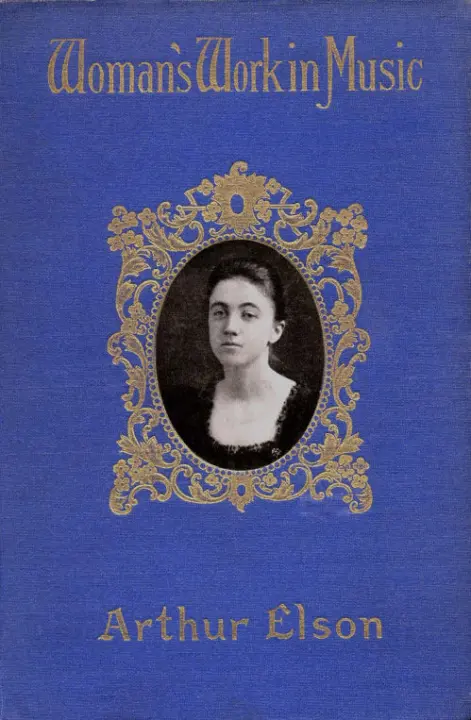
"Woman's Work in Music" by Arthur Elson is a historical account written in the late 19th century. The book explores the influence of women on the art of music across various cultures and time periods, highlighting their contributions to musical compositions and traditions. It aims to evaluate women's place in the musical world, both in terms of their creative output and their roles in supporting male counterparts. The opening of this work delves into the historical and mythical representations of women and their relation to music from ancient civilizations. It discusses figures such as Saint Cecilia, the patron saint of music, and the significant roles of female deities in Hindoo mythology who contributed to the development of music. Elson expands on how ancient cultures revered women musically while also detailing the paradox of their limited roles in performance and composition. The narrative sets a tone of recognition for women's historical contributions while preparing the reader for a broader examination of their impact throughout music history.
Introduction adapted from the source catalogue; source summaries may be automatically generated.
Free to read · English · 52,291 words · No account needed
MAKE TIME FOR A GOOD BOOK
On by default. Untick to stop anonymous reading totals. Each page counts after 10 seconds in view. How this works.
Anonymous counting is on unless you have switched it off.
Valentine, Ann, 133.
Van Buren, Alicia, 206.
Verdi, Giuseppe, 84-85.
Verger, Virginie du, 191.
Verse, 47.
Vezzana, Lucretia, 65.
Viardot-Garcia, Pauline, 183, 184.
Vidal, Pierre, 43.
Vigny, Louise von, 172.
Vizzani, Orsina, 64.
Vorwerk, Henrietta, 227.
Wace, Robert, 48.
Wacht-Lieder, 40.
Wagner, Cosima, 88.
Wagner, Richard, 85-88, 240.
Walter, Ida, 142.
Walther von der Vogelweide, 41.
Ward, Kate Lucy, 152.
Wartburg, 41.
Weber, Aloysia, 75.
Weber, Carl Maria von, 78-80.
Weber, Constance, 75, 77.
Westrop, Kate, 144.
White, Maude Valerie, 150, 238, 239.
Wieck, Clara, 90-102, 106.
Wieck, Friedrich, 91, 102.
Wieck, Marie, 91-171.
William of Poitou, 50.
Williams, Margaret, 205.
Willman, Magdalena, 119.
Winkel, Therese, 173.
Wiseneder, Caroline, 167, 242.
Wodzinski, Marie, 129.
Wolfram von Eschenbach, 40.
Wood, Mary Knight, 206.
Woods, Eliza, 205.
Woolf, Sophia, 136.
Wurm, Marie, 140.
Wurmbrand, Countess, 169.
Young, Harriet Maitland, 141.
Zapater, Rosaria, 230.
Zaubiter, Ida, 173.
Zentner, Clary, 216.
Zimmermann, Agnes, 145, 239.
Zumsteeg, Emilie, 159.
[1] For a good account of Hindoo music, see "Curiosities of Music," by
L. C. Elson.
[2] Aside from the supernatural phase, the great power ascribed to music by all mythologies may well have its foundation in fact. Taking as illustration the ease with which the ignorant classes of the present, especially in thinly settled countries, become the prey of various delusions, it may well be true that whole races have passed through mental stages in which their emotions, aroused by music, exerted an almost irresistible power.
[3] Among the early forms of composition, the most important was the mass, consisting of Kyrie, Sanctus, and other prescribed numbers, much as at the present day. More free in form was the motet, in which religious subjects were treated in contrapuntal fashion. The madrigal differed from this only in dealing with secular subjects. That these old madrigals, with their flowing parts and melodic imitations, are not unpleasing to modern ears, has been often proven. Their progressions are at times strange to us, but on repeated hearing often become imbued with remarkable delicacy and appropriateness.
[4] La Mara claims that the "Carneval" was inspired wholly by Clara, while Reissmann gives that honour to Ernestine.
[5] The term piano trio is used to signify a piece for piano, violin, and 'cello, in full sonata form.
[6] For more extended lists of English and other composers, see appendix. The student is referred to Otto Ebel's valuable handbook of women composers.
[7] A. Michaelis, "Frauen als Schaffende Tonkuenstler."
[8] See "Music in the Nineteenth Century," by J. A. Fuller-Maitland.
Your reading position is saved on this browser. Take it to another device with a library code. Reading pages adapt to text, rather than matching a printed edition.
BEHIND THE BOOK
This eBook is for the use of anyone anywhere in the United States and most other parts of the world at no cost and with almost no restrictions whatsoever. You may copy it, give it away or re-use it under the terms of the Project Gutenberg License included with this eBook or online at www.gutenberg.org. If you are not located in the United States, you will have to check the laws of the country where you are located before using this eBook. Read the source licence.
The original source file, including credits and licence, is retained by this library. Request an original-format copy at no charge. Please include the book title and Project Gutenberg identifier #20571.
KEEP YOUR CURIOSITY GOING
Cécile Tormay

Moritz Busch
John L. Ransom
Frances Wright
Cécile Tormay

Mabel Potter Daggett