THE CLASSIC COLLECTION✦An outlaw’s diary: the CommuneCLASSIC FREE BOOKS
An outlaw’s diary: the Commune
Cécile Tormay
THE CLASSIC COLLECTION · 1899
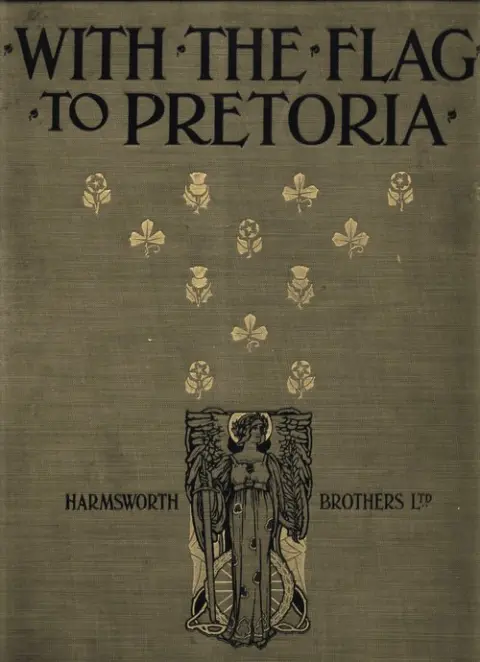
"With the Flag to Pretoria: A History of the Boer War of 1899-1900. Volume 1" by H. W. Wilson is a historical account written in the late 19th century. The book focuses on the Boer War, detailing the events, strategies, and political implications surrounding this conflict. This volume examines the early stages of the war, including the buildup to conflict and the initial battles that set the tone for subsequent struggles." "The opening of the book sets the stage for the Boer War by recounting the political tensions leading up to the conflict, particularly the Boer ultimatum that triggered hostilities. It details Britain's unpreparedness for the war, the historical context of colonization in South Africa, and the growing animosity between British and Boer factions. Key figures like President Kruger and British officials like Sir Alfred Milner are introduced, providing insight into their motivations and actions. The narrative flows into the early military engagements, highlighting the strategic and logistical challenges faced by British forces as they confronted the Boer troops, emphasizing the complexities of military tactics employed on both sides."
Introduction adapted from the source catalogue; source summaries may be automatically generated.
Free to read · English · 136,423 words · No account needed
MAKE TIME FOR A GOOD BOOK
On by default. Untick to stop anonymous reading totals. Each page counts after 10 seconds in view. How this works.
Anonymous counting is on unless you have switched it off.
The battle begins--Bombardment of Fort Wylie--Artillery pushed forward--The Boers open fire--The guns abandoned--General Hart's position--The Dublin Fusiliers attempt to ford the Tugela--Their retirement ordered--Failure to carry Hlangwane--Advance of Hildyard's Brigade--General withdrawal ordered--Death of Lieutenant Roberts--Guns and men captured by the Boers--Retirement effected in good order--Our losses--Scarcity of water--Bravery of the Army Medical Corps--Impressions of an eye-witness--Armistice--A day of blunders.
[Sidenote: The battle begins.]
Long before day broke the infantry began to move off in huge masses. The men were in the best and highest of spirits, expecting easy victory. To this cheerfulness the general opinion of the Staff that the enemy were on the point of retreating contributed greatly. Gradually the dense columns opened out into skirmishing order, and the eagerly-looked-for day began to break, radiant, clear, intensely hot, over the distant ridges of the Drakensberg.
[Sidenote: Bombardment of Fort Wylie.]
[Sidenote: DEC. 15, 1899.] Opening of the Battle.]
The crash of the naval 12-pounders, opening fire on Fort Wylie at 4,000 yards, began the battle at 4·45. They fired slowly till the day grew higher and all preparations were completed, when they poured in a terrific storm of shells and shrapnel. On their right the 14th and 66th Field Batteries and six naval 12-pounders under Colonel Long took up the bombardment. There was still no sign of life from the long, indistinct lines of Boer entrenchments, flickering through the heat-mist which rose under the burning sun from the parched ground. Far away and well out of range a few small groups of Boers could be made out through field-glasses, apparently watching the British artillery fire. So complete was the silence of the enemy that the conjecture that the position had been abandoned became almost a conviction.
[Sidenote: Artillery pushed forward.]
[Sidenote: The Boers open fire.]
[Sidenote: [DEC. 15, 1899.]
At this point, Colonel Long, with the artillery in the centre, determined to push closer in, where his 15-pounder field guns could fire with better effect, though he had received orders to keep his two batteries under cover of Barton's brigade, and only to use the naval 12-pounders at long range. He was, it would seem, fully under the impression that the enemy had retired, and refused to listen to the entreaties of one or two junior officers, who dreaded some trick on the part of the Boers. He was confirmed in this impression by two scouts whom he sent forward. One rode close up to the river bank; the other actually set foot on the road bridge without seeing a single enemy. This was a carefully calculated ruse of the Boers, and it succeeded. Confidently, Colonel Long directed the 14th and 66th Field Batteries and six naval guns under Lieutenant James to advance to a point barely 800 yards from the Tugela and 1,200 yards from Fort Wylie, crossing on the way two dongas. This position was more than a mile in front of the slowly advancing infantry of Hildyard's brigade. The two batteries galloped forward, outstripping their infantry escort; the naval guns followed more slowly, when suddenly a single shot rang out from one of the hills behind Colenso. It was the signal for the Boers to open fire. Instantly the whole northern bank of the river broke into flame with a fearful crackling and spluttering, above which could be heard the loud and heavy hammering of the Boer 1-pounder automatic guns. A deluge of projectiles from rifle, cannon, and machine gun descended upon Colonel Long's artillery. The gunners faced the storm with stubborn heroism, neither flinching from their work nor showing any undue haste. The guns were calmly unlimbered, picked up the range, and then opened fire on Fort Wylie. Two of the naval 12-pounders had crossed the rearmost donga, but all the oxen dragging these were in a moment killed or stampeded by the Boer fire, and the sailors had, perhaps luckily for them, to drag the weapons back to the other four 12-pounders, which now unlimbered and opened from a position considerably to the rear of Colonel Long's batteries. The great 4·7's, far behind, gave all the aid they could in beating down the fire of Fort Wylie. The Boer works, at this point, were wreathed in one continuous cloud of smoke from the bursting shells. With the dense green fumes which the lyddite projectiles scattered as they exploded, it seemed as though the hill had broken bodily into flame and was being consumed by subterranean fires. Yet in the midst of this cyclone of death the Boer gunners, behind their earthworks, worked their guns as steadfastly as the British gunners. The latter, unhappily, stood in the open space before Colenso with half-a-mile of smooth open ground behind them--a splendid target at close range.
Your reading position is saved on this browser. Take it to another device with a library code. Reading pages adapt to text, rather than matching a printed edition.
BEHIND THE BOOK
This eBook is for the use of anyone anywhere in the United States and most other parts of the world at no cost and with almost no restrictions whatsoever. You may copy it, give it away or re-use it under the terms of the Project Gutenberg License included with this eBook or online at www.gutenberg.org. If you are not located in the United States, you will have to check the laws of the country where you are located before using this eBook. Read the source licence.
The original source file, including credits and licence, is retained by this library. Request an original-format copy at no charge. Please include the book title and Project Gutenberg identifier #48534.
KEEP YOUR CURIOSITY GOING
Cécile Tormay

Moritz Busch
John L. Ransom
Frances Wright
Cécile Tormay

Mabel Potter Daggett