THE CLASSIC COLLECTION✦Building the pacific railwayCLASSIC FREE BOOKS
Building the pacific railway
Edwin L. (Edwin Legrand) Sabin
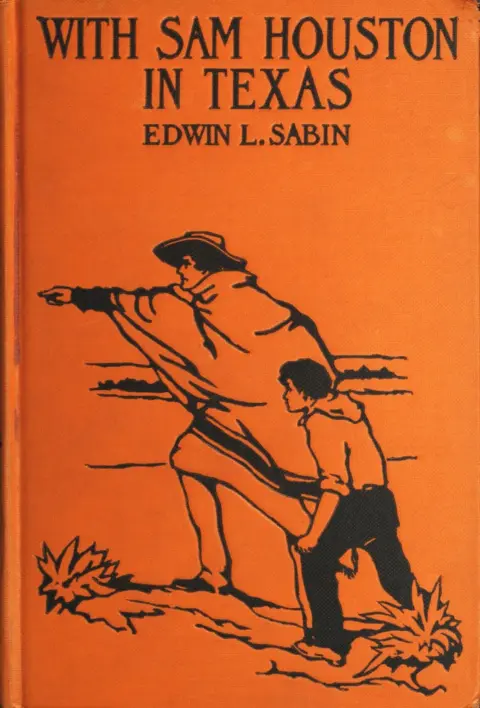
THE CLASSIC COLLECTION · 1916
"With Sam Houston in Texas" by Edwin L. Sabin is a historical account written in the early 20th century. The book focuses on the adventurous tales surrounding the life of Sam Houston during the Texas struggle for independence from Mexico, highlighting the events of 1835-1836 through the eyes of a young volunteer named Ernest Merrill. The narrative endeavors to depict the heroic actions and pivotal decisions that led to the establishment of Texas as an independent republic. The opening of the story introduces readers to Ernest Merrill, who is traveling on a steamboat named "Arkansas" headed to Fort Gibson. The boat becomes stuck on a mud-bar, showcasing the challenges of travel during that era. Among the passengers is Lieutenant Neal, who takes an interest in Ernest's journey. Their encounter with a Texan named Dick Carroll reveals the escalating tensions in Texas and the lure of land and opportunity, setting the stage for Ernest's involvement in the struggles for Texas independence. Moreover, the early chapters establish the character of Sam Houston, referenced as a figure of great importance and destiny for the future of Texas. As Ernest navigates through his adventures, the reader gains insight into the historical significance and colorful personalities of this critical time in American history.
Introduction adapted from the source catalogue; source summaries may be automatically generated.
Free to read · English · 99,392 words · No account needed
MAKE TIME FOR A GOOD BOOK
On by default. Untick to stop anonymous reading totals. Each page counts after 10 seconds in view. How this works.
Anonymous counting is on unless you have switched it off.
“I done told you, I done told you,” reiterated Jim.
The mist was so thick that each man barely could see his neighbor; but from the near distance an officer called:
“Steady, boys. They can’t see any better than we can.”
Colonel Bowie hustled through the fog.
“Where were those shots fired?” he queried right and left.
“Straight yonder, colonel,” they directed, as he passed.
“Fall in, all of you,” he ordered; and the word sped.
But the colonel did not go far. Another figure, coming running, met him. By the voice it was Henry Karnes, breathless.
“Mexicans out thar, colonel,” he reported. “Don’t know how many, but a hull platoon charged me jest as I was relieved, an’ I gin ’em a mornin’ pill from ol’ Sal; they skedaddled, an’ another tried same trick, so I gin ’em a dose from my pistol, an’ they skedaddled, too.”
“Bet one didn’t skedaddle,” said Jim, to Ernest. “That Henry can hit a nail-head with his eyes shut.”
“Silence in the ranks,” ordered an officer; and the men easily laughed. They were not a whit afraid.
The line of this division had been formed along the natural parapet where bottom-land met prairie on the left; and across at the right the other division under Captain Fannin had probably likewise been formed.
“Steady,” passed the word. “Wait till the fog lifts, boys.”
“Gee, wish I could see,” complained Ernest, beside Jim, trying to stand on tiptoe so as to peek over the edge of the little bluff.
“I opine that fog out there’s plumb full of Mexican soldiers,”
predicted Jim again.
“Move across to the other side, boys,” was the next order. “The colonel wants us to join lines with Fannin, so we won’t be shooting into each other. Then if those Mexicans charge in here we can everlastingly wallop ’em.”
So in spectral procession they changed to the Captain Fannin side, and the double ranks now extended around the inside of the horseshoe, from the parapet front to the river.
“Clear away the brush, boys, under foot and on top, so we can move and see to shoot; and where the bank’s too high to look over, dig toe-holds for yourselves.”
From in front muskets were hammering away, as the Mexicans proceeded to shoot blindly into the fog.
“They must think they’re going to scare us out by noise,” asserted Jim, while he and Ernest and their comrades tore and slashed and dug. “They’ve got cannon, too, all right enough. Those were the wheels I heard squeaking.”
Your reading position is saved on this browser. Take it to another device with a library code. Reading pages adapt to text, rather than matching a printed edition.
Edwin L. (Edwin Legrand) Sabin

Edwin L. (Edwin Legrand) Sabin

Edwin L. (Edwin Legrand) Sabin

Edwin L. (Edwin Legrand) Sabin
BEHIND THE BOOK
This eBook is for the use of anyone anywhere in the United States and most other parts of the world at no cost and with almost no restrictions whatsoever. You may copy it, give it away or re-use it under the terms of the Project Gutenberg License included with this eBook or online at www.gutenberg.org. If you are not located in the United States, you will have to check the laws of the country where you are located before using this eBook. Read the source licence.
The original source file, including credits and licence, is retained by this library. Request an original-format copy at no charge. Please include the book title and Project Gutenberg identifier #62898.
KEEP YOUR CURIOSITY GOING
Cécile Tormay

Moritz Busch
Coulson Kernahan
John L. Ransom

Maurice Baring
Frances Wright