THE CLASSIC COLLECTION✦Building the pacific railwayCLASSIC FREE BOOKS
Building the pacific railway
Edwin L. (Edwin Legrand) Sabin
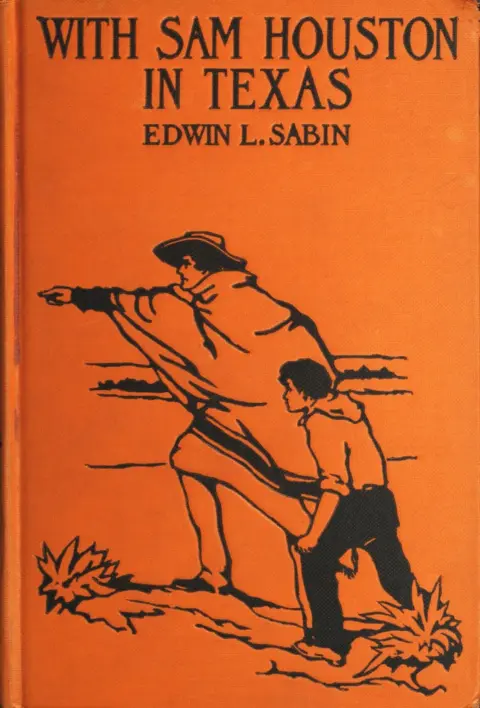
THE CLASSIC COLLECTION · 1916
"With Sam Houston in Texas" by Edwin L. Sabin is a historical account written in the early 20th century. The book focuses on the adventurous tales surrounding the life of Sam Houston during the Texas struggle for independence from Mexico, highlighting the events of 1835-1836 through the eyes of a young volunteer named Ernest Merrill. The narrative endeavors to depict the heroic actions and pivotal decisions that led to the establishment of Texas as an independent republic. The opening of the story introduces readers to Ernest Merrill, who is traveling on a steamboat named "Arkansas" headed to Fort Gibson. The boat becomes stuck on a mud-bar, showcasing the challenges of travel during that era. Among the passengers is Lieutenant Neal, who takes an interest in Ernest's journey. Their encounter with a Texan named Dick Carroll reveals the escalating tensions in Texas and the lure of land and opportunity, setting the stage for Ernest's involvement in the struggles for Texas independence. Moreover, the early chapters establish the character of Sam Houston, referenced as a figure of great importance and destiny for the future of Texas. As Ernest navigates through his adventures, the reader gains insight into the historical significance and colorful personalities of this critical time in American history.
Introduction adapted from the source catalogue; source summaries may be automatically generated.
Free to read · English · 99,392 words · No account needed
MAKE TIME FOR A GOOD BOOK
On by default. Untick to stop anonymous reading totals. Each page counts after 10 seconds in view. How this works.
Anonymous counting is on unless you have switched it off.
“What?” he demanded. “That? Horse drinking――or maybe a coyote tuning up. Go to sleep. We’ve got plenty sentries.” And he irritably pulled his wet, heavy blanket higher, over his chin, for the dense fog was thrusting its clammy fingers down his neck.
“Sounds to me like one of those Mexican carts squeaking,” asserted Jim. “Don’t hear it now, but I’ve been hearing it, I tell you. If it wasn’t for those sentries I’d say that Cos was crossing a cannon through the river.”
“Well, Henry Karnes is out on guard, and he’ll hear things if anybody can,” retorted Ernest. “So will those fellows in the cupola.” And as fast as possible he took another cat-nap.
Next he was awakened for keeps. In his ears echoed a shrill Texas “Whoo-ee!”――as from a distance. Up and down the lines of prone figures word was being passed for all to tumble out.
“Somebody yelled from the cupola!” babbled Jim, likewise awake, as he and Ernest struggled to sit up and pull on their damp boots. Ghostly figures on either side were doing the same. “That’s an alarm. I heard what I heard and they heard what I heard and I heard what they heard, I reckon.”
The fog upon the camp was astir, but all movements and voices were hushed by the heavy mist. The appointed mess cooks had been busy for some time, evidently; camp-fire smoke and the fragrance of coffee wafted pleasingly through the heavy air.
“Aren’t attacked yet, are we?” stammered Ernest.
“No. The fog out yonder’s full of Mexicans, though, I ’low. Hope it holds till we get our coffee. Come on.”
Exchanging brief comments, and listening tensely, the men hastily drank their coffee, and munched their bread and beef. If the Mexicans were surrounding them, it was being done very quietly. However, more than one in the camp had thought he had heard suspicious sounds. And that cry from the cupola!
“There goes the change of guard,” remarked Jim, as he and Ernest finished breakfast, still in the fog. “We-all don’t move till the fog raises.”
Scarcely had he spoken, when from the front, where in the mist the prairie abruptly fell to the bottom-land, broke a quick muffled spatter of shots――followed at once by the single, smarter report of a rifle.
“Ball’s opened!” shouted someone in the little mess; and every member grabbed his gun and scrambled to his feet.
“Muskets, first, that was; then a rifle.”
“Bang!” Another single shot.
“Pistol, this time, boys. Out Henry Karnes’s way. Alerte, everybody!”
Ernest stood aquiver, peering. Peered all.
Your reading position is saved on this browser. Take it to another device with a library code. Reading pages adapt to text, rather than matching a printed edition.
Edwin L. (Edwin Legrand) Sabin

Edwin L. (Edwin Legrand) Sabin

Edwin L. (Edwin Legrand) Sabin

Edwin L. (Edwin Legrand) Sabin
BEHIND THE BOOK
This eBook is for the use of anyone anywhere in the United States and most other parts of the world at no cost and with almost no restrictions whatsoever. You may copy it, give it away or re-use it under the terms of the Project Gutenberg License included with this eBook or online at www.gutenberg.org. If you are not located in the United States, you will have to check the laws of the country where you are located before using this eBook. Read the source licence.
The original source file, including credits and licence, is retained by this library. Request an original-format copy at no charge. Please include the book title and Project Gutenberg identifier #62898.
KEEP YOUR CURIOSITY GOING
Cécile Tormay

Moritz Busch
Coulson Kernahan
John L. Ransom

Maurice Baring
Frances Wright