THE CLASSIC COLLECTION✦Andersonville diaryCLASSIC FREE BOOKS
Andersonville diary
John L. Ransom
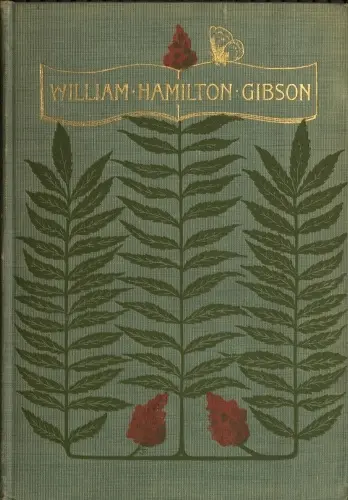
THE CLASSIC COLLECTION · 1901
"William Hamilton Gibson: artist—naturalist—author" by John Coleman Adams is a biographical account written in the early 20th century. This work delves into the life and contributions of William Hamilton Gibson, a notable figure in the fields of art and naturalism, highlighting his journey and the timeless influence he had on nature appreciation in America. The book not only recounts Gibson's achievements as an artist but also elucidates his philosophy and passion for nature. The opening of the work introduces Gibson's early life, emphasizing the fortunate circumstances of his upbringing in Sandy Hook, Connecticut, a region characterized by its picturesque landscapes. It sets the tone by celebrating the idyllic childhood memories that sparked his lifelong love for nature and art. As it unfolds, the narrative begins to describe Gibson's formative years at a unique boarding school known as the Gunnery, where he nurtured his innate artistic talent and developed a profound appreciation for the natural world. Through these early experiences, readers are invited to witness the events and influences that shaped Gibson into a prominent artist-naturalist, foreshadowing the compelling stories yet to come.
Introduction adapted from the source catalogue; source summaries may be automatically generated.
Free to read · English · 67,045 words · No account needed
MAKE TIME FOR A GOOD BOOK
On by default. Untick to stop anonymous reading totals. Each page counts after 10 seconds in view. How this works.
Anonymous counting is on unless you have switched it off.
Of all the great nature students of our time, Richard Jeffries ranks as the one most closely in touch with the sub-human world, the earth and all the life it bears in and on its bosom. His whole soul seems exquisitely in tune with the cosmos. He breathes with the respirations of the earth; he sighs with the breath of the winds; his senses and his thoughts sway with the bending of the grain and the waving of the tree-tops. “To know him,” says his eulogist, Mr. Ellwanger, “is to approach nearer the heart of the flower, the mystic concave of the sky, and the elusive verge of the horizon.” But in this respect he has a peer in William Hamilton Gibson. No man ever lived on friendlier terms with nature. As close, as accurate, as patient in his observation as any of the classic characters in nature love, he has a distinction all his own, a peculiar personal attitude toward all extra-human life. He feels and he expresses a sort of fellowship with life in other than human form. He accepts the lesser things as little brothers and sisters of the human. He gives the right hand of fellowship to whatever has life. He humanizes, if one may so term it, the life which lies below man’s in the vital scale. What writer since the days of the primeval fairy tales ever brought the worlds of human life and other life so near each other? He seems a modern Siegfried, into whose ears the birds talk, and the grass whispers as it grows. When he comes back from an exploration into the insect realm close to his own doorstep, he reports what he has seen and heard precisely as if he were recounting the talk and doings of his own kind. He translates this life of beetle and spider and bee and ant and bird into the terms of human life and activity. He makes all life seem related to our lives, all being to appear of one substance, all to be worthy of interest, sympathy, love, and reverence. More than any other mind of his generation he leads us to feel that kinship of all life which Drummond has asserted in “The Ascent of Life,” and which Professor Shaler has condensed into a phrase in calling it “The Bond of the Generations.” That was a shrewd and sagacious disclosure of character, as well as a bit of fun, which led his mother to write, in the letter already quoted, “How are your friends and dear companions, the worms?” He was on terms of friendship with all living things. But to any mind at all sensitive to the real and deeper meaning of nature, to its spiritual origin, its profound unity, this underlying affinity of all its forms of life, there was a bit of true philosophy in the mother’s comment. It was certainly truer and wiser than the criticism once made upon his intellectual temperament in the columns of the “Tribune.” “So thoroughly,” said this reviewer, “was he absorbed in the life of the humbler animals and plants that one suspects he was quite out of his element elsewhere. He was incapable of assigning them a relative place. To him they were always supreme. And because they were supreme they were colored and transformed by his humanizing and anthropomorphizing whimseys. He was always reading into them his own charming qualities of mind and heart, at the same time that he was imitating their own quickness and alertness. Indeed, natural life always appealed not so much to his imagination as to his fancy. He was absorbed in nature as a child is absorbed in its playthings. With all his minuteness of knowledge, he never fully and unqualifiedly faced the two great facts of the natural world, the struggle for existence, and the survival of the fittest. He exaggerated and instinctively transformed the natural world, and to the using of it as the source and stimulus of his own acute poetic ingenuity, devoted all his energies and interest.” The criticism is brilliant, but superficial; and its kindly temper does not atone for its total injustice and perversion of values. It is pure assumption, in the first place, to call the “struggle for existence, and the survival of the fittest” “the two great facts of the natural world.” Who authorizes the ranking of those facts as prime or principal? Why not assign the highest place to the continuity of life, and the conservation of advantages, and the advance of types? These are quite as impressive facts as those others. And if they are suggestive of quite other inferences neither Gibson nor any nature lover need be disparaged for choosing to dwell upon those inferences. If he, like a growing company of later students and observers, was impressed with the fraternity of all lives, great and small, with the analogies between the human and the dumb creation, and felt the kinship of even insects and birds, with their later and more favored human cousins,--if we may not use a closer term,--why should this keener insight be called a “whimsey,” and this deeper divination a “fancy”? And because he had a nature which thrilled and fired with the delight of knowledge and all the mental activity which it sets in motion, why should he be accused of using his growing store of that knowledge as a wine to warm his fancy and a spur to the making of similes? The fact is, Gibson not only saw and faced the law of struggle and of survival, but he saw a great deal more. And if he did not dwell upon these facts with the lugubrious emphasis which characterized so many of his contemporaries in science, it was not because he saw them out of relation, but in truer and clearer perspective. There has been too little sympathy, too little of the “humanizing and anthropomorphizing” spirit in scientific research. Gibson was a prophet, in advance of his day. What he was doing is fast becoming the dominant spirit of investigators. And many more laws and principles will be laid bare when men come to realize that all living things are of one blood, than are to be discerned through the cold and unsympathetic gaze of old-fashioned science. Gibson’s habit, moreover, was not a “humanizing” of animal and plant life, in the sense of trying to force our life upon theirs, attributing human thoughts and aims and feelings to the lower creation. It was rather an effort to link their life to ours, by insight, sympathy, and study. He simply made men feel the kinship of all living things. In that he was fully in the spirit of the most advanced science. He believed thoroughly in the truth contained in a sentence which he quoted from “the rapt philosopher of Walden”: “Man cannot afford to be a naturalist and look at nature directly. He must look through and beyond her. To look at her is as fatal as to look at the head of Medusa. It turns the man of science to stone.”
Your reading position is saved on this browser. Take it to another device with a library code. Reading pages adapt to text, rather than matching a printed edition.
BEHIND THE BOOK
This eBook is for the use of anyone anywhere in the United States and most other parts of the world at no cost and with almost no restrictions whatsoever. You may copy it, give it away or re-use it under the terms of the Project Gutenberg License included with this eBook or online at www.gutenberg.org. If you are not located in the United States, you will have to check the laws of the country where you are located before using this eBook. Read the source licence.
The original source file, including credits and licence, is retained by this library. Request an original-format copy at no charge. Please include the book title and Project Gutenberg identifier #55690.
KEEP YOUR CURIOSITY GOING
John L. Ransom

Herman W. Mudgett

Harriet Monroe
Daniel Dulany Addison
Charles Lanman

Harold Rosher