THE CLASSIC COLLECTION✦Andersonville diaryCLASSIC FREE BOOKS
Andersonville diary
John L. Ransom
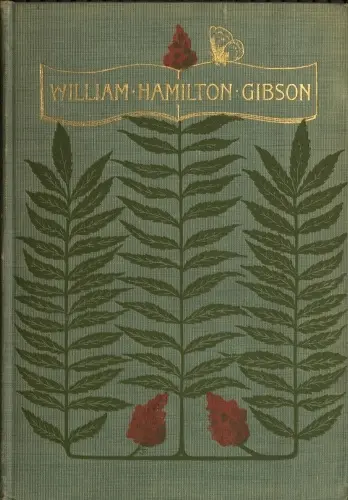
THE CLASSIC COLLECTION · 1901
"William Hamilton Gibson: artist—naturalist—author" by John Coleman Adams is a biographical account written in the early 20th century. This work delves into the life and contributions of William Hamilton Gibson, a notable figure in the fields of art and naturalism, highlighting his journey and the timeless influence he had on nature appreciation in America. The book not only recounts Gibson's achievements as an artist but also elucidates his philosophy and passion for nature. The opening of the work introduces Gibson's early life, emphasizing the fortunate circumstances of his upbringing in Sandy Hook, Connecticut, a region characterized by its picturesque landscapes. It sets the tone by celebrating the idyllic childhood memories that sparked his lifelong love for nature and art. As it unfolds, the narrative begins to describe Gibson's formative years at a unique boarding school known as the Gunnery, where he nurtured his innate artistic talent and developed a profound appreciation for the natural world. Through these early experiences, readers are invited to witness the events and influences that shaped Gibson into a prominent artist-naturalist, foreshadowing the compelling stories yet to come.
Introduction adapted from the source catalogue; source summaries may be automatically generated.
Free to read · English · 67,045 words · No account needed
MAKE TIME FOR A GOOD BOOK
On by default. Untick to stop anonymous reading totals. Each page counts after 10 seconds in view. How this works.
Anonymous counting is on unless you have switched it off.
The birth of the spring; from perpetual snow on mountain peaks; dew; mist and cloud; storm cloud.
Rain Cloud dragging its veil on mountain-top. (See quotation from Ruskin in note-book). Poetic simile of mountain “Light of Asia” (227). Storm on mountain.
Hovering Mist and Cloud. Lifting and creeping in fantastic forms, above the lake. Wild Mountain Pass. Hermit’s Ravine. See reference. Ruskin in literary memorandum. Shelley’s “Cloud.”
Mountain Veterans. Gnarled spruces.
Mountain Flowers. The heath family, clothing the rugged mountains.
Mountain Fruits. “Propitiating the Mountain-gods
by a sacrifice of their fruits.” Thoreau. Supper of blue-berries.
Thoreau.
The Trickling Mountain Spring. “Amy’s Grotto.”
A Dewdrop on leaf (vignette-idea; or tail-piece).
Primeval Elements. Indian Legends, etc. Story of a Fountain. Primeval spring and incident. Hawthorne.
A Trickling Passage. Drops trickling down a spray of Fumitory (Adlumia)
over rock.
A Recluse. A shy wood flower.
Indian Pipe--legend?
Loiterings among mossy boulders and ferns.
The Wood-bird’s Bath.
The Harebell.
A Fungus. Some beautiful specimen of Hydnum Agaricum or--
Through the Mossy Groove (bole)--to the old Trough.
Water Trough. This subject must come in book. Make view from above conduit, and looking out through verdure upon road from back of trough. See Hawthorne’s “Town Pump.” “David Swan.”
Waste Water Running along road and under. Plank Bridge (with roadside ford) bordered with tall Galingales, Cat-tails etc.
The Meadow Stream (place after mountain-lake?)
The Meadow Rue (shadow or silhouette).
Sensitive Fern (one of the most antiquated forms of existing ferns).
Cardinal Flower.
A Border Tangle. Galium. Rue.
Coils of Gold. The Jewel-weed (or some other plant). Strangled by the golden dodder. The dodder is mentioned in Lowell’s “Threnodia” as an emblem of love. It is a questionable sort of love that hangs on by the teeth. “Deadly gripe of gold” (Hawthorne).
Hemlock cones and Chickadees.
An Ambuscade. Leaf-nest of large Arachnid.
The Alders.
Gathering Cowslip-greens (combine with picture of plant).
The Trout Brook
The Angler. (Consult Izaak Walton. “Contemplative Man’s Recreation.”)
Beauties (good subject for tail-piece).
The Water-mill. Children playing with toy-wheel. See sketch made at
Cumberland, Me.
A Trickling Flume. A mossy flume perched on tall beams, embowered in leafy branches and overgrown with weeds. See photo and sketch of “Haunted Mill” with mill in distance.
The Sawmill (combine cider-mill with same? Washington).
“Highland Stream tamed by human cunning.” Hawthorne.
Riding on Sawmill Carry. Children riding out over abyss on the
log-carry.
Under the Mill (old wheel, etc.).
Sheepwashing.
Life under the Water. (Crawfish; leopard-frog, etc.) Under the Water. Battle of dragon-fly and lizard. Caddis-worms and nests.
The Slender Foot-bridge--“Dangerous passage.” Bubby fishing; three or four minnows on string. Lovers.
Your reading position is saved on this browser. Take it to another device with a library code. Reading pages adapt to text, rather than matching a printed edition.
BEHIND THE BOOK
This eBook is for the use of anyone anywhere in the United States and most other parts of the world at no cost and with almost no restrictions whatsoever. You may copy it, give it away or re-use it under the terms of the Project Gutenberg License included with this eBook or online at www.gutenberg.org. If you are not located in the United States, you will have to check the laws of the country where you are located before using this eBook. Read the source licence.
The original source file, including credits and licence, is retained by this library. Request an original-format copy at no charge. Please include the book title and Project Gutenberg identifier #55690.
KEEP YOUR CURIOSITY GOING
John L. Ransom

Herman W. Mudgett

Harriet Monroe
Daniel Dulany Addison
Charles Lanman

Harold Rosher