THE CLASSIC COLLECTION✦Andersonville diaryCLASSIC FREE BOOKS
Andersonville diary
John L. Ransom
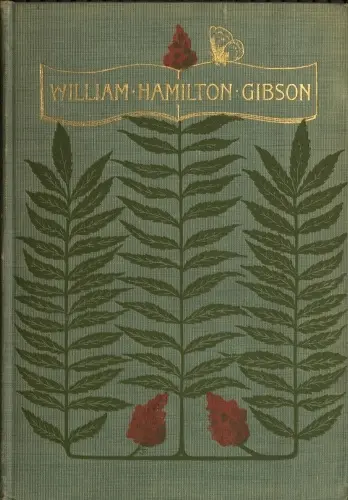
THE CLASSIC COLLECTION · 1901
"William Hamilton Gibson: artist—naturalist—author" by John Coleman Adams is a biographical account written in the early 20th century. This work delves into the life and contributions of William Hamilton Gibson, a notable figure in the fields of art and naturalism, highlighting his journey and the timeless influence he had on nature appreciation in America. The book not only recounts Gibson's achievements as an artist but also elucidates his philosophy and passion for nature. The opening of the work introduces Gibson's early life, emphasizing the fortunate circumstances of his upbringing in Sandy Hook, Connecticut, a region characterized by its picturesque landscapes. It sets the tone by celebrating the idyllic childhood memories that sparked his lifelong love for nature and art. As it unfolds, the narrative begins to describe Gibson's formative years at a unique boarding school known as the Gunnery, where he nurtured his innate artistic talent and developed a profound appreciation for the natural world. Through these early experiences, readers are invited to witness the events and influences that shaped Gibson into a prominent artist-naturalist, foreshadowing the compelling stories yet to come.
Introduction adapted from the source catalogue; source summaries may be automatically generated.
Free to read · English · 67,045 words · No account needed
MAKE TIME FOR A GOOD BOOK
On by default. Untick to stop anonymous reading totals. Each page counts after 10 seconds in view. How this works.
Anonymous counting is on unless you have switched it off.
“Even the powdery chaff which I blew away in order to better reveal the larger morsels, proved to be the fine seed of various grasses and sedges; while among the more conspicuous which remained I noted the following considerable list, not to mention others which were then beyond my limited botanical knowledge. The seeds of the alder, birch, hemlock, ragweed, bur-marigold, and wild-carrot, were, perhaps, the most numerous and general. There was an exclusive colony of dried grapes assembled in one particular corner, doubtless laying their plans for a future arborescent monopoly of the rails in their vicinity. I found, also, numbers of larch seeds, both with and without their wings. Stag-horn-sumach, poison-ivy, ash, and hop-hornbeam representatives were frequent, and one chaffy handful, downy with goldenrod and aster seeds was lit up with a bright scarlet berry of black alder, like a tiny live coal in a bed of ashes. There was an occasional withered poke-berry to be met with, also fruits of sheep-berry, ampelopsis, juniper, and hawthorn. Another sample challenged my audacious familiarity with the fangs of a Cenchrus bur--the spiny fruit of the hedgehog grass, and still another was pretty well doctored with the poisonous seeds of stramonium, or jimson-weed, a line of which followed along the base of a drift like an open trail fuse of blasting powder leading up to a drill hole well calked with chaff. I recall also a few samaras of the tulip-tree, some hazel-nuts, oats, foxtail-grass seed, as well as several other queer diminutive forms which were unknown to me at the time, and which I cannot now identify from memory.”
If we were to name the quality most characteristic of his work as a naturalist, it would be his habit of close and accurate observation. He saw more of the objects and incidents of the natural world in a square rod, than most men, even fairly observant, would see in a square mile. His books are a mass of evidence of the minuteness and the accuracy of his observations; and his note-books tell with still greater force the story of his patience and industry in preparing himself to report what he had seen. They show that he looked and saw for himself, and that his stories of plant and insect life are genuine studies, at first hand. A fine instance of the personal observation and actual experience which lay behind his work is afforded in the case of the chapter upon the “Bombardier-Beetle” in “Sharp Eyes.” It is but a brief sketch, and reports only a curious performance on the part of a rather rare insect. But the observed facts on which it is based are set down in a record almost as long as the sketch itself, and in a manner to show the foundation of close attention and scrutiny to which he was continually subjecting the face of the earth. He writes under date of September 28th, at Williamstown, Massachusetts. The note begins with a memorandum to the effect that he carried his camera, with four plates, and that he observed tumble-bugs, ichneumon flies, and dung beetles. “In turning over a large stone, as is my habit in my walks, I discerned beneath it a little beetle which I at first supposed to be the common species, so closely resembling the Bombardier beetle of Europe. I had no special desire to capture it, and as it escaped beneath the grass and debris, my attention was arrested by a series of queer detonations, which made me suspect that some kind of a toad lay concealed near by. As I rummaged among the leaves I heard the queer report right at my fingers’ ends, and at the same time noticed a tiny cloud of smoke emerging from the same quarter. The fact then dawned upon me that perhaps I had discovered a genuine Bombardier. A moment’s search revealed the little fellow, and he discharged his battery six times or so. I captured him. I have not yet read of this species having been discovered in America. And certainly the allied species of this country possess no such detonating power. Before the detonation the body of the beetle would swell considerably. I kept the beetle and several of its allied species in a box some weeks afterward, and observed the explosion several times. Mrs. Gibson also heard it once and distinctly saw the small cloud of smoke of the volatile fluid. About two days after the capture of the Bombardier, I espied a beetle crawling on the floor of my room, and thinking that my pet had escaped I captured the insect. It proved to be another of the same species, but evidently of the other sex, and it was undoubtedly seeking for its imprisoned mate. There are numerous parallel instances in my own experience, but in this instance it is especially remarkable that I should find a second individual of a species so rare in America that I had never been able to find one before; and although I overturned at least a thousand stones during my stay in Williamstown, I was never able to discover another specimen.”
Your reading position is saved on this browser. Take it to another device with a library code. Reading pages adapt to text, rather than matching a printed edition.
BEHIND THE BOOK
This eBook is for the use of anyone anywhere in the United States and most other parts of the world at no cost and with almost no restrictions whatsoever. You may copy it, give it away or re-use it under the terms of the Project Gutenberg License included with this eBook or online at www.gutenberg.org. If you are not located in the United States, you will have to check the laws of the country where you are located before using this eBook. Read the source licence.
The original source file, including credits and licence, is retained by this library. Request an original-format copy at no charge. Please include the book title and Project Gutenberg identifier #55690.
KEEP YOUR CURIOSITY GOING
John L. Ransom

Herman W. Mudgett

Harriet Monroe
Daniel Dulany Addison
Charles Lanman

Harold Rosher