THE CLASSIC COLLECTION✦Andersonville diaryCLASSIC FREE BOOKS
Andersonville diary
John L. Ransom
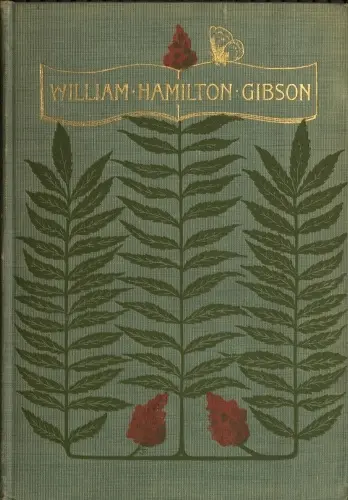
THE CLASSIC COLLECTION · 1901
"William Hamilton Gibson: artist—naturalist—author" by John Coleman Adams is a biographical account written in the early 20th century. This work delves into the life and contributions of William Hamilton Gibson, a notable figure in the fields of art and naturalism, highlighting his journey and the timeless influence he had on nature appreciation in America. The book not only recounts Gibson's achievements as an artist but also elucidates his philosophy and passion for nature. The opening of the work introduces Gibson's early life, emphasizing the fortunate circumstances of his upbringing in Sandy Hook, Connecticut, a region characterized by its picturesque landscapes. It sets the tone by celebrating the idyllic childhood memories that sparked his lifelong love for nature and art. As it unfolds, the narrative begins to describe Gibson's formative years at a unique boarding school known as the Gunnery, where he nurtured his innate artistic talent and developed a profound appreciation for the natural world. Through these early experiences, readers are invited to witness the events and influences that shaped Gibson into a prominent artist-naturalist, foreshadowing the compelling stories yet to come.
Introduction adapted from the source catalogue; source summaries may be automatically generated.
Free to read · English · 67,045 words · No account needed
MAKE TIME FOR A GOOD BOOK
On by default. Untick to stop anonymous reading totals. Each page counts after 10 seconds in view. How this works.
Anonymous counting is on unless you have switched it off.
“May you have many long years to continue making the world happier, and may you receive as much sunshine in your own life as you have given others.
“Yours most sincerely,
The other letter is from his pastor:
“To me you are an interpreter of a word of God which is both older and newer than the one to the interpretation of which I have given my life. You have enabled a vaster congregation than any minister ever speaks to, to see in it a meaning before unseen, if not unsuspected. I am one of your congregation and I am your debtor for lessons, not merely of beauty, but of truth and purity, which cannot be put into words. In interpreting Nature you bring us nearer to God and the eternal beauty and goodness. For this, no less than for the autograph which hangs on our walls Mrs. Abbott and I heartily thank you.
“Yours sincerely,
LYMAN ABBOTT.
“70 COLUMBIA HEIGHTS,
7 April, 1888.”
Gibson was a warm partisan of water-color as a medium of artistic expression. He believed thoroughly in the possibilities of that mode of painting, which, it will be noted, was by no means understood or well-developed in this country when he was beginning to paint. His views in reference to it are well set forth in a letter to his mother, describing his first picture for the Water Color Society’s exhibition, written in the winter of 1874. He says:
“I am at present busily engaged on my water-color painting for the coming Spring exhibition. It is only just under way, but all who have seen it express much pleasure and enthusiasm at it and particularly admire my selection of a subject. It would be difficult to find a subject calculated to create such popular favor, and you know that a good selection in this particular is ‘half the battle.’ The idea is this: Subject, a ‘Struggle for Life.’ It is indicated by an old, old tree (an oak if you please) growing under all possible disadvantages, and besieged with a host of parasitic growths which threaten to sap its vitality and hasten its death. The trunk and main portion of a few branches only are shown and but one or two of them are possessed of any leafage. The near portion is devoid of bark and the exposed wood, by the action of the weather without and decay within, has become stained and broken. The interior is hollow, and the rich brown debris of its decomposing wood falls through a large irregular opening at the base of the trunk, and then spreading itself on a moss and lichen covered rock becomes the prey to brilliantly colored fungi and mother to many ferns. The tree is supposed to have started life near a rock and in the course of time its roots have grown over its surface and again by the action of time and other causes are now bare of bark and some of them dead. Higher in the tree, an unsightly gaping hollow presents itself, left after the fall of some dead and useless limb and this, collecting the rain water from each successive shower, has caused the gradual undermining of the tree and hurried it to its approaching death. Close beneath this opening, true to nature, sapping what little life blood still circulates in the part clings a luxuriant clump of the deadly agaric (touch wood) which may so often be seen on trees that have passed their better days. These are not all the burdens under which this aged subject is struggling. The mistletoe has fastened itself upon its only living branch, and parasitic vines innumerable clamber up and surround the trunk in their ‘deadly embrace.’ A brightly colored woodpecker has just alighted on the dying tree and finds food in plenty in the substance of decay. The whole picture is intended to suggest the idea of a struggle, and I know that I can make it so plain that anyone will realize my intention. A little pool of rain water lies at the foot of the rock and touching the roots which will give an additional effect of reflection, and what with this, the warm coloring of dried fallen leaves relieved by a group of delicate ferns, and other like growths, together with a strong play of sunlight on the whole, I see no reason why the picture should not be a good success and feel equal to rendering all that my imagination suggests and pictures. I have only just commenced, but enough is even now suggested to insure an at least attractive result. I have selected the medium of water-color because I believe that more can be done with that than most people are aware. I can work faster with water-color and secure just as brilliant effect as I could in oils. People in general do not know how much can be done with water-color, and I hope that I may live to show them.”
Your reading position is saved on this browser. Take it to another device with a library code. Reading pages adapt to text, rather than matching a printed edition.
BEHIND THE BOOK
This eBook is for the use of anyone anywhere in the United States and most other parts of the world at no cost and with almost no restrictions whatsoever. You may copy it, give it away or re-use it under the terms of the Project Gutenberg License included with this eBook or online at www.gutenberg.org. If you are not located in the United States, you will have to check the laws of the country where you are located before using this eBook. Read the source licence.
The original source file, including credits and licence, is retained by this library. Request an original-format copy at no charge. Please include the book title and Project Gutenberg identifier #55690.
KEEP YOUR CURIOSITY GOING
John L. Ransom

Herman W. Mudgett

Harriet Monroe
Daniel Dulany Addison
Charles Lanman

Harold Rosher