THE CLASSIC COLLECTION✦Andersonville diaryCLASSIC FREE BOOKS
Andersonville diary
John L. Ransom
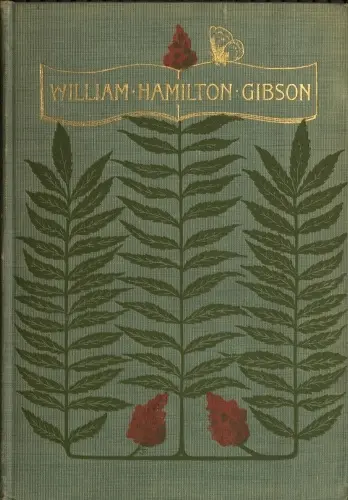
THE CLASSIC COLLECTION · 1901
"William Hamilton Gibson: artist—naturalist—author" by John Coleman Adams is a biographical account written in the early 20th century. This work delves into the life and contributions of William Hamilton Gibson, a notable figure in the fields of art and naturalism, highlighting his journey and the timeless influence he had on nature appreciation in America. The book not only recounts Gibson's achievements as an artist but also elucidates his philosophy and passion for nature. The opening of the work introduces Gibson's early life, emphasizing the fortunate circumstances of his upbringing in Sandy Hook, Connecticut, a region characterized by its picturesque landscapes. It sets the tone by celebrating the idyllic childhood memories that sparked his lifelong love for nature and art. As it unfolds, the narrative begins to describe Gibson's formative years at a unique boarding school known as the Gunnery, where he nurtured his innate artistic talent and developed a profound appreciation for the natural world. Through these early experiences, readers are invited to witness the events and influences that shaped Gibson into a prominent artist-naturalist, foreshadowing the compelling stories yet to come.
Introduction adapted from the source catalogue; source summaries may be automatically generated.
Free to read · English · 67,045 words · No account needed
MAKE TIME FOR A GOOD BOOK
On by default. Untick to stop anonymous reading totals. Each page counts after 10 seconds in view. How this works.
Anonymous counting is on unless you have switched it off.
The “Memorial” was published in 1887, and he went on with the articles and the water-colors, busy all the time, and always laying out work in advance of his swiftest execution. The spring of 1888 brought the opportunity for a trip to Europe, which included a tour in Great Britain, France, Holland, and Switzerland, with a fortnight in London and another in Paris. His camera and his pencil were both busy, but the new experiences made only an episode in his busy life. He was interested in all the art he saw, and the life of the people appealed to him there, as it did at home. A letter describing his impressions of Holland shows the spirit in which he traveled and the things he elected to see.
“Since last writing you I have enjoyed a week (or more I fear) of rare incident and experience, my days being so full and my evenings so tired that I have failed again in my good intentions as to frequency of letters.
“I hurried your last letter into the mail and am somewhat in doubt whether it reached the Queenstown post in time. Since that writing we (which means a party of Van Ingen, Willis, Roberts, McGrath, Dunthorne and myself) have visited successively Flushing, Rotterdam, The Hague, Dordrecht, Scheveningen, Amsterdam and Brussels. Of course our visit has been brief as the period of time represented has been but four days. The picture galleries have received most of our attention at these places, but at Dordrecht and Scheveningen we found the living pictures unmatched by any in the respective art exhibitions. Dort is a perfect treasure of a place, pictorially considered, and I shall live in hopes of revisiting it in the future more at my leisure and with an eye to ‘material.’ You would have been charmed with the quaintness of this old Dutch village with its Venice-like canals, its queer inhabitants, its hundreds of wind-mills and picturesque old boats. We hired a boat and guide and rowed for hours upon one of these meandering waterways--under arched bridges beneath which we had to stoop; beneath overhanging balconies bright with flowering plants and with an occasional saucy or coquettish face half disclosed between the Venetian blinds at the windows, occasionally with a giggle accompaniment or a handkerchief manœuvered in a manner which would have done credit to a French or Spanish coquette. The little Dutch ‘yongen’ or Deutscher ‘pups’ saluted us with questionable slang or with stones or what-not, at every private quay or alley-way opening on the canal and altogether our turnout with its noisy exclamatory cargo was a great center of attraction to contiguous neighborhoods whose windows were usually filled with curious spectators mostly on a broad grin of Dutch proportions and typical comeliness, and ’tis true occasionally relieved by a disclosure which our Scotch friend Roberts assured us was ‘bonny’ and which commentary I was pleased to verify, and which moreover was the signal of a chorus of ‘ah’s’ from our bateau that would have done credit to a West Brighton populace at the ‘busting’ of a rocket. Our trip was occasionally varied by a landing at some quaint quay or alley, and a rummaging visit to some musty old bric-a-brac den or junk shop. The streets were of the queerest in architecture and life--queer old women with brass headgear and huge sabots or wooden shoes, and voices like a fog-horn, peddling their green goods, their eggs, milk or whatever, their treasures suspended from yokes, and borne with apparent pleasure. I have bought one of their huge brass milk cans and a few other of their distinguishing paraphernalia for our front parlor over the mantel--(a part of the foregoing was penned late last night but I was so utterly tired that I had to quit in the midst of a sentence which I presume you can detect by examination). I am in the same condition to-night (Friday, May 25th), having spent seven mortal hours on my feet in the ‘Louvre’ to say nothing of the exhaustion which the visit has brought to the other end of my person. Yesterday I was seven hours at the Salon, viewing the miles of pictures and occasionally imagining myself in a harem or in a feminine quarter of a Turkish bath by mistake. I shall go again to-morrow, as I did not see one half of the bathers yesterday and besides there are a few landscapes that I want to get a peep at, if the fleshly charmers will only give a fellow half a chance. 5000 pictures!!! to say nothing of about three acres of statuary!
Your reading position is saved on this browser. Take it to another device with a library code. Reading pages adapt to text, rather than matching a printed edition.
BEHIND THE BOOK
This eBook is for the use of anyone anywhere in the United States and most other parts of the world at no cost and with almost no restrictions whatsoever. You may copy it, give it away or re-use it under the terms of the Project Gutenberg License included with this eBook or online at www.gutenberg.org. If you are not located in the United States, you will have to check the laws of the country where you are located before using this eBook. Read the source licence.
The original source file, including credits and licence, is retained by this library. Request an original-format copy at no charge. Please include the book title and Project Gutenberg identifier #55690.
KEEP YOUR CURIOSITY GOING
John L. Ransom

Herman W. Mudgett

Harriet Monroe
Daniel Dulany Addison
Charles Lanman

Harold Rosher