THE CLASSIC COLLECTION✦Andersonville diaryCLASSIC FREE BOOKS
Andersonville diary
John L. Ransom
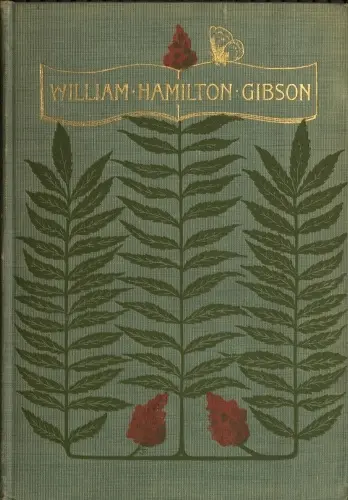
THE CLASSIC COLLECTION · 1901
"William Hamilton Gibson: artist—naturalist—author" by John Coleman Adams is a biographical account written in the early 20th century. This work delves into the life and contributions of William Hamilton Gibson, a notable figure in the fields of art and naturalism, highlighting his journey and the timeless influence he had on nature appreciation in America. The book not only recounts Gibson's achievements as an artist but also elucidates his philosophy and passion for nature. The opening of the work introduces Gibson's early life, emphasizing the fortunate circumstances of his upbringing in Sandy Hook, Connecticut, a region characterized by its picturesque landscapes. It sets the tone by celebrating the idyllic childhood memories that sparked his lifelong love for nature and art. As it unfolds, the narrative begins to describe Gibson's formative years at a unique boarding school known as the Gunnery, where he nurtured his innate artistic talent and developed a profound appreciation for the natural world. Through these early experiences, readers are invited to witness the events and influences that shaped Gibson into a prominent artist-naturalist, foreshadowing the compelling stories yet to come.
Introduction adapted from the source catalogue; source summaries may be automatically generated.
Free to read · English · 67,045 words · No account needed
MAKE TIME FOR A GOOD BOOK
On by default. Untick to stop anonymous reading totals. Each page counts after 10 seconds in view. How this works.
Anonymous counting is on unless you have switched it off.
The sequel to that story is given in one of his frank, confidential letters to his mother, meant only for her eye, and therefore full of such a self-expression as he would have made to no one else. It answers still further the question as to how he came to get this particular commission in a way which reveals again his boldness and faith in undertaking new and untried work:
“N. Y., Jan. 22, 1872.
“I have stopped short in my work for the purpose of writing a few lines to you, as more time has already elapsed since you last heard from me than I had expected to allow. Everything goes on as smoothly as I could desire; of course there are ripples occasionally but they only tend to make the intervening success and prosperity more serene by contrast.
“I still continue as busy as ever only more so. The stone work is the principal employment, at present, and I have given from the start immense satisfaction. You remember that in my last ‘long letter’ I spoke of commencing on the second stone the following day. Well I did so and finished on the next day after, not spending quite two days on it. That week I realized $170.00 for work which I did all myself. The Appletons were surprised more than I can tell you when I informed them of the completion of the second stone, and would scarcely believe that I had done it myself. When they came to see the proof they were even more pleased than they were with the first. The third stone was then sent to my office on the next Saturday afternoon. Monday morning following it had not a mark on it and before I left for home that very evening it was completely finished, thus making $70 in one day. On the next morning I went up to the Appletons’ and notified Mr. A. that his third stone for the charts was finished and in a playful way that I wished he would please send for it and let me have the next. ‘Why,’ said he, ‘I told them to take it to you last Saturday afternoon.’ ‘Well,’ said I, they did bring me one last Saturday afternoon and that is the one that I have finished and wish you to take away.’ I wish you could have seen the expression of mingled surprise and incredulity which covered his face. ‘Why,’ said he, ‘have you done it yourself?’ ‘Yes,’ I returned, ‘I commenced it and finished it yesterday.’ He received the intelligence rather with hesitation at first and finally as I had expected, took the course of questioning whether there was really $70.00 worth of work on them. He was very coy in his manner of doing it but I saw well enough through it all. He put such questions as these, ‘Well, you are doing them much quicker than you expected aren’t you? There is not quite so much work on them as you expected, is there? You thought at first that there would be a week’s time on each stone you remember?’ You see the style of query he used. To all these I admitted that they had become much more easy for me than I had expected, that I was hurrying them up because I knew that they were in a great hurry for the work. I reminded them that my estimate was the lowest that they could obtain in the city and said if I had the faculty of working fast that I ought to be remunerated for it, etc. ‘But,’ said he, ‘there is quite a wide difference between a week and a day and it seems that you did the last one in a day.’ ‘Well,’ said I, ‘so I did, but I will spend a week at them hereafter.’ This made him laugh heartily, and he drew me a check for $70.00 on the spot and told me that he was glad I was doing them so fast and that the firm were more than pleased, thinking my work far ahead of the original, etc. The fourth stone I finished this Monday having commenced it on Saturday last. It has been taken away this morning; the fifth one is now on my desk ready for me to proceed. It is a beautiful surface to draw upon, and I enjoy the work very much. I certainly have the faculty of drawing very fast. Several artists have seen my drawings on the stone and several lithographers also, and they all tell me frankly (after they have been really convinced that I have drawn one in a day or even two days) that there is not another man in the city that could do it and no one that could do it better. The most reasonable time which the Appletons could find elsewhere was a week and this amongst lithographers who had drawn upon stone all their lives. The printers of my lithographic work say that they never printed neater work in their lives and that my drawings all print very brightly.”
Your reading position is saved on this browser. Take it to another device with a library code. Reading pages adapt to text, rather than matching a printed edition.
BEHIND THE BOOK
This eBook is for the use of anyone anywhere in the United States and most other parts of the world at no cost and with almost no restrictions whatsoever. You may copy it, give it away or re-use it under the terms of the Project Gutenberg License included with this eBook or online at www.gutenberg.org. If you are not located in the United States, you will have to check the laws of the country where you are located before using this eBook. Read the source licence.
The original source file, including credits and licence, is retained by this library. Request an original-format copy at no charge. Please include the book title and Project Gutenberg identifier #55690.
KEEP YOUR CURIOSITY GOING
John L. Ransom

Herman W. Mudgett

Harriet Monroe
Daniel Dulany Addison
Charles Lanman

Harold Rosher