THE CLASSIC COLLECTION✦Andersonville diaryCLASSIC FREE BOOKS
Andersonville diary
John L. Ransom
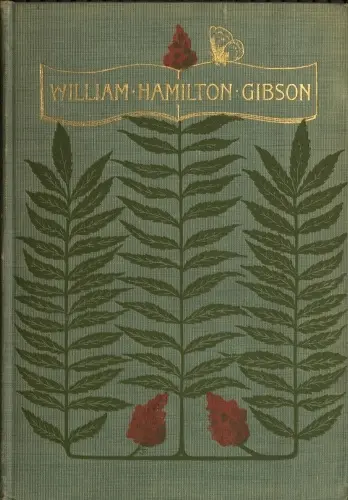
THE CLASSIC COLLECTION · 1901
"William Hamilton Gibson: artist—naturalist—author" by John Coleman Adams is a biographical account written in the early 20th century. This work delves into the life and contributions of William Hamilton Gibson, a notable figure in the fields of art and naturalism, highlighting his journey and the timeless influence he had on nature appreciation in America. The book not only recounts Gibson's achievements as an artist but also elucidates his philosophy and passion for nature. The opening of the work introduces Gibson's early life, emphasizing the fortunate circumstances of his upbringing in Sandy Hook, Connecticut, a region characterized by its picturesque landscapes. It sets the tone by celebrating the idyllic childhood memories that sparked his lifelong love for nature and art. As it unfolds, the narrative begins to describe Gibson's formative years at a unique boarding school known as the Gunnery, where he nurtured his innate artistic talent and developed a profound appreciation for the natural world. Through these early experiences, readers are invited to witness the events and influences that shaped Gibson into a prominent artist-naturalist, foreshadowing the compelling stories yet to come.
Introduction adapted from the source catalogue; source summaries may be automatically generated.
Free to read · English · 67,045 words · No account needed
MAKE TIME FOR A GOOD BOOK
On by default. Untick to stop anonymous reading totals. Each page counts after 10 seconds in view. How this works.
Anonymous counting is on unless you have switched it off.
Probably no trait in him thus throve and grew as did his enthusiasm, his zest in living, his love of what he did, and what he saw, and what he contributed to other lives. To all who knew him he was a fellow of infinite zest. He enjoyed life. He enjoyed all lives, both great and small, human and sub-human. A friend used to say of him that Gibson was a man who thoroughly enjoyed himself. No doubt he did. For that is only another way of saying that he rejoiced in the things God had given him, the powers which were at once endowment and working capital in his life. No man ever took more keen delight in what is commonly counted the drudgery of toil. He really did not seem to be conscious of the hardship of hard work or the irksomeness of the set task. He so thoroughly loved the thing which he did, that all labor was a labor of love. That took away the sense of bondage to his business, and was one of the secrets of his immense endurance, his elasticity under heavy loads, his exuberance of spirits in situations when most men would have sunk overwhelmed.
He had the trait which marks all such natures, a whole-heartedness in all that he undertook, which made him a difficult man to overcome, to put down, or to defeat. That was obvious in all his hard apprenticeship; in his determined struggle for success; in his loyalty to his own ideals. It came out in some other incidents of his life. His vigorous fight against the spirit of vandalism which threatened the natural beauties of Prospect Park, at the hands of a dense and narrow officialism, was a case in point. In the spring of 1887, Mr. Gibson, in the course of a stroll through the Park, was filled with the consternation and wrath which are inevitable in a real nature-lover when he finds that ignorant and unsympathetic hands--and heads--have been busy destroying the natural beauties which years of artificial culture cannot make good. As he wrote in a communication to one of the most reputable journals of the day: “One of the wildest and most beautiful sections of the Park had been invaded by the butcherly Goths and Vandals known as our Park Commissioners. Chaos reigned on every side--beautiful fresh trees by the score, lying in piles of logs among seas of chips, bonfires of brushwood on every hand, and the beauty of the place otherwise hacked and slashed on all sides.” Gibson at once sounded an emphatic and indignant warning through the columns of the Brooklyn “Eagle.” The Park Commissioners replied through an agent in contemptuous fashion, and declared that all they had been doing was to cut down “a lot of ailanthus trees.” They did not know the caliber of their critic. In a second letter Gibson reiterated his charges and showed as the result of actual count and careful identification, that over two hundred trees had been felled in one small acre, and that these included large and beautiful specimens of white birch, black birch, willow, elm, poplar, sweet-gum, flowering dogwood, hornbeam, European alder, nettle-tree, young maple, and numerous other varieties of the minor sylvae, comprising one of the most beautiful pieces of underwood to be found in any park. The Park Commissioners met this new charge with a square denial. Gibson produced new and indisputable evidence to confute them; induced a committee of gentlemen of the highest standing and intelligence to investigate the premises and the evidences of his accuracy,--including Dr. Charles H. Hall, Dr. Charles C. Hall, Dr. Truman J. Backus, and Dr. Almon Gunnison,--who over their own names verified all his statements. Then the Commissioners were forced to admit his charges (and thus, indirectly, their own untruthfulness), but claimed that what they had done was in the nature of the “improvement” of the Park. Then Gibson challenged the discomfited Commissioners to refer their claim of “improvement” to Samuel Parsons, the Superintendent of Central Park, requesting his expert decision whether this cutting was or was not a justifiable artistic or skilful piece of landscape gardening. The challenge was not accepted. There was no need that it should be. Gibson had roused a vigorous public sentiment which forced the Commissioners to call a halt in their reckless and stupid work; and his absolute honesty, accuracy, and readiness as an advocate had put his adversaries to shame and confusion. The incident is well worth recalling as an evidence of what one honest and vigorous citizen can do in the correction of a public evil. It is even more interesting as an illustration of the thoroughness and grasp of his mind on all subjects of which he claimed any right to speak.
Your reading position is saved on this browser. Take it to another device with a library code. Reading pages adapt to text, rather than matching a printed edition.
BEHIND THE BOOK
This eBook is for the use of anyone anywhere in the United States and most other parts of the world at no cost and with almost no restrictions whatsoever. You may copy it, give it away or re-use it under the terms of the Project Gutenberg License included with this eBook or online at www.gutenberg.org. If you are not located in the United States, you will have to check the laws of the country where you are located before using this eBook. Read the source licence.
The original source file, including credits and licence, is retained by this library. Request an original-format copy at no charge. Please include the book title and Project Gutenberg identifier #55690.
KEEP YOUR CURIOSITY GOING
John L. Ransom

Herman W. Mudgett

Harriet Monroe
Daniel Dulany Addison
Charles Lanman

Harold Rosher