THE CLASSIC COLLECTION✦Andersonville diaryCLASSIC FREE BOOKS
Andersonville diary
John L. Ransom
THE CLASSIC COLLECTION · 1901
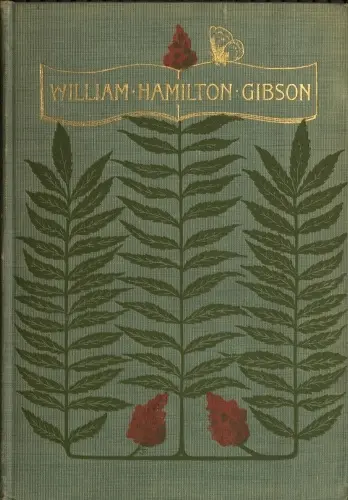
"William Hamilton Gibson: artist—naturalist—author" by John Coleman Adams is a biographical account written in the early 20th century. This work delves into the life and contributions of William Hamilton Gibson, a notable figure in the fields of art and naturalism, highlighting his journey and the timeless influence he had on nature appreciation in America. The book not only recounts Gibson's achievements as an artist but also elucidates his philosophy and passion for nature. The opening of the work introduces Gibson's early life, emphasizing the fortunate circumstances of his upbringing in Sandy Hook, Connecticut, a region characterized by its picturesque landscapes. It sets the tone by celebrating the idyllic childhood memories that sparked his lifelong love for nature and art. As it unfolds, the narrative begins to describe Gibson's formative years at a unique boarding school known as the Gunnery, where he nurtured his innate artistic talent and developed a profound appreciation for the natural world. Through these early experiences, readers are invited to witness the events and influences that shaped Gibson into a prominent artist-naturalist, foreshadowing the compelling stories yet to come.
Introduction adapted from the source catalogue; source summaries may be automatically generated.
Free to read · English · 67,045 words · No account needed
MAKE TIME FOR A GOOD BOOK
On by default. Untick to stop anonymous reading totals. Each page counts after 10 seconds in view. How this works.
Anonymous counting is on unless you have switched it off.
(This section should be introduced here as a “loitering-place” of the saunterer as well as of the brook,--a rest in the journey of the waters when they linger placidly in the old mill-pond, backing-up from the dam, and flooding the lowlands. Although it might be brought in between the mountain-lake and the brook.)
Consider the Black Mountain Swamp for example; Beaver dam, Lenox. Cotton sedge; Sarracenia; Pond lilies; Sphagnum.
A Quaint Cradle. Nest of Reed Warbler or other bird built among reeds or
rushes.
Musk-rat Huts. A Musquash Village. Muskrat’s bubble under the ice, driven away from its heath. See “Trapper”; also Thoreau. The provident musk-rat.
Scouts. Spring Heralds. Skunk cabbage.
Winter Botany. Crystalline Botany; Thoreau. It is the anatomy which determines the marked character and distinct individuality of plants, even of the same genus. The winter phantoms present its most perfect and unencumbered articulation, and render their forms against the snow especially conspicuous. Thus have I counted, without effort, eight species of golden-rod, growing in a tangle each as distinctly specific as in its summer dress and ornament.
A Frost Grotto.
Will o’ the Wisp. A fantasy with fairies, nymphs, or naiads.
Haunt of the Hylas.
Cranberry Culture. The Cranberry plant.
After Bullfrogs. Spatter Dock, turtles, etc.; turtles on a projecting log or rock, family group. Pollywogs. Duckweed. Specimen of similar plant. Green shell-like, nerve-like leaf, floating on surface and sending downward a fringe of purplish black rootlets. Found at Washington, spring of 1882.
A Living Opal. A fairy creature of the marsh. This is described in my note-book about two years ago, and I note that Mr. John Burroughs has discovered the same creature and has written of it under title “A Fairy,” in Scribner’s, January, 1883.
Pickerel Weed and Pickerel.
Vallisneria--Anacharsis; waterweed.
Swamp plants for selection. (Here follows a list of some twenty plants.)
Transformation of Neuroptera.
Exquisite Bivalves in the mud (small pearly clams).
The Brook (Continued)
The Millpond.
The Water adder (see notes Lake Winnepesaukee).
Nymphæ; maids of the pond (nymphs floating in mist above the floating lilies. See John Lafarge, portfolio proofs).
Among the Pond-lilies. The Lotus-lily with cup capsule. Allied to Eastern lily. Suggestion of the Nile.
Mirror of the Sunset. (Reflections. Still pond. Mill dam.)
The Heron.
Winter Sports on the Ice. Fishing. Harvesting the Ice-crop. Waiting for a Bite (comic character). (See Wordsworth “To win a pittance from the cold, unfeeling lake.”)
The Grist-Mill. The Miller. (A character from life; Standing at window of mill door. “The mills of the gods.”)
Under the Fall. (Foam. Bubbles that reflect the glories of the world.)
Swallows. (Skimming over water. “Swallows skating on the air.”)
Your reading position is saved on this browser. Take it to another device with a library code. Reading pages adapt to text, rather than matching a printed edition.
BEHIND THE BOOK
This eBook is for the use of anyone anywhere in the United States and most other parts of the world at no cost and with almost no restrictions whatsoever. You may copy it, give it away or re-use it under the terms of the Project Gutenberg License included with this eBook or online at www.gutenberg.org. If you are not located in the United States, you will have to check the laws of the country where you are located before using this eBook. Read the source licence.
The original source file, including credits and licence, is retained by this library. Request an original-format copy at no charge. Please include the book title and Project Gutenberg identifier #55690.
KEEP YOUR CURIOSITY GOING
John L. Ransom

Herman W. Mudgett

Harriet Monroe
Daniel Dulany Addison
Charles Lanman

Harold Rosher