
The Writing of News A Handbook with Chapters on Newspaper Correspondence and Copy Reading
Charles G. (Charles Griffith) Ross
THE CLASSIC COLLECTION · 1895
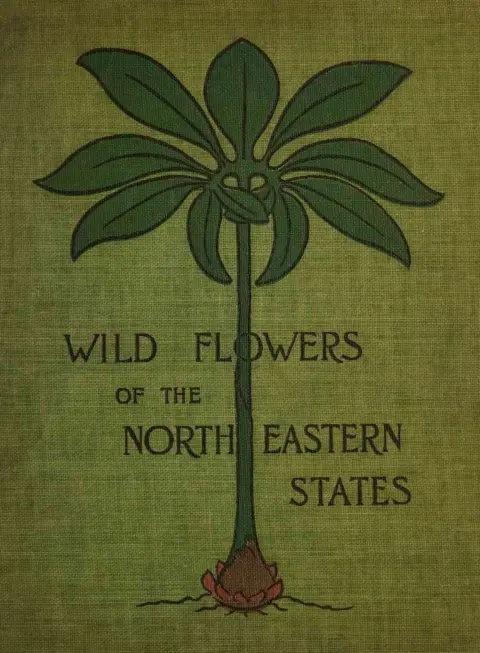
"Wild Flowers of the North-Eastern States" by Ellen Miller and Margaret Christine Whiting is a botanical guidebook written in the late 19th century. This work offers a detailed collection of three hundred and eight wildflower species native to the North-Eastern United States, emphasizing their unique characteristics through life-size illustrations and descriptions. The book aims to make the world of flora accessible to non-scientific readers, providing a resource for nature lovers to engage with and appreciate the beauty and individuality of each flower. The opening of this publication sets a welcoming tone, explaining the authors' goals to present flowers in an approachable manner, avoiding complex scientific terminology. They encourage readers to appreciate the flowers for their personal qualities rather than their botanical classifications. The introduction highlights the authors' efforts in gathering diverse specimens while acknowledging the limits of their selection; they dedicate their work to promoting a "floral portrait-gallery" that encourages exploration and admiration of nature's nuances. Furthermore, the text describes the significance of each plant, including their habitats, flowering times, and distinctive features that contribute to their allure and aesthetics in the natural landscape.
Introduction adapted from the source catalogue; source summaries may be automatically generated.
Free to read · English · 68,255 words · No account needed
MAKE TIME FOR A GOOD BOOK
On by default. Untick to stop anonymous reading totals. Each page counts after 10 seconds in view. How this works.
Anonymous counting is on unless you have switched it off.
Found in moist meadows, on banks, and brooksides in May.
The flowers and leaves grow from the root, about 4 or 6 inches high.
The leaf appears some time after the flowers; it is large, rounding, with a heart-shaped base, the margin slightly broken by small rounded points, and with strong ribs radiating from the base; it is exceptionally fine in texture, and the upper side is possessed of a silky smoothness, the lower side being soft woolly (the new leaves are very woolly). They grow from the root on stout, half-round stems, that are dull purplish-red in color, and often covered with a loose white wool; the leaves are a fine cool green, silvery beneath.
The small flowers are grouped in dandelion-like heads, with many fine fringy rays; all colored alike a bright yellow. The head is held in a deep, leafy cup that is green strongly tinged with reddish-brown; it grows on a stout, grooved, roughish stem, which bears several, small, brownish scales; it rises from the ground before the leaves.
The Coltsfoot, introduced from England, has become thoroughly naturalized here. Its blossoms bear a certain superficial resemblance to the Dandelion, though really different in habits of growth. The leaves are truly decorative, growing thickly in large spaces, and forming a mosaic of green tiles close down to the brook’s edge.
*Robin’s Plantain.* Erigeron bellidifolius.
Found in meadows and fields, during May and June.
The stalk (from 8 to 18 inches high) is single, and sparingly leafy; grooved, and slightly hairy. Color, light green.
The long, narrow leaf, with a tapering tip, and a partly-clasping base, has a taut midrib which fulls the blade; its margin is sparsely notched (except that of the upper leaves), and the surface is slightly hairy. The color is green, with a paler midrib. The arrangement is alternate, and at long intervals.
The disc flowers are very small, and in color greenish-yellow; set in a flat-topped head, surrounded by many long rays, like a finely cut fringe, which are blue or pinkish-lavender. The cup is hemispherical, and green. The heads form a flat-topped terminal cluster.
Robin’s Plantain grows in communities among tall grasses, swaying gracefully on its long stalks as the breeze sweeps over the field. This is apparently the only one of its class that is distinguished by an attractive folk-name of its own,--all the rest are Daisy Fleabanes.
*Daisy Fleabane.* Erigeron Philadelphicus.
Found in meadows and roadsides during June.
The simple, and leafy, stalk grows from 2 to 8 feet high; it is rather slender, finely grooved or lined, and a little hairy. In color a light green.
Your reading position is saved on this browser. Take it to another device with a library code. Reading pages adapt to text, rather than matching a printed edition.
BEHIND THE BOOK
This eBook is for the use of anyone anywhere in the United States and most other parts of the world at no cost and with almost no restrictions whatsoever. You may copy it, give it away or re-use it under the terms of the Project Gutenberg License included with this eBook or online at www.gutenberg.org. If you are not located in the United States, you will have to check the laws of the country where you are located before using this eBook. Read the source licence.
The original source file, including credits and licence, is retained by this library. Request an original-format copy at no charge. Please include the book title and Project Gutenberg identifier #73825.
KEEP YOUR CURIOSITY GOING
Charles G. (Charles Griffith) Ross
Hannah Webster Foster

Emily Lawless
Edwin Hamlin Carr

Charles De Lano Hine
Andrew Ure