
The Writing of News A Handbook with Chapters on Newspaper Correspondence and Copy Reading
Charles G. (Charles Griffith) Ross
THE CLASSIC COLLECTION · 1895
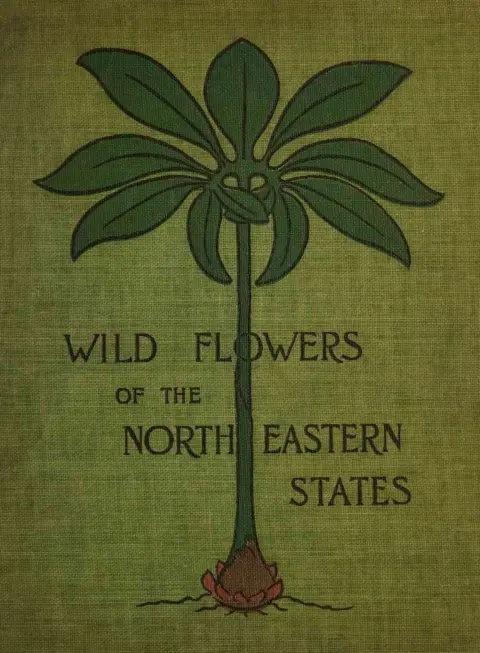
"Wild Flowers of the North-Eastern States" by Ellen Miller and Margaret Christine Whiting is a botanical guidebook written in the late 19th century. This work offers a detailed collection of three hundred and eight wildflower species native to the North-Eastern United States, emphasizing their unique characteristics through life-size illustrations and descriptions. The book aims to make the world of flora accessible to non-scientific readers, providing a resource for nature lovers to engage with and appreciate the beauty and individuality of each flower. The opening of this publication sets a welcoming tone, explaining the authors' goals to present flowers in an approachable manner, avoiding complex scientific terminology. They encourage readers to appreciate the flowers for their personal qualities rather than their botanical classifications. The introduction highlights the authors' efforts in gathering diverse specimens while acknowledging the limits of their selection; they dedicate their work to promoting a "floral portrait-gallery" that encourages exploration and admiration of nature's nuances. Furthermore, the text describes the significance of each plant, including their habitats, flowering times, and distinctive features that contribute to their allure and aesthetics in the natural landscape.
Introduction adapted from the source catalogue; source summaries may be automatically generated.
Free to read · English · 68,255 words · No account needed
MAKE TIME FOR A GOOD BOOK
On by default. Untick to stop anonymous reading totals. Each page counts after 10 seconds in view. How this works.
Anonymous counting is on unless you have switched it off.
Though a pretty plant growing, it is not a pickable one, as its weak
stems get themselves inextricably entangled and caught on their own
armor.
*Plantain-leaved Everlasting.* Antennaria plantaginifolia.
*Spring Everlasting.*
*Pussy-toes.*
Found in light soil, meadows, and uplands, in April and May.
The short, leafy stalk, covered with a silvery wool, runs on the ground, and is from 3 to 10 inches in height. Pale green in color.
The small, broad-oval leaf is rounded at the tip, 3-ribbed, of a tough fibre, and, when young, covered with a silky white wool. It is set on a short, margined stem. In color, light grayish-green.
The flowers are gathered in small heads,--the stamen-bearing and pistil-bearing flowers growing on different plants. The pistil-bearing heads are like little bundles of silky threads, silvery white; the stamen-bearing heads are more rounded in shape, and of a creamy-white color, the tawny stamens being tipped with orange. The heads are set in pale green, urn-shaped, small cups, on short foot-stems, forming a little group on the top of the flower-stem.
Spring Everlasting spreads rapidly by runners sent out from the main plant, and its grave prettiness does not save it from being considered a troublesome pest by the farmer looking for good grass pasturage for his herd.
*Dandelion.* Taraxacum officinale.
Found, during April and May, in every sunny meadow, lawn, and grassy
road.
The leaves, and the flowers on stems which vary from 3 or 4 to 12 inches in height, rise from the root.
The long and narrow leaf is often and irregularly cut, the notches generally pointing backwards, and the margin is also sharply toothed; the texture is close, the surface is smooth, and the midrib is wide; the edge is wavy. In color, grass green, the midrib pale. Many leaves grow in a rosette-like cluster from the root,--the flower buds held in the center.
The small “strap-shaped” flowers, with their notched ends, are gathered in overlapping rows, to form a large circular head; in color they are a brilliant orange-yellow, the central flowers deeper in tint. The head is confined in a cup of many narrow, dark green, leafy bracts, and set on long, smooth, elastic stems, which are hollow, and juicy with a bitter-flavored milk.
The seed-globe of the Dandelion is a favorite with children, by whom it is named a “clock”; its seeds are furnished with feathery plumes, which serve as wings to waft them abroad. The flower-stem too is easily split when plucked, and curls into enchanting spirals that no youthful taste may resist. When cut off short by the cruel lawn-mower, these generous plants put forth fresh golden discs close to the ground within the leaves.
*Coltsfoot.* Tussilago Farfara.
Your reading position is saved on this browser. Take it to another device with a library code. Reading pages adapt to text, rather than matching a printed edition.
BEHIND THE BOOK
This eBook is for the use of anyone anywhere in the United States and most other parts of the world at no cost and with almost no restrictions whatsoever. You may copy it, give it away or re-use it under the terms of the Project Gutenberg License included with this eBook or online at www.gutenberg.org. If you are not located in the United States, you will have to check the laws of the country where you are located before using this eBook. Read the source licence.
The original source file, including credits and licence, is retained by this library. Request an original-format copy at no charge. Please include the book title and Project Gutenberg identifier #73825.
KEEP YOUR CURIOSITY GOING
Charles G. (Charles Griffith) Ross
Hannah Webster Foster

Emily Lawless
Edwin Hamlin Carr

Charles De Lano Hine
Andrew Ure