THE CLASSIC COLLECTION✦Quinneys’CLASSIC FREE BOOKS
Quinneys’
Horace Annesley Vachell
THE CLASSIC COLLECTION · 1920
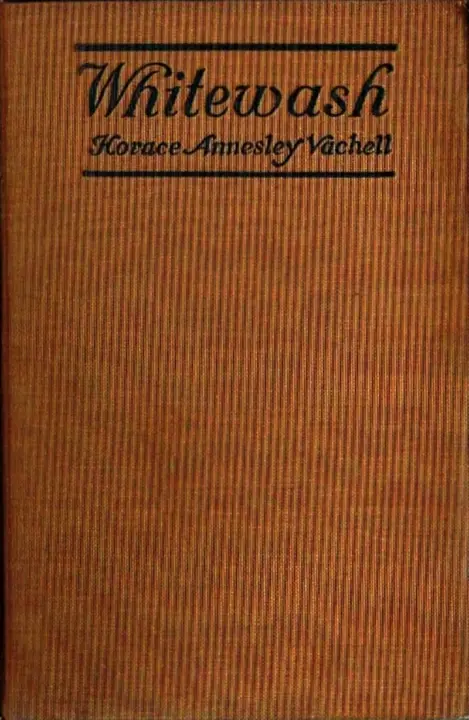
"Whitewash" by Horace Annesley Vachell is a novel written in the early 20th century. The story revolves around Lady Selina Chandos, the strong-willed widow of a squire as she manages her estate and navigates the complexities of her relationships with tenants and local gentry. The initial chapters introduce us to Lady Selina, her family dynamics, and the socio-political tensions in her community concerning her decisions as a landowner. The opening of "Whitewash" presents Lady Selina at her manor, reflecting on her responsibilities post her husband's death. While preparing for a local fête, she engages in discussions about an eviction notice she feels compelled to issue to her long-time tenant, Ephraim Exton, due to his negligence in maintaining his property. This scene establishes her character as someone who is both benevolent yet firm in her management of the estate. Lady Selina's interactions with her children, Brian and Cicely, as well as the village clergyman, Mr. Goodrich, reveal the communal expectations of her position, foreshadowing tensions that may arise as new ideas challenge traditional practices. The narrative hints at the underlying social pressures and moral dilemmas she encounters in a changing world.
Introduction adapted from the source catalogue; source summaries may be automatically generated.
Free to read · English · 89,679 words · No account needed
MAKE TIME FOR A GOOD BOOK
On by default. Untick to stop anonymous reading totals. Each page counts after 10 seconds in view. How this works.
Anonymous counting is on unless you have switched it off.
“I can tell you,” said Agatha. “I was her secretary. I know all about
her doles.”
“Doles? What be doles, Aggie?”
“Soup, blankets, cloaks, a dozen or two of port from the wood.”
Nicodemus looked incredulous.
“Part from the wood? What a queer place to get ’un. There be allers beef at Yuletide, milk for widders and little ’uns, a mort o’ comfort for them as keers for cows’ gifts. A gert charitable ’ooman, my lady be. Rich folk should be treated wi’ respect.”
“And what does it all come to in cash?” asked Agatha. “I’ll tell you. About five hundred pounds—counting everything.”
Nicodemus chuckled, rubbing together his gnarled hands, which indicated more than his face great age.
“A gert noble sum, neighbours. My lady has done her dooty.”
“What hasn’t she done?” asked John sharply.
“Dang my old boans, I dun’no.”
“She hasn’t pulled down a score of cottages like this.”
“Pulled down cottages?” Nicodemus wiped his shining brow.
“They ought to be burnt—burnt,” repeated Agatha excitedly.
“Aye,” said Timothy, “and the Hall wi’ ’un.”
Nick’s voice was heard from the ingle-nook, shrill and ear-piercing:
“’Twould be a rare lark!”
Nobody noticed the boy. The Ancient thumped the tiled floor with his oak stick, exclaiming angrily: “What blarsted talk! ’Tis a fool’s cap you be wanting, Aggie Farleigh.”
Nick interposed again:
“I’ll make ’ee one, Aggie.”
The tension was increasing. Timothy’s deep-set eyes glowered; John Exton, thinking of his father, and recalling old calculations, said emphatically:
“I’ve been into this. Upworthy ought to have fifty new cottages. At the old prices, three hundred apiece, that would make fifteen thousand. Two thousand more would lay down decent drains.”
Nicodemus thumped the floor more vigorously:
“I says in my common way: ‘Drains be damned!’”
John continued, warming to his work:
“Eight thousand more would be little enough to spend on the farms. That foots up twenty-five thousand pound.”
“Ah-h-h!” The Ancient shook a trembling forefinger at him. “’Tis easy to make free wi’ other folk’s cash. Johnny’d have my lady so pore as we.”
Agatha turned upon him.
“That’s nonsense, granfer. Her income is six thousand a year. She could borrow twenty-five thousand by giving up one thousand a year. Instead of putting this big property in order, she bribes you all with doles. And she saves herself five hundred a year. Have you got it?”
Nicodemus retorted smartly:
“I holds wi’ King Solomon, a wiser man even than I be, there bain’t no fool so irksome as a female fool.”
“Meaning, you rude old man?”
Your reading position is saved on this browser. Take it to another device with a library code. Reading pages adapt to text, rather than matching a printed edition.
Horace Annesley Vachell
Horace Annesley Vachell
Horace Annesley Vachell
Horace Annesley Vachell
BEHIND THE BOOK
This eBook is for the use of anyone anywhere in the United States and most other parts of the world at no cost and with almost no restrictions whatsoever. You may copy it, give it away or re-use it under the terms of the Project Gutenberg License included with this eBook or online at www.gutenberg.org. If you are not located in the United States, you will have to check the laws of the country where you are located before using this eBook. Read the source licence.
The original source file, including credits and licence, is retained by this library. Request an original-format copy at no charge. Please include the book title and Project Gutenberg identifier #56827.
KEEP YOUR CURIOSITY GOING
Coulson Kernahan

Maurice Baring
Frances Wright
Cécile Tormay

Frederic Jesup Stimson

W. H. P. (William Henry Pope) Jarvis