THE CLASSIC COLLECTION✦Quinneys’CLASSIC FREE BOOKS
Quinneys’
Horace Annesley Vachell
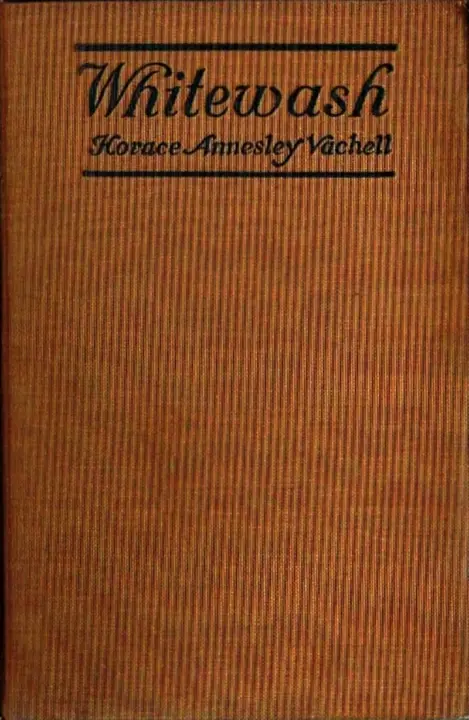
THE CLASSIC COLLECTION · 1920
"Whitewash" by Horace Annesley Vachell is a novel written in the early 20th century. The story revolves around Lady Selina Chandos, the strong-willed widow of a squire as she manages her estate and navigates the complexities of her relationships with tenants and local gentry. The initial chapters introduce us to Lady Selina, her family dynamics, and the socio-political tensions in her community concerning her decisions as a landowner. The opening of "Whitewash" presents Lady Selina at her manor, reflecting on her responsibilities post her husband's death. While preparing for a local fête, she engages in discussions about an eviction notice she feels compelled to issue to her long-time tenant, Ephraim Exton, due to his negligence in maintaining his property. This scene establishes her character as someone who is both benevolent yet firm in her management of the estate. Lady Selina's interactions with her children, Brian and Cicely, as well as the village clergyman, Mr. Goodrich, reveal the communal expectations of her position, foreshadowing tensions that may arise as new ideas challenge traditional practices. The narrative hints at the underlying social pressures and moral dilemmas she encounters in a changing world.
Introduction adapted from the source catalogue; source summaries may be automatically generated.
Free to read · English · 89,679 words · No account needed
MAKE TIME FOR A GOOD BOOK
On by default. Untick to stop anonymous reading totals. Each page counts after 10 seconds in view. How this works.
Anonymous counting is on unless you have switched it off.
“We don’t want that old gaffer. Tell him he can’t come in.”
But Timothy objected.
“Let ’un in; let ’un in. All friends be heartily welcome.”
Agatha shrugged her shoulders. John opened the door to Nicodemus, who entered gallantly, carrying his many years as if they were feathers.
“Marning, all.”
Nick followed, and espying a newspaper which John had stuck into the strap of Agatha’s suit-case, furtively purloined it, sidling into the ingle-nook, where he remained more or less invisible.
“Glad to see you looking so hearty, Mr. Burble,” said John.
“John Exton, I do declare, and Aggie Farleigh! Well, well!”
“How are you, granfer?” asked Agatha.
Nicodemus squared his shoulders.
“I be the most notable man in village. How be Auntie, Aggie?”
“Very sick. I’ve not seen her yet.”
Nicodemus greeted Timothy, and then smacked his lips as he envisaged the small bottle of port wine.
“Ah-h-h! Her ladyship ha’ been herealong. Part wine, as I live!”
At once Timothy jumped up, fierce and menacing.
“Her wine? In my house? Gi’ me that bottle!”
“We may need it,” protested Agatha. Timothy pushed her roughly aside and seized the bottle, exclaiming with biblical fervour:
“Death be in her loving-kindness, and sorrow in her cups o’ wine. I be goin’ to throw ’un away.”
The Ancient tottered at such a threat.
“Throw away good liquor! What an onchristian act! A rare churchgoer, such as you be, Tim Farleigh, ought to behave hisself more genteel. Throw away my lady’s part wine! I never heard such hellish talk.”
Timothy turned upon him aggressively, but the Ancient stood his ground.
“There be no heaven and hell, save on this earth. The quality gets the heaven, and we pore folks walks in hell. I be done wi’ church-goin’—done wi’ it for ever—done!”
He went out. A crash of breaking glass was heard. Nicodemus looked up to
Heaven.
“Lard help ’un!”
To his immense amazement, Agatha snapped out:
“My lady’s wine is poison to him, and no wonder.”
“Part wine bain’t pison, neighbours. Why not drink the wine, and then
smash bottle?”
“Because his wife may be dying, Mr. Burble.”
“Fevers and such comes from Providence, Aggie. I holds tight to Providence, I do. And I don’t hold wi’ talk agen the quality. That was never my way.”
Timothy came back.
“What be saying?” he asked.
Nicodemus wagged his head solemnly.
“I don’t hold wi’ talk agen the quality, Tim. Her ladyship spends money on we wi’ both hands.”
“You tell me how much she spends,” sneered Timothy.
“I dunno.”
Your reading position is saved on this browser. Take it to another device with a library code. Reading pages adapt to text, rather than matching a printed edition.
Horace Annesley Vachell
Horace Annesley Vachell
Horace Annesley Vachell
Horace Annesley Vachell
BEHIND THE BOOK
This eBook is for the use of anyone anywhere in the United States and most other parts of the world at no cost and with almost no restrictions whatsoever. You may copy it, give it away or re-use it under the terms of the Project Gutenberg License included with this eBook or online at www.gutenberg.org. If you are not located in the United States, you will have to check the laws of the country where you are located before using this eBook. Read the source licence.
The original source file, including credits and licence, is retained by this library. Request an original-format copy at no charge. Please include the book title and Project Gutenberg identifier #56827.
KEEP YOUR CURIOSITY GOING
Coulson Kernahan

Maurice Baring
Frances Wright
Cécile Tormay

Frederic Jesup Stimson

W. H. P. (William Henry Pope) Jarvis