THE CLASSIC COLLECTION✦Drawings of RossettiCLASSIC FREE BOOKS
Drawings of Rossetti
T. Martin Wood
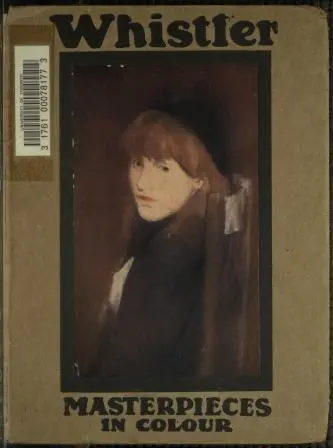
THE CLASSIC COLLECTION · 1908
"Whistler" by T. Martin Wood is a biography focusing on the life and work of the renowned American artist James Abbot McNeill Whistler, written in the early 20th century. This detailed account explores Whistler's artistic philosophy, unique style, and the influential relationships he had throughout his life, particularly in London and Paris. The book delves into the topic of the aesthetic movement in art, emphasizing Whistler's approach to painting and his belief in the intrinsic beauty of art for its own sake. In this biography, Wood paints a vivid portrait of Whistler, highlighting his dual personality as both an artist and a public figure known for his flamboyant lifestyle and sharp wit. The narrative chronicles Whistler's journey from his early days in Lowell, Massachusetts, to his significant contributions to art in England and abroad. Wood discusses key aspects of Whistler’s work, such as his mastery in creating nocturnes and portraits, including the famous "Arrangement in Grey and Black," also known as "Whistler's Mother." The text also covers pivotal moments in Whistler's career, including his contentious trial against John Ruskin, which ultimately shaped his reputation and legacy in the art world. Throughout the biography, readers gain insight into Whistler's relentless pursuit of perfection and his philosophical views on the role of art in society.
Introduction adapted from the source catalogue; source summaries may be automatically generated.
Free to read · English · 11,131 words · No account needed
MAKE TIME FOR A GOOD BOOK
On by default. Untick to stop anonymous reading totals. Each page counts after 10 seconds in view. How this works.
Anonymous counting is on unless you have switched it off.
At the time when Rossetti and his circle were foregathering chiefly at Rossetti's house, quiet Chelsea scarcely knew how daily were associations added which will always cluster round her name. Whistler's share in those associations is very large, and he has left in his paintings the memory of many a night, as he returned beside the river. Before Whistler painted it, night was more opaque than it is now. It had been viewed only through the window of tradition. It was left for a man of the world coming out of an artificial London room to paint its stillness, and also to show us that we ourselves had made night more beautiful, with ghostly silver and gold; and to tell us that the dark bridges that sweep into it do not interrupt--that we cannot interrupt, the music of nature.
The figure of Whistler emerges: with his extreme concern as to his appearance, his careful choice of clothes, his hair so carefully arranged. He had quite made up his mind as to the part he intended to play and the light in which he wished to be regarded. He had a dual personality. Himself as he really was and the personality which he put forward as himself. In a sense he never went anywhere unaccompanied; he was followed and watched by another self that would perhaps have been happier at home. Tiring of this he would disappear from society for a time. Other men's ringlets fall into their places accidentally--so it might be with the young Disraeli. Other men's clothes have seemed characteristic without any of this elaborate pose. He chose his clothes with a view to their being characteristic, which is rather different and less interesting than the fact of their becoming so because he, Whistler, wore them. Other men are dandies, with little conception of the grace of their part; with Whistler a supreme artist stepped into the question. He designed himself. Nor had he the illusions of vanity, but a groundwork of philosophy upon which every detail of his personal life was part of an elaborate and delicately designed structure, his art the turret of it all, from which he saw over the heads of others. There is no contradiction between the dandy and his splendid art. He lived as exquisitely and carefully as he painted. Literary culture, merely, in his case was not great perhaps, yet he could be called one of the most cultured figures of his time. In every direction he marked the path of his mind with fastidious borders. And it is interesting that he should have painted the greatest portrait of Carlyle, who, we will say, represented in English literature Goethe's philosophy of culture, which if it has an echo in the plastic arts, has it in the work of Whistler. In his "Heretics" Mr. G. K. Chesterton condemned Whistler for going in for the art of living--I think he says the miserable art of living--I have not seen the book for a long time, but surely the fact that Whistler was more than a private workman, that his temperament had energy enough to turn from the ardours of his work to live this other part of life--indicates extraordinary vitality rather than any weakness. Whistler was never weak: he came very early to an understanding of his limitations, and well within those limitations took his stand. Because of this his art was perfect. In it he declined to dissipate his energy in any but its natural way. In that way he is as supreme as any master. Attacked from another point his whole art seems but a cobweb of beautiful ingenuity--sustained by evasions. Whistler, one thinks, would have been equally happy and meteorically successful in any profession; one can imagine what an enlivening personality his would have been in a Parliamentary debate, and how fascinating. Any public would have suited him. Art was just an accident coming on the top of many other gifts. It took possession of him as his chief gift, but without it he was singularly well equipped to play a prominent part in the world. As things happened all his other energy went to forward, indirectly and directly, the claims of art. Perhaps his methods of self-advancement were not so beautiful as his art, and his wit was of a more robust character. For this we should be very glad; the world would have been too ready to overlook his delicate work--except that it had to feed his inordinate ambition. At first it recognised his wit and then it recognised his art, or did its level best to, in answer to his repeated challenges.
Your reading position is saved on this browser. Take it to another device with a library code. Reading pages adapt to text, rather than matching a printed edition.
BEHIND THE BOOK
This eBook is for the use of anyone anywhere in the United States and most other parts of the world at no cost and with almost no restrictions whatsoever. You may copy it, give it away or re-use it under the terms of the Project Gutenberg License included with this eBook or online at www.gutenberg.org. If you are not located in the United States, you will have to check the laws of the country where you are located before using this eBook. Read the source licence.
The original source file, including credits and licence, is retained by this library. Request an original-format copy at no charge. Please include the book title and Project Gutenberg identifier #41492.
KEEP YOUR CURIOSITY GOING

Charles G. (Charles Griffith) Ross
Hannah Webster Foster

Emily Lawless
Edwin Hamlin Carr

Charles De Lano Hine
Andrew Ure