THE CLASSIC COLLECTION✦Building the pacific railwayCLASSIC FREE BOOKS
Building the pacific railway
Edwin L. (Edwin Legrand) Sabin
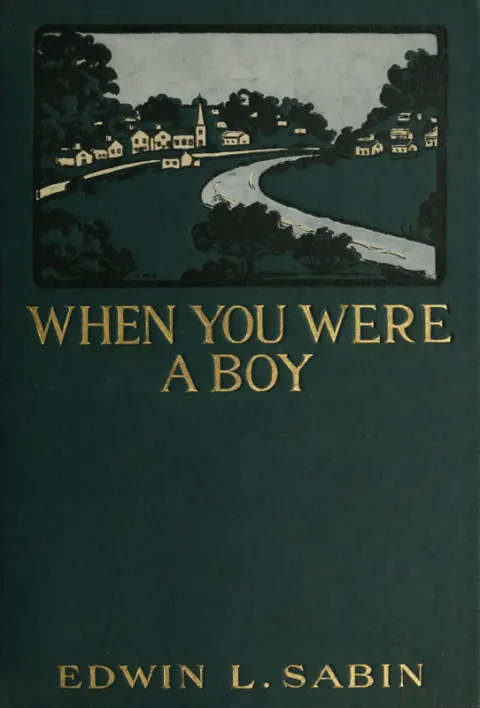
THE CLASSIC COLLECTION · 1905
"When You Were a Boy" by Edwin L. Sabin is a nostalgic children's narrative written in the early 20th century. The text is likely a novel or a collection of intertwined stories centered around the experiences of boys during childhood, exploring themes of innocence, adventure, and the simplicity of pastimes like baseball and the circus. The main character, addressed as "you," engages with a cast of friends, including relatable figures such as Fat Day, Hen Schmidt, and Billy Lunt, who embody the essence of youthful camaraderie and imaginative play. The opening portion of the work introduces the reader to a lively scene where the main character joins friends in forming a baseball team, the North Stars. The camaraderie is palpable as they organize their lineup, discuss their uniforms, and anticipate an upcoming match against the Second-street kids. The sense of competition, childhood rivalry, and the spirit of playfulness is highlighted as the boys navigate the trials of their baseball game, culminating in moments filled with excitement and disappointment. The narrative captures the essence of boyhood adventures, from the thrill of playing sports to the simplicity of the friendships formed during these formative years.
Introduction adapted from the source catalogue; source summaries may be automatically generated.
Free to read · English · 42,358 words · No account needed
MAKE TIME FOR A GOOD BOOK
On by default. Untick to stop anonymous reading totals. Each page counts after 10 seconds in view. How this works.
Anonymous counting is on unless you have switched it off.
The butt slammed you under the chin, knocking your teeth together upon your lower lip. You noted it not.
“We got him! We got him!”
Thus Hen, tumbling over the rail fence, was wildly bellowing—with a pardonable extension of the subject pronoun.
“Hurrah!”
You were on your feet in a twinkling, and were dashing in the wake of Hen, up the incline, midway of which, just below the stump, on his side lay the woodchuck, limp and still.
Hen circumspectly reached and stirred him with the tip of a toe; then, emboldened into the attitude of Victor, recklessly kicked him.
“He’s dead!”
“Je-rusalem! I should say he was!” you agreed, poking the inert mass. “Wasn’t that a dandy shot, though?”
“You bet!” praised Hen.
And so it was—considering the attendant circumstances.
Gloatingly you and Hen examined your prize, inch by inch, investigating him from his two front teeth to his scraggly tail. Most of all did you gloat upon the blood, striking proof of your valor, and ere you had finished you well-nigh could have drawn a diagram of the shot holes.
’Twas established that the aim had been perfect (yourself demonstrating to Hen precisely what had been your course of action), that the gun had shot tremendously, and that the woodchuck was a very prodigy of size and strength.
Poor ’chuck! He had made his last foray, long enough had he dared to live, and now, despite his cunning, he had fallen to a boy who shut both eyes before firing.
Homeward, is it? Certainly! Nothing is left to be gained on the trail. With the stride of conquerors, you and Hen march through the village—you with gun and ammunition flasks, Hen with the woodchuck, which he has appropriated, dangling by the tail.
“Well, well! Where did you get that fellow?” query the men.
“Oh, John and me shot him,” explains Hen.
“Crickety, but ain’t he a big one! How’d you get him?” query the boys.
“We shot him! And he was runnin’, too!” boasts Hen.
“Aw, you found him!”
“Didn’t neither—did we, John? You come here and I’ll show you the shot
holes in him!”
So, side by side, you and Hen gallantly stepped, with the visible tokens of your calling, homeward bound. At the entrance to your alley, however, Hen inclined to lag; and as the back yard was being traversed he fell further behind. Your own pace was slower and less confident, now.
Hen flung you the woodchuck.
“I’ve got to go,” he maintained. “You can take him.”
The back door opened, and mother stood and gazed upon you, even as Hen
was discreetly retiring.
Your reading position is saved on this browser. Take it to another device with a library code. Reading pages adapt to text, rather than matching a printed edition.
Edwin L. (Edwin Legrand) Sabin

Edwin L. (Edwin Legrand) Sabin

Edwin L. (Edwin Legrand) Sabin

Edwin L. (Edwin Legrand) Sabin
BEHIND THE BOOK
This eBook is for the use of anyone anywhere in the United States and most other parts of the world at no cost and with almost no restrictions whatsoever. You may copy it, give it away or re-use it under the terms of the Project Gutenberg License included with this eBook or online at www.gutenberg.org. If you are not located in the United States, you will have to check the laws of the country where you are located before using this eBook. Read the source licence.
The original source file, including credits and licence, is retained by this library. Request an original-format copy at no charge. Please include the book title and Project Gutenberg identifier #58165.
KEEP YOUR CURIOSITY GOING
Coulson Kernahan

Maurice Baring
Frances Wright
Cécile Tormay

Frederic Jesup Stimson

W. H. P. (William Henry Pope) Jarvis