THE CLASSIC COLLECTION✦Building the pacific railwayCLASSIC FREE BOOKS
Building the pacific railway
Edwin L. (Edwin Legrand) Sabin
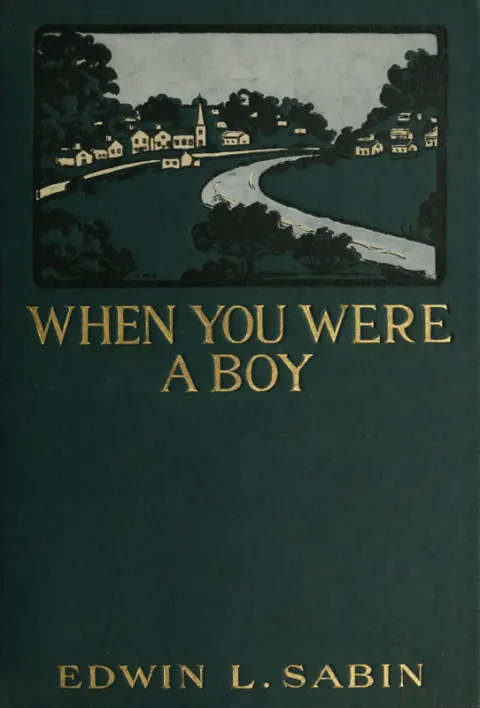
THE CLASSIC COLLECTION · 1905
"When You Were a Boy" by Edwin L. Sabin is a nostalgic children's narrative written in the early 20th century. The text is likely a novel or a collection of intertwined stories centered around the experiences of boys during childhood, exploring themes of innocence, adventure, and the simplicity of pastimes like baseball and the circus. The main character, addressed as "you," engages with a cast of friends, including relatable figures such as Fat Day, Hen Schmidt, and Billy Lunt, who embody the essence of youthful camaraderie and imaginative play. The opening portion of the work introduces the reader to a lively scene where the main character joins friends in forming a baseball team, the North Stars. The camaraderie is palpable as they organize their lineup, discuss their uniforms, and anticipate an upcoming match against the Second-street kids. The sense of competition, childhood rivalry, and the spirit of playfulness is highlighted as the boys navigate the trials of their baseball game, culminating in moments filled with excitement and disappointment. The narrative captures the essence of boyhood adventures, from the thrill of playing sports to the simplicity of the friendships formed during these formative years.
Introduction adapted from the source catalogue; source summaries may be automatically generated.
Free to read · English · 42,358 words · No account needed
MAKE TIME FOR A GOOD BOOK
On by default. Untick to stop anonymous reading totals. Each page counts after 10 seconds in view. How this works.
Anonymous counting is on unless you have switched it off.
“Gee! I bet that’ll pepper him!” commended Hen; and laying aside his flasks he equipped himself with a rock in each hand, for aiding in the proposed job.
Very peaceful and cozy was it there, against the fence, with Indian Summer (in retrospect, those falls were all Indian Summer) around you, the warm sun shining upon you, and the warm grass and pungent weeds an elastic cushion underneath. It was an agreeable change, to surrender your gun to the fence, and relax.
“Sh!” whispered Hen, angrily, when you sought to straighten a leg.
“I don’t believe he’s comin’ out,” you whispered back.
“Yes, he will,” averred Hen.
“Maybe he doesn’t stay there any more,” you hazarded anxiously.
“Course he does!”
“Maybe he’s gone to sleep for the winter, though.”
“Sh! Shut up! He won’t come out as long as you’re talkin’!”
You subsided, and with cheekbone glued to the gunstock, and eyes ferociously glaring along the barrel, at the hole beyond, you expectantly bided the first rash movement on the part of Mr. ’Chuck.
In the meantime, what of that woodchuck? Lured afield by the pleasant weather, from his predatory tour he was leisurely returning—halting now to nuzzle amidst the stubble, now to scratch—for a mid-day nap within his subterrene retreat. He waddled into a dried ditch and out again, slipped through his private wicket in a boundary hedge, and gradually working up the slope was approaching his home, on the side opposite to your rail fence, when Hen, suddenly espying him, was astounded into the yelp: “There he is! Shoot! Shoot!”
Startled into immobility, the woodchuck stared about with quivering whiskers and bulging eyes. Boys!
As in a dream, you vaguely saw a squat, furry shape, a cleft, vibrant nose and two broad, yellow teeth; and with the remembrance that your gun was pointing in the general direction of this combination, you desperately tugged at the trigger. Your sole thought was to “shoot, shoot,” the quicker the better. The report was the thing.
But no report came. The trigger would not budge.
“Darn it! You old fool, you! You ain’t got it cocked!” shrieked Hen, grabbing at your weapon.
With a whistle of decision the woodchuck bolted for sanctuary. He clawed, he slid, he sprawled, all at once. Hen frenziedly delivered both rocks. The ’chuck, at the mouth of his burrow, in a second more would have swung on the pivot of his four short, stout little legs and have whisked in like a brindled streak, when, having succeeded in cocking your piece, you blindly let go—bang!
Your reading position is saved on this browser. Take it to another device with a library code. Reading pages adapt to text, rather than matching a printed edition.
Edwin L. (Edwin Legrand) Sabin

Edwin L. (Edwin Legrand) Sabin

Edwin L. (Edwin Legrand) Sabin

Edwin L. (Edwin Legrand) Sabin
BEHIND THE BOOK
This eBook is for the use of anyone anywhere in the United States and most other parts of the world at no cost and with almost no restrictions whatsoever. You may copy it, give it away or re-use it under the terms of the Project Gutenberg License included with this eBook or online at www.gutenberg.org. If you are not located in the United States, you will have to check the laws of the country where you are located before using this eBook. Read the source licence.
The original source file, including credits and licence, is retained by this library. Request an original-format copy at no charge. Please include the book title and Project Gutenberg identifier #58165.
KEEP YOUR CURIOSITY GOING
Coulson Kernahan

Maurice Baring
Frances Wright
Cécile Tormay

Frederic Jesup Stimson

W. H. P. (William Henry Pope) Jarvis