THE CLASSIC COLLECTION✦Building the pacific railwayCLASSIC FREE BOOKS
Building the pacific railway
Edwin L. (Edwin Legrand) Sabin
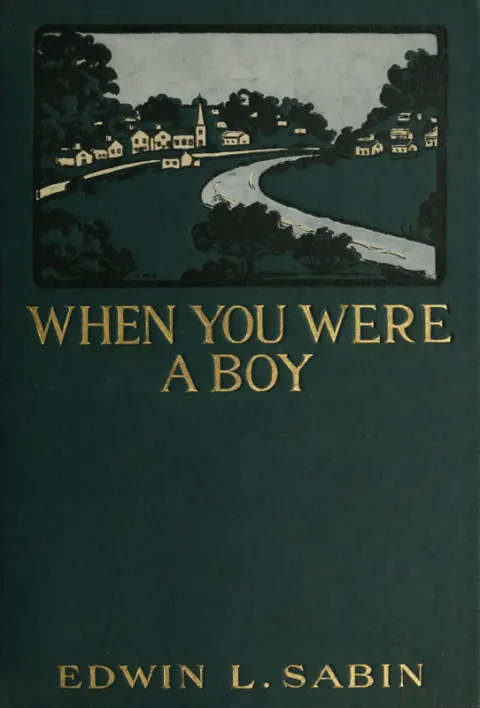
THE CLASSIC COLLECTION · 1905
"When You Were a Boy" by Edwin L. Sabin is a nostalgic children's narrative written in the early 20th century. The text is likely a novel or a collection of intertwined stories centered around the experiences of boys during childhood, exploring themes of innocence, adventure, and the simplicity of pastimes like baseball and the circus. The main character, addressed as "you," engages with a cast of friends, including relatable figures such as Fat Day, Hen Schmidt, and Billy Lunt, who embody the essence of youthful camaraderie and imaginative play. The opening portion of the work introduces the reader to a lively scene where the main character joins friends in forming a baseball team, the North Stars. The camaraderie is palpable as they organize their lineup, discuss their uniforms, and anticipate an upcoming match against the Second-street kids. The sense of competition, childhood rivalry, and the spirit of playfulness is highlighted as the boys navigate the trials of their baseball game, culminating in moments filled with excitement and disappointment. The narrative captures the essence of boyhood adventures, from the thrill of playing sports to the simplicity of the friendships formed during these formative years.
Introduction adapted from the source catalogue; source summaries may be automatically generated.
Free to read · English · 42,358 words · No account needed
MAKE TIME FOR A GOOD BOOK
On by default. Untick to stop anonymous reading totals. Each page counts after 10 seconds in view. How this works.
Anonymous counting is on unless you have switched it off.
Yes, you are near enough. No. 4 shot at fifteen yards ought to do the business for that chap. You slowly settle upon your knees, behind the tree trunk which is your shelter, and cock your piece. At the click the “woodpecker” for an instant ceases operations, and flirts his tail inquisitively.
“Darn it—you’ve scared him!” you accuse Hen, who shifts and squirms at your back, in attempts to secure a better view. Hen holds himself in suspense, apparently well-nigh suffocating with the effort. You bring your piece to bear, but it is so long and awkward that you are being worsted in the struggle, when Hen eagerly proposes:
“Lay it on my shoulder!”
You recede a little, and Hen wriggles forward, the transfer being accomplished with mingled fear and haste.
Hen’s shoulder is rather low for an ideal rest, but you may not complain. You sink as far as possible, and aim. The muzzle projects beyond the tree trunk, and wavers in space. Beyond the space is your suspicious woodpecker, a creature of the most unexpected and eccentric movements imaginable. He never stays “put.” Just as the sight approaches him, he changes position; and just as he approaches the sight, it changes. A conjunction of the two seems hopeless.
“Why don’t you shoot? What’s the matter with you?” gasps Hen.
You shut both eyes. Boom!
Backward you keel, head down, heels up, and the gun, jumping from Hen’s shoulder, rasps along the tree to the ground.
“Did I hit him? Where’d he go?” you cry frantically, staggering to your
feet.
Hen is bounding toward the tree whereon the impudent bird had been foraging. You wonder that the tree yet remains, but there it is, to all appearances as hale as ever.
“Did I hit him?” you repeat, seizing the gun and following.
“I dunno. But he flew off kind of funny,” reports Hen.
“Find any blood? I bet I wounded him like everything, anyhow!” you assert. The woodpecker must have bled internally, for, search as you two might, no tell-tale splashes of gore could be discovered. There were even no feathers. You scanned the tree, but upon close inspection it still persisted in acknowledging no damage, despite the frightful leaden deluge to which you had subjected it.
“Aw, you missed him! Aw, gee!” suddenly bemoans Hen, overcome by
disappointment.
“Didn’t neither. He flew just when I shot, and I couldn’t stop!” you reply, defensively—unmindful of the discrepancy evident between your denial and your excuse.
“If you’d let me shoot I’d have got him,” declares Hen, unplacated.
Your reading position is saved on this browser. Take it to another device with a library code. Reading pages adapt to text, rather than matching a printed edition.
Edwin L. (Edwin Legrand) Sabin

Edwin L. (Edwin Legrand) Sabin

Edwin L. (Edwin Legrand) Sabin

Edwin L. (Edwin Legrand) Sabin
BEHIND THE BOOK
This eBook is for the use of anyone anywhere in the United States and most other parts of the world at no cost and with almost no restrictions whatsoever. You may copy it, give it away or re-use it under the terms of the Project Gutenberg License included with this eBook or online at www.gutenberg.org. If you are not located in the United States, you will have to check the laws of the country where you are located before using this eBook. Read the source licence.
The original source file, including credits and licence, is retained by this library. Request an original-format copy at no charge. Please include the book title and Project Gutenberg identifier #58165.
KEEP YOUR CURIOSITY GOING
Coulson Kernahan

Maurice Baring
Frances Wright
Cécile Tormay

Frederic Jesup Stimson

W. H. P. (William Henry Pope) Jarvis