THE CLASSIC COLLECTION✦Building the pacific railwayCLASSIC FREE BOOKS
Building the pacific railway
Edwin L. (Edwin Legrand) Sabin
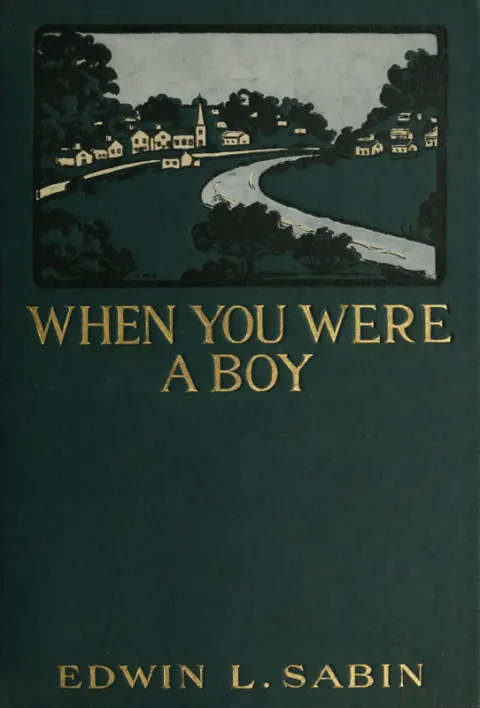
THE CLASSIC COLLECTION · 1905
"When You Were a Boy" by Edwin L. Sabin is a nostalgic children's narrative written in the early 20th century. The text is likely a novel or a collection of intertwined stories centered around the experiences of boys during childhood, exploring themes of innocence, adventure, and the simplicity of pastimes like baseball and the circus. The main character, addressed as "you," engages with a cast of friends, including relatable figures such as Fat Day, Hen Schmidt, and Billy Lunt, who embody the essence of youthful camaraderie and imaginative play. The opening portion of the work introduces the reader to a lively scene where the main character joins friends in forming a baseball team, the North Stars. The camaraderie is palpable as they organize their lineup, discuss their uniforms, and anticipate an upcoming match against the Second-street kids. The sense of competition, childhood rivalry, and the spirit of playfulness is highlighted as the boys navigate the trials of their baseball game, culminating in moments filled with excitement and disappointment. The narrative captures the essence of boyhood adventures, from the thrill of playing sports to the simplicity of the friendships formed during these formative years.
Introduction adapted from the source catalogue; source summaries may be automatically generated.
Free to read · English · 42,358 words · No account needed
MAKE TIME FOR A GOOD BOOK
On by default. Untick to stop anonymous reading totals. Each page counts after 10 seconds in view. How this works.
Anonymous counting is on unless you have switched it off.
You and Hen climb the fence and scale the hill, upon whose slope begins your favorite patch of timber. Making sport of your backs, along the fence that you have just quitted scampers a chipmunk, but you do not know. Your thoughts are ahead.
The consciousness that your gun is charged imbues you with a strange thrill of importance. You are deadly. Come what may, lion, bear, wildcat, squirrel, rabbit, eagle, owl, partridge, you are prepared, so let them one and all beware.
You and Hen talk in guarded tones, whilst your four eyes rove hither and thither, greedy to sight prey. But under-foot, stealthy though you fancy your advance, rustle the dried leaves, spreading afar the news of your passage; and hushed though you consider your voices, they penetrate into sharp ears attuned to catch the slightest alien sound. Eyes, sharper than yours, widen and wait.
You would give the world to see a rabbit or a squirrel. You have just as much chance of seeing a rabbit or a squirrel as you have of seeing a hippopotamus. However, it doesn’t matter.
Hist! On before something twitters.
“There’s a bird!”
“Sh, can’t you! I hear him!”
Cautiously you and Hen steal forward, tip-toeing over crackling leaf and twig, your gaze riveted on the distance.
“I see him!” announces Hen, excitedly.
“Where?” you whisper.
“There—in that tree! Now he’s runnin’ ’round the trunk! He’s a woodpecker.” (Naturalists might cavil and term him a “warbler,” but just the same he acts like a woodpecker!) “Can’t you see him?”
Alas, you can’t—at least, you don’t. Hen cannot abide such stupidity. Besides, the thing is liable to make off.
“Ain’t you got any eyes? Gee whizz! Gimme the gun. I can pop him from
here.”
Give Hen the gun? Well, hardly! You clutch it the tighter, and strain and peer. Now you glimpse him—a tiny chap in a pepper-and-salt suit, busily engaged in pecking at the bark beneath his toes.
“I see him!” you mutter exultantly.
You stoop; Hen stoops. You glide up, making service of covert afforded by tree and bush, and your flasks catch, and sometimes you step on them. Hen, too, glides, just behind, imitating your every movement.
The hour is portentous, but the dare-devil bird braves it and maintains his post at table. Possibly, deceived by your woodcraft (as you fondly suppose), he is oblivious to the fact that yard by yard two boys are drawing closer and closer. You are breathing hard, and to your rear pants Hen, for the advance has been onerous.
“G’wan and shoot! He’ll fly away,” urges Hen, hoarsely.
Your reading position is saved on this browser. Take it to another device with a library code. Reading pages adapt to text, rather than matching a printed edition.
Edwin L. (Edwin Legrand) Sabin

Edwin L. (Edwin Legrand) Sabin

Edwin L. (Edwin Legrand) Sabin

Edwin L. (Edwin Legrand) Sabin
BEHIND THE BOOK
This eBook is for the use of anyone anywhere in the United States and most other parts of the world at no cost and with almost no restrictions whatsoever. You may copy it, give it away or re-use it under the terms of the Project Gutenberg License included with this eBook or online at www.gutenberg.org. If you are not located in the United States, you will have to check the laws of the country where you are located before using this eBook. Read the source licence.
The original source file, including credits and licence, is retained by this library. Request an original-format copy at no charge. Please include the book title and Project Gutenberg identifier #58165.
KEEP YOUR CURIOSITY GOING
Coulson Kernahan

Maurice Baring
Frances Wright
Cécile Tormay

Frederic Jesup Stimson

W. H. P. (William Henry Pope) Jarvis