THE CLASSIC COLLECTION✦Building the pacific railwayCLASSIC FREE BOOKS
Building the pacific railway
Edwin L. (Edwin Legrand) Sabin
THE CLASSIC COLLECTION · 1905
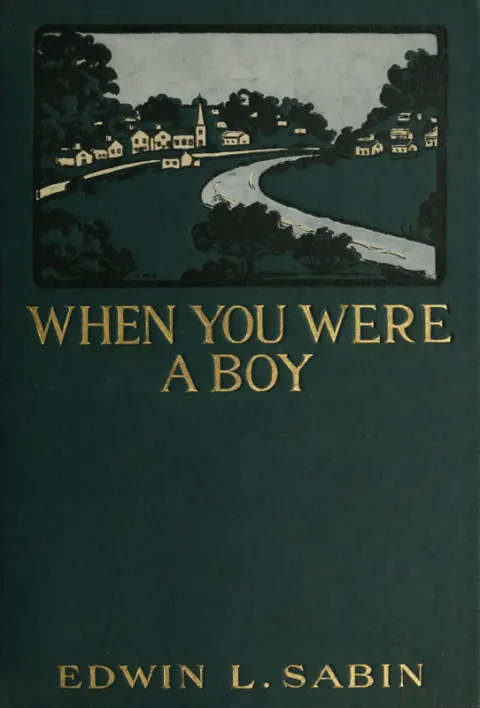
"When You Were a Boy" by Edwin L. Sabin is a nostalgic children's narrative written in the early 20th century. The text is likely a novel or a collection of intertwined stories centered around the experiences of boys during childhood, exploring themes of innocence, adventure, and the simplicity of pastimes like baseball and the circus. The main character, addressed as "you," engages with a cast of friends, including relatable figures such as Fat Day, Hen Schmidt, and Billy Lunt, who embody the essence of youthful camaraderie and imaginative play. The opening portion of the work introduces the reader to a lively scene where the main character joins friends in forming a baseball team, the North Stars. The camaraderie is palpable as they organize their lineup, discuss their uniforms, and anticipate an upcoming match against the Second-street kids. The sense of competition, childhood rivalry, and the spirit of playfulness is highlighted as the boys navigate the trials of their baseball game, culminating in moments filled with excitement and disappointment. The narrative captures the essence of boyhood adventures, from the thrill of playing sports to the simplicity of the friendships formed during these formative years.
Introduction adapted from the source catalogue; source summaries may be automatically generated.
Free to read · English · 42,358 words · No account needed
MAKE TIME FOR A GOOD BOOK
On by default. Untick to stop anonymous reading totals. Each page counts after 10 seconds in view. How this works.
Anonymous counting is on unless you have switched it off.
And you could float—almost, that is, until your feet or your face sank too far and forced you to rally.
“Aw, that ain’t floatin’! Jus’ watch me!” decrees Snoopie.
Snoopie really could float—and challenging admiring eyes he proceeds to
display.
“Watch me!” implores Fat.
“Aw, gee! Watch Fat! Aw gee! That ain’t floatin’! That ain’t floatin’, is it, Snoop? Fat wiggles his hands down by his sides!”
“Don’t either!” declares Fat, angrily, flopping his mottled self to a
standing position.
“You do, too! Don’t he?”
You could stand Snoopie’s superiority, but not Fat’s.
“Well, I didn’t wiggle ’em much, anyhow,” grumbles Fat.
With breath tight held and head tilted stanchly back, launching yourself and paddling furiously dog-fashion, you can easily imagine that you are cleaving a path through the murky flood.
“You’re touchin’ bottom! Aw, you touched bottom!” accuses Fat.
“I wasn’t, either, darn you! I started ’way up there at that stick and I come ’way down here!” (The distance is at least a yard.)
Betimes, splashing out, you all seek the banks, amphibious-like; to streak yourselves fantastically with mud, to cover yourselves luxuriously with hot sand, to race, to gambol, or to loll on the turf and emulously compare sunburn, “peels,” and vaccination scars.
In again you scamper, and the pool resumes its cauldron turmoil.
The sun, from his new station low in the west, sends rays slanting in beneath the trees to signal “Home.”
“Come on, I’m goin’ out!” says Hen. “You’d better, too. Your lips are blue as the dickens.”
“So are yours,” you retort. “Ain’t they, kids! Ain’t Hen’s lips bluer’n
mine?”
A farewell wallow, and out you wade reluctantly. One by one out wade all. Your hands are shriveled with long soaking. You are water-logged. There is sand in your hair. Languidly you dress.
With Snoopie and Hen and Fat and Skinny and the others—a company now chastened and subdued—back you stroll across the pasture, the setting sun in your face, the robins piping their even-song, the locusts done and quiescent, katydids tentatively tuning up as their successors. The sky is golden in the west, pink overhead, blue in the east. Upon the clover the dew is collecting, annoying o’erzealous bees. Skinny and Nix drop off to the left, Snoopie to the right, each lining his straightest course for home.
“Good-night, kids!” they call back.
Now in the village, the little group rapidly dwindles. Presently only you and Hen and Billy remain.
Billy turns in.
At his gate Hen stops.
Your reading position is saved on this browser. Take it to another device with a library code. Reading pages adapt to text, rather than matching a printed edition.
Edwin L. (Edwin Legrand) Sabin

Edwin L. (Edwin Legrand) Sabin

Edwin L. (Edwin Legrand) Sabin

Edwin L. (Edwin Legrand) Sabin
BEHIND THE BOOK
This eBook is for the use of anyone anywhere in the United States and most other parts of the world at no cost and with almost no restrictions whatsoever. You may copy it, give it away or re-use it under the terms of the Project Gutenberg License included with this eBook or online at www.gutenberg.org. If you are not located in the United States, you will have to check the laws of the country where you are located before using this eBook. Read the source licence.
The original source file, including credits and licence, is retained by this library. Request an original-format copy at no charge. Please include the book title and Project Gutenberg identifier #58165.
KEEP YOUR CURIOSITY GOING
Coulson Kernahan

Maurice Baring
Frances Wright
Cécile Tormay

Frederic Jesup Stimson

W. H. P. (William Henry Pope) Jarvis