THE CLASSIC COLLECTION✦Building the pacific railwayCLASSIC FREE BOOKS
Building the pacific railway
Edwin L. (Edwin Legrand) Sabin
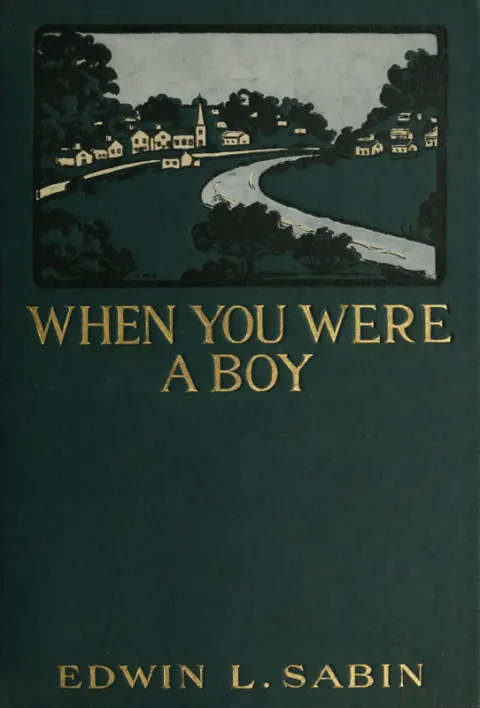
THE CLASSIC COLLECTION · 1905
"When You Were a Boy" by Edwin L. Sabin is a nostalgic children's narrative written in the early 20th century. The text is likely a novel or a collection of intertwined stories centered around the experiences of boys during childhood, exploring themes of innocence, adventure, and the simplicity of pastimes like baseball and the circus. The main character, addressed as "you," engages with a cast of friends, including relatable figures such as Fat Day, Hen Schmidt, and Billy Lunt, who embody the essence of youthful camaraderie and imaginative play. The opening portion of the work introduces the reader to a lively scene where the main character joins friends in forming a baseball team, the North Stars. The camaraderie is palpable as they organize their lineup, discuss their uniforms, and anticipate an upcoming match against the Second-street kids. The sense of competition, childhood rivalry, and the spirit of playfulness is highlighted as the boys navigate the trials of their baseball game, culminating in moments filled with excitement and disappointment. The narrative captures the essence of boyhood adventures, from the thrill of playing sports to the simplicity of the friendships formed during these formative years.
Introduction adapted from the source catalogue; source summaries may be automatically generated.
Free to read · English · 42,358 words · No account needed
MAKE TIME FOR A GOOD BOOK
On by default. Untick to stop anonymous reading totals. Each page counts after 10 seconds in view. How this works.
Anonymous counting is on unless you have switched it off.
“Let’s play hooky this afternoon, and go fishin’!”
“My father won’t let me,” you declare.
“Aw, come on. He’ll never know,” scoffs Snoopie.
But he would, just the same.
The only chance you have is to be sick.
It is over-late to be sick to-day, for there is a ball game after school, and you are to take part. If you are sick this evening, when the sports of the day are finished, your mother will accuse you of having played too hard, and such a notion would turn your attack into a boomerang.
You will be sick in the morning.
Accordingly, with great languidness you flop into your chair at breakfast, and carefully dawdle over your food. You endeavor not to eat, although, as luck would have it, the menu is one of which you are particularly fond. But so much the better.
“Why, John, you aren’t eating! Isn’t the breakfast good?” exclaims mother, instantly noting.
“Yes, ’m.”
“Then why don’t you eat it?”
“Come, eat your breakfast, Johnny,” supplements father.
“I don’t want to,” you plead.
“Don’t you feel well?” asks mother anxiously.
“Not very.”
“Where do you feel sick?”
“Oh, my head aches.”
“Give me your hand.”
You lay it in hers, and she thoughtfully holds it and scrutinizes you.
“I do believe that the boy has a little fever, Henry,” she says to
father.
“Maybe he’s caught cold. Better have him keep quiet to-day,” suggests father. “I’ll do his chores this morning.”
You really begin to feel ill, the word “fever” has such a portentous sound. And you thereby submit the easier to being stowed upon the sofa against the wall, your head upon a pillow and the ready afghan over your feet and legs.
“There’s so much measles about now; don’t you think we ought to have Dr. Reese come in and look at him?” remarks mother to father, in that impersonal mode of conversation, like an aside, which seems to presuppose that you have no ears.
“N-n-no,” decides father. “I’d wait and see if he doesn’t feel better
soon.”
In his eye there is a twinkle, at which mother’s face clears, and they exchange glances which you do not comprehend.
The first bell rings. The chattering boys and girls on their way to school pass the house. But no school for you, you bet! And the last bell rings. As you hark to some belated, luckless being scampering madly by, you hug yourself. Let the blamed old bell bang; you don’t care!
The summons dies away in a jarring clang. Here you are, safe.
Your reading position is saved on this browser. Take it to another device with a library code. Reading pages adapt to text, rather than matching a printed edition.
Edwin L. (Edwin Legrand) Sabin

Edwin L. (Edwin Legrand) Sabin

Edwin L. (Edwin Legrand) Sabin

Edwin L. (Edwin Legrand) Sabin
BEHIND THE BOOK
This eBook is for the use of anyone anywhere in the United States and most other parts of the world at no cost and with almost no restrictions whatsoever. You may copy it, give it away or re-use it under the terms of the Project Gutenberg License included with this eBook or online at www.gutenberg.org. If you are not located in the United States, you will have to check the laws of the country where you are located before using this eBook. Read the source licence.
The original source file, including credits and licence, is retained by this library. Request an original-format copy at no charge. Please include the book title and Project Gutenberg identifier #58165.
KEEP YOUR CURIOSITY GOING
Coulson Kernahan

Maurice Baring
Frances Wright
Cécile Tormay

Frederic Jesup Stimson

W. H. P. (William Henry Pope) Jarvis