THE CLASSIC COLLECTION✦Building the pacific railwayCLASSIC FREE BOOKS
Building the pacific railway
Edwin L. (Edwin Legrand) Sabin
THE CLASSIC COLLECTION · 1905
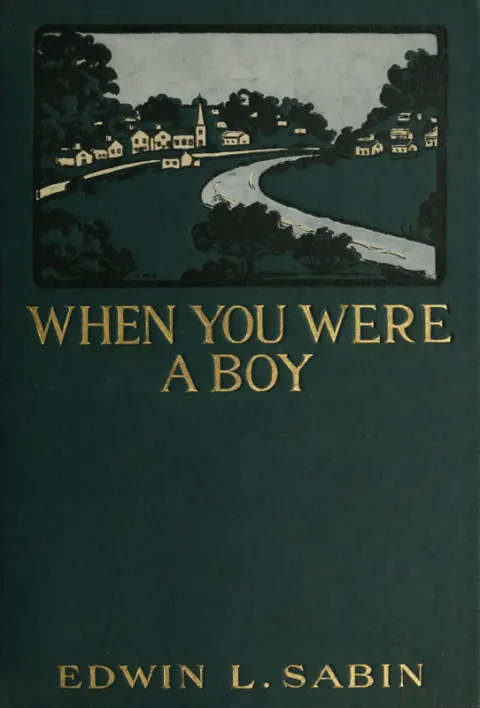
"When You Were a Boy" by Edwin L. Sabin is a nostalgic children's narrative written in the early 20th century. The text is likely a novel or a collection of intertwined stories centered around the experiences of boys during childhood, exploring themes of innocence, adventure, and the simplicity of pastimes like baseball and the circus. The main character, addressed as "you," engages with a cast of friends, including relatable figures such as Fat Day, Hen Schmidt, and Billy Lunt, who embody the essence of youthful camaraderie and imaginative play. The opening portion of the work introduces the reader to a lively scene where the main character joins friends in forming a baseball team, the North Stars. The camaraderie is palpable as they organize their lineup, discuss their uniforms, and anticipate an upcoming match against the Second-street kids. The sense of competition, childhood rivalry, and the spirit of playfulness is highlighted as the boys navigate the trials of their baseball game, culminating in moments filled with excitement and disappointment. The narrative captures the essence of boyhood adventures, from the thrill of playing sports to the simplicity of the friendships formed during these formative years.
Introduction adapted from the source catalogue; source summaries may be automatically generated.
Free to read · English · 42,358 words · No account needed
MAKE TIME FOR A GOOD BOOK
On by default. Untick to stop anonymous reading totals. Each page counts after 10 seconds in view. How this works.
Anonymous counting is on unless you have switched it off.
“‘Tell my mother that her other sons—’” presently he assists, in husky tones; and, as if set in motion by the vibrations, your voice, with an apologetic “Oh, yes,” goes ahead once more.
“‘Tell my mother that her other sons shall comfort her old age, For I was ay a truant bird, that thought his home a cage; For my father was a soldier—’”
And so forth.
Several times it stops again, but Billy sits alert to fill in each hiatus; and vastly relieved in mind you triumphantly regain your seat, only to ascertain, to your disgust, that you are the last of the afternoon’s victims.
Escape from this despotism of school, with its penalties and speaking and other disagreeable features, which combined to outweigh any possible advantages or profit, was always engaging in prospect, although apt to be unsatisfactory in realization.
You longed to be a man. You wondered how it would seem to walk about paying no attention whatsoever to the old bell. Were the people outside the school aware of their fortunate state? Gee!
It was an odd fact that in the week the finest and most interesting days, out of doors, habitually were Monday, Tuesday, Wednesday, Thursday, and Friday—and Sunday. The best fishing invariably came on Monday, Tuesday, Wednesday, Thursday, Friday—and Sunday. You always felt the most like having fun on Monday, Tuesday, Wednesday, Thursday, Friday—and Sunday. What was measly little Saturday, eclipsed so by these other days all-glorious without!
If your folks were only like Snoopie’s folks you could play hooky once in a while. Snoopie asserted that his father “didn’t care.” Yours did—very much.
The sole recourse which remained for you was being sick; and insomuch as the real article was annoyingly scarce with you, it was requisite that you manufacture some substitute.
’Tis a spell of beautiful weather—the kind of weather that came, as aforesaid, on Mondays, Tuesdays, Wednesdays, Thursdays, Fridays—and Sundays. Your feet lagged to school, and your heart kept pace with them. Now you are idling in your seat, utterly unable to work. A vagrant bee hums in through an open window, and hums out through another. A woodpecker drums, as on a sounding-board, upon the spire of the Congregational church. A blue jay screams derisively, like an exultant truant, among the elms arching the street in front. All these things upset you, stirring as they do the Wanderlust of boyhood.
The sky never has been so blue, the grass and the trees never so green, the sunshine never so golden, nor the air so mellow, as at recess.
You hate school. You don’t want to go in. Snoopie volunteers:
Your reading position is saved on this browser. Take it to another device with a library code. Reading pages adapt to text, rather than matching a printed edition.
Edwin L. (Edwin Legrand) Sabin

Edwin L. (Edwin Legrand) Sabin

Edwin L. (Edwin Legrand) Sabin

Edwin L. (Edwin Legrand) Sabin
BEHIND THE BOOK
This eBook is for the use of anyone anywhere in the United States and most other parts of the world at no cost and with almost no restrictions whatsoever. You may copy it, give it away or re-use it under the terms of the Project Gutenberg License included with this eBook or online at www.gutenberg.org. If you are not located in the United States, you will have to check the laws of the country where you are located before using this eBook. Read the source licence.
The original source file, including credits and licence, is retained by this library. Request an original-format copy at no charge. Please include the book title and Project Gutenberg identifier #58165.
KEEP YOUR CURIOSITY GOING
Coulson Kernahan

Maurice Baring
Frances Wright
Cécile Tormay

Frederic Jesup Stimson

W. H. P. (William Henry Pope) Jarvis