The Devil
Leo, graf Tolstoy
THE CLASSIC COLLECTION · 1887
"What to Do? Thoughts Evoked By the Census of Moscow" by graf Leo Tolstoy is a reflective essay written during the late 19th century. The work discusses the stark contrast between wealth and poverty within Moscow, after the author himself is struck by the experiences he witnesses while participating in a census. The text explores themes of social responsibility and moral obligation, questioning the societal structures that allow for such disparities in wealth, and reflects upon the deeper reasons behind human suffering. The opening of the work illustrates Tolstoy's personal journey as he transitions from rural life to the complexities of urban poverty in Moscow. Initially, he feels confused and troubled by the beggars he encounters, whose situation is starkly different from that of rural beggars. He describes a variety of beggars—both genuine and those preying on others' sympathies—and grapples with the restrictions placed upon them by authorities that seemingly punish the act of begging. Through his observations, he reveals an unsettling realization about the interconnectedness of wealth and poverty and begins to formulate a plan for charitable action. However, as he interacts with the city’s poor, his idealistic notions collide with the harsh realities of their lives, leading him to internal conflicts about the effectiveness and sincerity of charitable benevolence. This sets the stage for a profound and philosophical exploration of human compassion and societal obligation.
Introduction adapted from the source catalogue; source summaries may be automatically generated.
Free to read · English · 45,098 words · No account needed
MAKE TIME FOR A GOOD BOOK
On by default. Untick to stop anonymous reading totals. Each page counts after 10 seconds in view. How this works.
Anonymous counting is on unless you have switched it off.
It was hard for me to come to this confession, but when I had come to it I was shocked at the error in which I had been living. I stood up to my ears in the mud, and yet I wanted to drag others out of this mud.
What is it that I wish in reality? I wish to do good to others. I wish to do it so that other people may not be cold and hungry, so that others may live as it is natural for people to live.
[I wish this, and I see that in consequence of the violence, extortions, and various tricks in which I take part, people who toil are deprived of necessaries, and people who do not toil, in whose ranks I also belong, enjoy in superabundance the toil of other people.
I see that this enjoyment of the labors of others is so arranged, that the more rascally and complicated the trickery which is employed by the man himself, or which has been employed by the person from whom he obtained his inheritance, the more does he enjoy of the labors of others, and the less does he contribute of his own labor.
First come the Shtiglitzy, Dervizy, Morozovy, the Demidoffs, the Yusapoffs; then great bankers, merchants, officials, landed proprietors, among whom I also belong; then the poor—very small traders, dramshop-keepers, usurers, district judges, overseers, teachers, sacristans, clerks; then house-porters, lackeys, coachmen, watch-carriers, cab-drivers, peddlers; and last of all, the laboring classes—factory-hands and peasants, whose numbers bear the relation to the first named of ten to one. I see that the life of nine-tenths of the working classes demands, by reason of its nature, application and toil, as does every natural life; but that, in consequence of the sharp practices which take from these people what is indispensable, and place them in such oppressive conditions, this life becomes more difficult every year, and more filled with deprivations; but our life, the life of the non-laboring classes, thanks to the co-operation of the arts and sciences which are directed to this object, becomes more filled with superfluities, more attractive and careful, with every year. I see, that, in our day, the life of the workingman, and, in particular, the life of old men, of women, and of children of the working population, is perishing directly from their food, which is utterly inadequate to their fatiguing labor; and that this life of theirs is not free from care as to its very first requirements; and that, alongside of this, the life of the non-laboring classes, to which I belong, is filled more and more, every year, with superfluities and luxury, and becomes more and more free from anxiety, and has finally reached such a point of freedom from care, in the case of its fortunate members, of whom I am one, as was only dreamed of in olden times in fairy-tales,—the state of the owner of the purse with the inexhaustible ruble, that is, a condition in which a man is not only utterly released from the law of labor, but in which he possesses the possibility of enjoying, without toil, all the blessings of life, and of transferring to his children, or to any one whom he may see fit, this purse with the inexhaustible ruble.
Your reading position is saved on this browser. Take it to another device with a library code. Reading pages adapt to text, rather than matching a printed edition.
Leo, graf Tolstoy
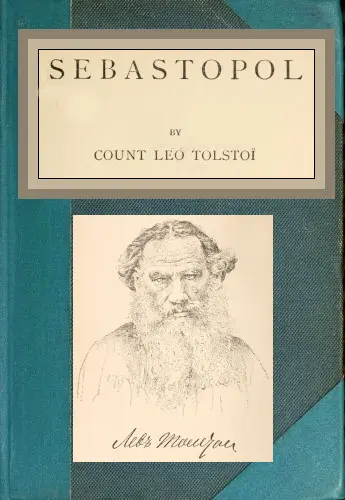
Leo, graf Tolstoy
Leo, graf Tolstoy
Leo, graf Tolstoy
BEHIND THE BOOK
This eBook is for the use of anyone anywhere in the United States and most other parts of the world at no cost and with almost no restrictions whatsoever. You may copy it, give it away or re-use it under the terms of the Project Gutenberg License included with this eBook or online at www.gutenberg.org. If you are not located in the United States, you will have to check the laws of the country where you are located before using this eBook. Read the source licence.
The original source file, including credits and licence, is retained by this library. Request an original-format copy at no charge. Please include the book title and Project Gutenberg identifier #3541.
KEEP YOUR CURIOSITY GOING

David Patterson (Spirit) Hatch

David Patterson (Spirit) Hatch

David Patterson (Spirit) Hatch
Coulson Kernahan

Ralph Waldo Emerson

Maurice Baring