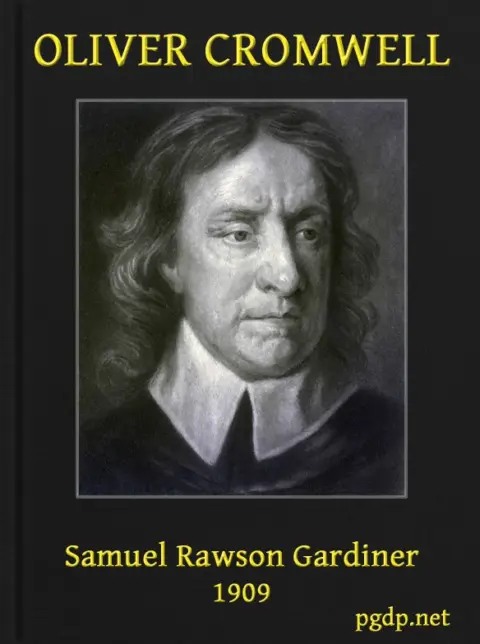
Oliver Cromwell
Samuel Rawson Gardiner
THE CLASSIC COLLECTION · 1897
"What Gunpowder Plot Was" by Samuel Rawson Gardiner is a historical account written in the late 19th century. The book examines the infamous Gunpowder Plot of 1605, challenging traditional narratives and exploring the motivations behind the conspiracy to blow up the British Parliament. Gardiner engages with various historical evidences and interpretations, particularly focusing on the claims made by Father Gerard regarding the conspirators' supposed manipulation by government officials. The opening of the text sets the stage for an in-depth analysis of the historical controversy surrounding the Gunpowder Plot. Gardiner begins by referencing Father Gerard’s examination of evidence asserting the plot was fabricated by the Earl of Salisbury for political gain. He discusses Gerard's conclusions, noting their implications on Catholic perceptions and the subsequent penalties they suffered following the event. Gardiner moves to critique Gerard's approach and the reliability of various sources, hinting at a meticulous inquiry into the established narrative while arguing for a thorough exploration of historical documents to discover the truth behind this pivotal moment in British history.
Introduction adapted from the source catalogue; source summaries may be automatically generated.
Free to read · English · 71,803 words · No account needed
MAKE TIME FOR A GOOD BOOK
On by default. Untick to stop anonymous reading totals. Each page counts after 10 seconds in view. How this works.
Anonymous counting is on unless you have switched it off.
Cellar, the, Fawkes antedates the hiring of, 18, 20;
new door made into, 25;
evidence on the lease of, 28;
supposed bargain between Ferrers and Percy for, 30;
Fawkes's account of the hiring of, 34;
Winter's account of the hiring of, 65;
partly let to Mrs. Skinner, 100, 101;
leased to Percy, 105;
the miners said to be ignorant of the position of, 105;
Capon's evidence on the details of, 107;
new door into, ib.;
entrances into, 110;
alleged public access to, 111;
Knyvet's visit to, 129;
Suffolk's search in, 131
Clement VIII., Pope, writes to James, 150;
annotates a report from the Nuncio at Paris, 151, 152;
rejects James's proposals, 158;
his conduct towards James, 167;
Lindsay's report on the proceedings of, 168
Cobham, Lord, reports a saying of James I., 8
Coe, Thomas, as informer, 175, note 1
Coke, Attorney-General, conducts the first examination of Fawkes, 17; attends the commissioners for the examination of the plot, 25; his fishing inquiry, 40; omits a passage in Fawkes's confession, and brings a false charge against Gerard, 178
Cornwallis, Salisbury's letter to, 31
Cranborne, Viscount, his conversation with the Venetian ambassador,
162-166.
See Cecil, Sir Robert, and Salisbury, Earl of
Davies, an informer, 173
Devonshire, Earl of, a commissioner to examine the plot, 24
Digby, Sir Edward, misstatement about the knighting of the sons of, 10;
arrest of, 47;
writes to Salisbury, 169;
receives a letter about an otter hunt, 175, note 1;
his evidence against Garnet, 192
Digby, Sir Kenelm, alleged statement by, 10
Doubleday, Edmond, secures Fawkes, 135-137
Dunchurch, hunting-match at, 30
Edinburgh Reviewer, the, negative criticism of, 3; his summary of the story of the plot, 14
Edmondes, Salisbury's letter to, 31
Favat, Salisbury's letter to, 183, 184
Fawkes, Guy, first examination of, 17;
assumes the name of Johnson, 18;
shields his companions by false statements, 19;
alleged alteration of the examination of, 20;
confesses the whole of the design, 21;
second examination of, 25;
third examination of, 26;
fourth examination of, 30;
threatened with torture, 32;
fifth examination of, 33;
relation of the fifth examination of, with that of Nov. 17, 37;
his declaration under torture, 43;
gives the names of the plotters, 44;
examined on the hints given to noblemen to absent themselves from
Parliament, 48;
a watch bought for, 49;
doubts as to the genuineness of his full account of the plot
examined, 50-54;
capable of directing mining operations, 78;
ascertains that the cellar is to be let, 109;
alleged discrepancies in the accounts of the seizure of, 127;
arrest of, 132-136
Ferrers, or Ferris, Henry, gives up his house to Percy, 29;
agreement for the lease by, 89
Fulman's Collection, notes on the plot preserved in, 9
Garnet, Henry, receives information of the plot from Greenway, 177;
Digby's evidence against, 192;
his knowledge of the plot, 193-199
Gerard, John (Jesuit in the 17th century), not to be trusted when in ignorance of the facts, 7; said to have given the sacrament to the conspirators, 44; probably ignorant of the plot, 177; false charge brought by Coke against, 178
Gibbons, Mrs., has charge of the house, 28
Your reading position is saved on this browser. Take it to another device with a library code. Reading pages adapt to text, rather than matching a printed edition.
Samuel Rawson Gardiner
Samuel Rawson Gardiner
BEHIND THE BOOK
This eBook is for the use of anyone anywhere in the United States and most other parts of the world at no cost and with almost no restrictions whatsoever. You may copy it, give it away or re-use it under the terms of the Project Gutenberg License included with this eBook or online at www.gutenberg.org. If you are not located in the United States, you will have to check the laws of the country where you are located before using this eBook. Read the source licence.
The original source file, including credits and licence, is retained by this library. Request an original-format copy at no charge. Please include the book title and Project Gutenberg identifier #34606.
KEEP YOUR CURIOSITY GOING
Cécile Tormay

Moritz Busch
John L. Ransom
Frances Wright
Cécile Tormay

Mabel Potter Daggett