The Devil
Leo, graf Tolstoy
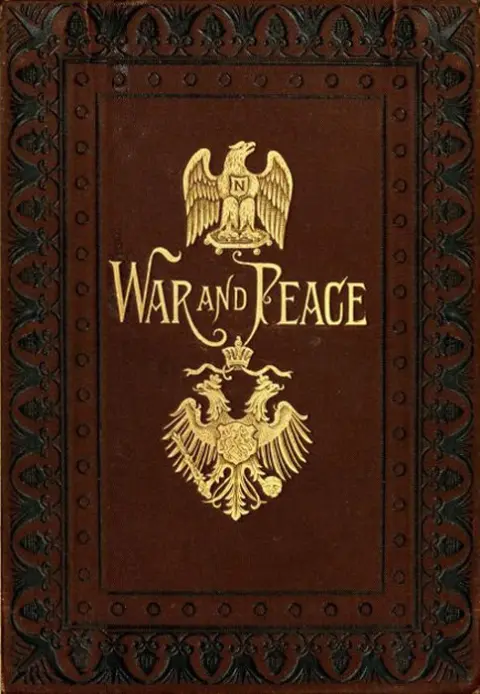
THE CLASSIC COLLECTION · 1869
"War and Peace" by graf Leo Tolstoy is a literary work published in 1869. Set during the Napoleonic Wars, it chronicles the French invasion of Russia through five interlocking narratives following different Russian aristocratic families. The work blends fictional storytelling with philosophical discussions about history, war, and power. Tolstoy himself hesitated to classify it, saying it is "not a novel, even less is it a poem, and still less a historical chronicle." It remains one of the most praised classics of world literature.
Introduction adapted from the source catalogue; source summaries may be automatically generated.
Free to read · English · 581,653 words · No account needed
MAKE TIME FOR A GOOD BOOK
On by default. Untick to stop anonymous reading totals. Each page counts after 10 seconds in view. How this works.
Anonymous counting is on unless you have switched it off.
On returning late in the evening Sónya went to Natásha’s room, and to her surprise found her still dressed and asleep on the sofa. Open on the table, beside her lay Anatole’s letter. Sónya picked it up and read it.
As she read she glanced at the sleeping Natásha, trying to find in her face an explanation of what she was reading, but did not find it. Her face was calm, gentle, and happy. Clutching her breast to keep herself from choking, Sónya, pale and trembling with fear and agitation, sat down in an armchair and burst into tears.
“How was it I noticed nothing? How could it go so far? Can she have left off loving Prince Andrew? And how could she let Kurágin go to such lengths? He is a deceiver and a villain, that’s plain! What will Nicholas, dear noble Nicholas, do when he hears of it? So this is the meaning of her excited, resolute, unnatural look the day before yesterday, yesterday, and today,” thought Sónya. “But it can’t be that she loves him! She probably opened the letter without knowing who it was from. Probably she is offended by it. She could not do such a thing!”
Sónya wiped away her tears and went up to Natásha, again scanning her
face.
“Natásha!” she said, just audibly.
Natásha awoke and saw Sónya.
“Ah, you’re back?”
And with the decision and tenderness that often come at the moment of awakening, she embraced her friend, but noticing Sónya’s look of embarrassment, her own face expressed confusion and suspicion.
“Sónya, you’ve read that letter?” she demanded.
“Yes,” answered Sónya softly.
Natásha smiled rapturously.
“No, Sónya, I can’t any longer!” she said. “I can’t hide it from you any longer. You know, we love one another! Sónya, darling, he writes... Sónya...”
Sónya stared open-eyed at Natásha, unable to believe her ears.
“And Bolkónski?” she asked.
“Ah, Sónya, if you only knew how happy I am!” cried Natásha. “You don’t know what love is....”
“But, Natásha, can that be all over?”
Natásha looked at Sónya with wide-open eyes as if she could not grasp
the question.
“Well, then, are you refusing Prince Andrew?” said Sónya.
“Oh, you don’t understand anything! Don’t talk nonsense, just listen!” said Natásha, with momentary vexation.
Your reading position is saved on this browser. Take it to another device with a library code. Reading pages adapt to text, rather than matching a printed edition.
Leo, graf Tolstoy
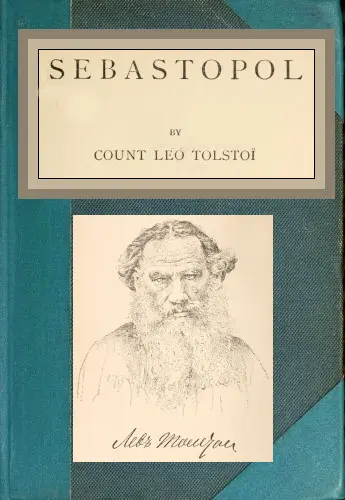
Leo, graf Tolstoy
Leo, graf Tolstoy
Leo, graf Tolstoy
BEHIND THE BOOK
This eBook is for the use of anyone anywhere in the United States and most other parts of the world at no cost and with almost no restrictions whatsoever. You may copy it, give it away or re-use it under the terms of the Project Gutenberg License included with this eBook or online at www.gutenberg.org. If you are not located in the United States, you will have to check the laws of the country where you are located before using this eBook. Read the source licence.
The original source file, including credits and licence, is retained by this library. Request an original-format copy at no charge. Please include the book title and Project Gutenberg identifier #2600.
KEEP YOUR CURIOSITY GOING
Cécile Tormay

Moritz Busch
Coulson Kernahan
John L. Ransom

Maurice Baring
Frances Wright