The Devil
Leo, graf Tolstoy
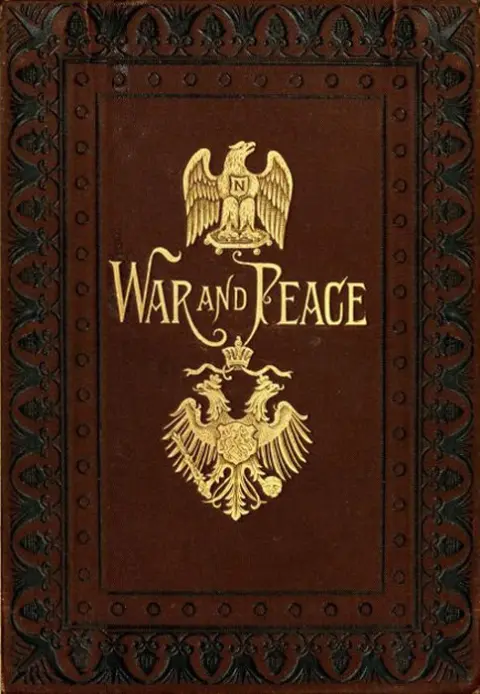
THE CLASSIC COLLECTION · 1869
"War and Peace" by graf Leo Tolstoy is a literary work published in 1869. Set during the Napoleonic Wars, it chronicles the French invasion of Russia through five interlocking narratives following different Russian aristocratic families. The work blends fictional storytelling with philosophical discussions about history, war, and power. Tolstoy himself hesitated to classify it, saying it is "not a novel, even less is it a poem, and still less a historical chronicle." It remains one of the most praised classics of world literature.
Introduction adapted from the source catalogue; source summaries may be automatically generated.
Free to read · English · 581,653 words · No account needed
MAKE TIME FOR A GOOD BOOK
On by default. Untick to stop anonymous reading totals. Each page counts after 10 seconds in view. How this works.
Anonymous counting is on unless you have switched it off.
“No, dearest, sweet one, honey, I won’t give up—I know you know
something.”
Anna Mikháylovna shook her head.
“You are a little slyboots,” she said.
“A letter from Nikólenka! I’m sure of it!” exclaimed Natásha, reading confirmation in Anna Mikháylovna’s face.
“But for God’s sake, be careful, you know how it may affect your
mamma.”
“I will, I will, only tell me! You won’t? Then I will go and tell at
once.”
Anna Mikháylovna, in a few words, told her the contents of the letter, on condition that she should tell no one.
“No, on my true word of honor,” said Natásha, crossing herself, “I won’t tell anyone!” and she ran off at once to Sónya.
“Nikólenka... wounded... a letter,” she announced in gleeful
triumph.
“Nicholas!” was all Sónya said, instantly turning white.
Natásha, seeing the impression the news of her brother’s wound
produced on Sónya, felt for the first time the sorrowful side of the
news.
She rushed to Sónya, hugged her, and began to cry.
“A little wound, but he has been made an officer; he is well now, he wrote himself,” said she through her tears.
“There now! It’s true that all you women are crybabies,” remarked Pétya, pacing the room with large, resolute strides. “Now I’m very glad, very glad indeed, that my brother has distinguished himself so. You are all blubberers and understand nothing.”
Natásha smiled through her tears.
“You haven’t read the letter?” asked Sónya.
“No, but she said that it was all over and that he’s now an
officer.”
“Thank God!” said Sónya, crossing herself. “But perhaps she deceived you. Let us go to Mamma.”
Pétya paced the room in silence for a time.
“If I’d been in Nikólenka’s place I would have killed even more of those Frenchmen,” he said. “What nasty brutes they are! I’d have killed so many that there’d have been a heap of them.”
“Hold your tongue, Pétya, what a goose you are!”
“I’m not a goose, but they are who cry about trifles,” said
Pétya.
“Do you remember him?” Natásha suddenly asked, after a moment’s
silence.
Sónya smiled.
“Do I remember Nicholas?”
Your reading position is saved on this browser. Take it to another device with a library code. Reading pages adapt to text, rather than matching a printed edition.
Leo, graf Tolstoy
Leo, graf Tolstoy
Leo, graf Tolstoy
Leo, graf Tolstoy
BEHIND THE BOOK
This eBook is for the use of anyone anywhere in the United States and most other parts of the world at no cost and with almost no restrictions whatsoever. You may copy it, give it away or re-use it under the terms of the Project Gutenberg License included with this eBook or online at www.gutenberg.org. If you are not located in the United States, you will have to check the laws of the country where you are located before using this eBook. Read the source licence.
The original source file, including credits and licence, is retained by this library. Request an original-format copy at no charge. Please include the book title and Project Gutenberg identifier #2600.
KEEP YOUR CURIOSITY GOING
Cécile Tormay

Moritz Busch
Coulson Kernahan
John L. Ransom

Maurice Baring
Frances Wright