
Barren Ground
Ellen Anderson Gholson Glasgow
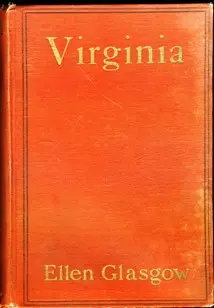
THE CLASSIC COLLECTION · 1913
"Virginia" by Ellen Glasgow is a novel written in the early 20th century. The story is set in the post-Civil War South, focusing on the life of Virginia Pendleton and her experiences as she navigates her way through the challenges of womanhood, societal expectations, and her burgeoning feelings for the returning Oliver Treadwell. The narrative delves into themes of personal growth, societal change, and the conflict between tradition and modernity. At the start of the novel, readers are introduced to the quaint town of Dinwiddie in Virginia during the year 1884. The opening chapter focuses on Miss Priscilla Batte, a teacher at a local academy, and her interactions with two young girls, Virginia Pendleton and Susan Treadwell. The girls exhibit the innocence and excitement of youth as they discuss the return of Oliver, Susan's cousin. Virginia is portrayed as a beautiful and spirited young woman, full of hope and curiosity about the future. During their conversation, Oliver's character is foreshadowed through discussions about his idealism and aspirations as a writer, which sets the stage for Virginia's growing interest in him. The narrative reflects both the external charm of Dinwiddie and the internal struggles of its characters, creating a rich context for the evolution of Virginia's identity against the backdrop of a transforming South.
Introduction adapted from the source catalogue; source summaries may be automatically generated.
Free to read · English · 147,246 words · No account needed
MAKE TIME FOR A GOOD BOOK
On by default. Untick to stop anonymous reading totals. Each page counts after 10 seconds in view. How this works.
Anonymous counting is on unless you have switched it off.
"I never saw that before," Lucy said, leaning over with a laugh. "You were so young when you married, mother, and you wore such tight sleeves, and a bustle!"
"Would you ever have believed she was as pretty as that?" asked Jenny, with the unconscious brutality of childhood.
"If you are ever as beautiful as your mother was, you may thank your stars," said Susan dryly, and by the expression in her face Virginia knew that she was thinking, "If that was my child, I'd slap her!"
Harry, who had been stuffing fruitcake on the sofa--sweets were his weakness--rose suddenly and came over to the group.
"If you are ever as beautiful as she is now, you may thank your stars, Miss Yellow Frisk!" he remarked crushingly.
It was a little thing--so little that it seemed ridiculous to think of it as among the momentous happenings in a life--but with that extraordinary proneness of the little to usurp the significant places of memory, it had become at last one of the important milestones in her experience. At the end, when she forgot everything else, she would not forget Harry's foolish words, nor the look in his indignant boyish face when he uttered them. Until then she had not admitted to herself that there was a difference in her feeling for her children, but with the touch of his sympathetic, not over clean, hand on her shoulder, she knew that she should never again think of the three of them as if they were one in her interest and her love. The girls were good children, dear children--she would have let herself be cut in pieces for either of them had it been necessary--but between Harry and herself there was a different bond, a closer and a deeper dependency, which strengthened almost insensibly as he grew older. Her daughters she loved, but her son, as is the inexplicable way of women, she adored blindly and without wisdom. If it had been possible to ruin him, she would have done so, but, unlike many other sons, he seemed, by virtue of that invincible strength with which he had been born, to be proof against both spoiling and flattery. He was a nice boy even to strangers, even to Susan, with her serene judgment of persons, he appeared a thoroughly nice boy! He was not only a tall, lean, habitually towselled-headed youngster, with a handsome sunburned face and a pair of charming, slightly quizzical blue eyes, but he was, as his teachers and his school reports bore witness, possessed of an intellectual brilliancy which made study as easy, and quite as interesting to him, as play. Unlike his father, he had entered life endowed with a cheerful outlook upon the world and with that temperament of success which usually, but by no means inevitably, accompanies it. Whatever happened, he would make the best of it, he would "get on," and it was impossible to imagine him in any hole so deep that he could not, sooner or later, find the way out of it. The Pendleton and the Treadwell spirits had contributed their best to him. If he derived from Cyrus, or from some obscure strain in Cyrus's ancestry, a wholesome regard for material success, a robust determination to achieve results combined with that hard, clear vision of affairs which makes such achievement easy, he had inherited from Gabriel his genial temper, his charm of manner, and his faith in life, which, though it failed to move mountains, had sweetened and enriched the mere act of living. Though he was less demonstrative than Lucy, who had outgrown the plainness and the reticence of her childhood and was developing into a coquettish, shallow-minded girl, with what Miss Priscilla called "a glib tongue," Virginia learned gradually, in the secret way mothers learn things, that his love for her was, after his ambition, the strongest force in his character. Between him and his father there had existed ever since his babyhood a curious, silent, yet ineradicable hostility. Whether the fault was Oliver's or Harry's, whether the father resented the energy and the initiative of his son, or the son resented the indifference and the self-absorption of his father, Virginia had never discovered. For years she fought against admitting the discord between them. Then, at last, on the occasion of a quarrel, when it was no longer possible to dissemble, she followed Oliver into his study, which had once been the "back parlour," and pleaded with him to show a little patience, a little sympathy with his son. "He's a boy any father would be proud of----" she finished, almost in tears.
Your reading position is saved on this browser. Take it to another device with a library code. Reading pages adapt to text, rather than matching a printed edition.
Ellen Anderson Gholson Glasgow

Ellen Anderson Gholson Glasgow

Ellen Anderson Gholson Glasgow

Ellen Anderson Gholson Glasgow
BEHIND THE BOOK
This eBook is for the use of anyone anywhere in the United States and most other parts of the world at no cost and with almost no restrictions whatsoever. You may copy it, give it away or re-use it under the terms of the Project Gutenberg License included with this eBook or online at www.gutenberg.org. If you are not located in the United States, you will have to check the laws of the country where you are located before using this eBook. Read the source licence.
The original source file, including credits and licence, is retained by this library. Request an original-format copy at no charge. Please include the book title and Project Gutenberg identifier #26316.
KEEP YOUR CURIOSITY GOING
Coulson Kernahan

Maurice Baring
Frances Wright
Cécile Tormay

Frederic Jesup Stimson

W. H. P. (William Henry Pope) Jarvis