
Barren Ground
Ellen Anderson Gholson Glasgow
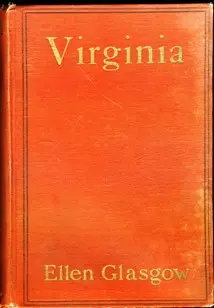
THE CLASSIC COLLECTION · 1913
"Virginia" by Ellen Glasgow is a novel written in the early 20th century. The story is set in the post-Civil War South, focusing on the life of Virginia Pendleton and her experiences as she navigates her way through the challenges of womanhood, societal expectations, and her burgeoning feelings for the returning Oliver Treadwell. The narrative delves into themes of personal growth, societal change, and the conflict between tradition and modernity. At the start of the novel, readers are introduced to the quaint town of Dinwiddie in Virginia during the year 1884. The opening chapter focuses on Miss Priscilla Batte, a teacher at a local academy, and her interactions with two young girls, Virginia Pendleton and Susan Treadwell. The girls exhibit the innocence and excitement of youth as they discuss the return of Oliver, Susan's cousin. Virginia is portrayed as a beautiful and spirited young woman, full of hope and curiosity about the future. During their conversation, Oliver's character is foreshadowed through discussions about his idealism and aspirations as a writer, which sets the stage for Virginia's growing interest in him. The narrative reflects both the external charm of Dinwiddie and the internal struggles of its characters, creating a rich context for the evolution of Virginia's identity against the backdrop of a transforming South.
Introduction adapted from the source catalogue; source summaries may be automatically generated.
Free to read · English · 147,246 words · No account needed
MAKE TIME FOR A GOOD BOOK
On by default. Untick to stop anonymous reading totals. Each page counts after 10 seconds in view. How this works.
Anonymous counting is on unless you have switched it off.
Out of that same vacancy, which seemed to swallow and to hold everything, which seemed to exist both within and outside of herself, a multitude of forgotten images and impressions flashed into being. She saw the nursery fireside in the rectory, and her mother, with hair that still shone like satin, rocking back and forth in the black wicker chair with the sagging bottom. She saw her kneeling on the old frayed red and blue drugget, her skirt pinned up at the back of her waist, while she bathed her daughter's scratched and aching feet in the oblong tin foot-tub. She saw her, as beautiful as an angel, in church on Sunday mornings, her worshipful eyes lifted to the pulpit, an edge of tinted light falling on the open prayer-book in her hand. She saw her, thin and stooping, a shadow of all that she had once been--waiting--waiting----She had always been there. It was impossible to realize that a time could ever come when she would not be there--and now she was gone!
And behind all the images, all the impressions, the stubborn thought persisted that this was life--that one could never escape it--that whatever happened, one must come back to it at the last. "I have my children still left--but for my children I could not live!" she thought, dropping on her knees by the bedside, and hiding her face in the grey wrapper.
After this it seemed to her that she ceased to live except in the lives of her children, and her days passed so evenly, so monotonously, that she only noticed their flight when one of the old people in Dinwiddie remarked to her with a certain surprise: "You've almost a grown daughter now, Jinny," or "Harry will soon be getting as big as his father. Have you decided where you will send him to college?" She was not unhappy--had she ever stopped to ask herself the question, she would probably have answered, "If only mother and father were living, I should be perfectly satisfied"; yet in spite of her assurances, there existed deep down in her--so deep that her consciousness had never fully grasped the fact of its presence--a dumb feeling that something was missing out of life, that the actuality was a little less bright, a little less perfect than it had appeared through the rosy glamour of her virgin dreams. Was this "something missing" merely one of the necessary conditions of mortal existence? Or was there somewhere on the earth that stainless happiness which she had once believed her marriage would bring to her? "I should be perfectly satisfied if only----" she would sometimes say in the night, and then check herself before she had ended the sentence. The lack, real as it was, was still too formless to lend itself to the precision of words; it belonged less to circumstances than to the essential structure of life. And yet, as she put it to herself in her rare moments of depression, she had so much to be thankful for! The children grew stronger as they grew older--since Harry's attack of diphtheria, indeed, there had been no serious illness in the family, and as she approached middle-age, her terror of illness increased rather than diminished. The children made up for much--they ought to have made up for everything--and yet did they? There was no visible fault that she could attribute to them. With her temperamental inability to see flaws, she was accustomed to think of them as perfect children, as children whom she would not change, had she the power, by so much as a hair or an outline. They grew up, straight, fine, and fearless, full of the new spirit, eager to test life, to examine facts, possessed by that awakening feeling for truth which had always frightened her a little in Susan. Vaguely, without defining the sensation, she felt that they were growing beyond her, that she could no longer keep up with them, that, every year, they were leaving her a little farther behind them. They were fond of her, but she understood from something Jenny said one day, that they had ceased to be proud of her. It was while they were looking over an old photograph album of Susan's that, coming to a picture of Virginia, taken the week before her wedding, Jenny cried out: "Why, there's mother!" and slipped it out of the page.
Your reading position is saved on this browser. Take it to another device with a library code. Reading pages adapt to text, rather than matching a printed edition.
Ellen Anderson Gholson Glasgow

Ellen Anderson Gholson Glasgow

Ellen Anderson Gholson Glasgow

Ellen Anderson Gholson Glasgow
BEHIND THE BOOK
This eBook is for the use of anyone anywhere in the United States and most other parts of the world at no cost and with almost no restrictions whatsoever. You may copy it, give it away or re-use it under the terms of the Project Gutenberg License included with this eBook or online at www.gutenberg.org. If you are not located in the United States, you will have to check the laws of the country where you are located before using this eBook. Read the source licence.
The original source file, including credits and licence, is retained by this library. Request an original-format copy at no charge. Please include the book title and Project Gutenberg identifier #26316.
KEEP YOUR CURIOSITY GOING
Coulson Kernahan

Maurice Baring
Frances Wright
Cécile Tormay

Frederic Jesup Stimson

W. H. P. (William Henry Pope) Jarvis