THE CLASSIC COLLECTION✦Thorns of regretCLASSIC FREE BOOKS
Thorns of regret
Alex. McVeigh, Mrs. Miller
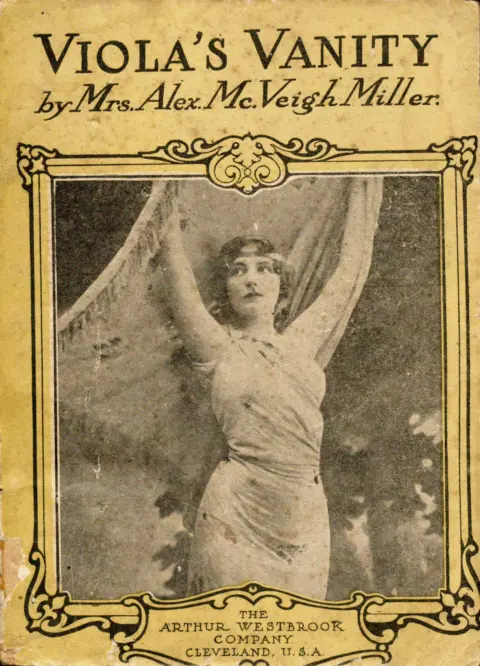
THE CLASSIC COLLECTION · 1897
"Viola's Vanity: or A Bitter Expiation" by Mrs. Alex. McVeigh Miller is a novel written in the late 19th century. The story revolves around Viola Van Lew, a beautiful and capricious young woman who garners the affection of many suitors but plays with their hearts without truly understanding the consequences of her actions. This examination of youth, vanity, and the complexities of love sets the stage for a poignant exploration of maturity and the impact of fleeting decisions on lives. The opening of the novel introduces Viola as a society belle who jilted her fiancé to elope with a poor journalist, Rolfe Maxwell. As the narrative unfolds, it delicately portrays her thoughtless nature, juxtaposed against the deep feelings of those around her. During the early chapters, Viola's interactions with men, especially her artist fiancé Florian Gay and the more serious Professor Desha, showcase her struggle between love and flirtation. The repercussions of her actions come to a head when she unintentionally causes distress to others, leading to a moment of deep reflection and the eventual realization of her heart's true desires. As the story develops, themes of remorse and growth become pivotal, hinting at a transformative journey for the naïve young lady captivated by her charm and admiration.
Introduction adapted from the source catalogue; source summaries may be automatically generated.
Free to read · English · 55,560 words · No account needed
MAKE TIME FOR A GOOD BOOK
On by default. Untick to stop anonymous reading totals. Each page counts after 10 seconds in view. How this works.
Anonymous counting is on unless you have switched it off.
“Farewell! I shall not be to thee
More than a passing thought,
But every time and place will be
With thy remembrance fraught.
Fruitless as constancy may be,
No chance, no change, may turn from thee
One who has loved thee wildly, well,
But whose first love vow breathed farewell.”
Viola struggled back to consciousness again, and her first words were to ask for the letter that had affected her so terribly.
“Your father took it, dear child,” was the gentle reply.
“He must not read it, not one word of it! Go and tell him to send it to me, Eliza!” the poor girl cried, frantically.
The maid went away obediently, but failed to return, the judge himself coming instead, looking at his daughter in wonder, she was so pale, so changed from the radiant girl of yesterday.
He sat down by the side of the bed, and she cried, eagerly:
“My letter, papa, my letter!”
He answered, sternly:
“I have read every word of it, Viola.”
The color flushed her pale cheeks like a rose.
“How dared you? You had no right!”
“I took the right, and I am glad that I did, for now I have an inkling of what led to your elopement last night. Now, Viola, you must tell me the whole miserable story.”
She felt as if she was withering under his searching gaze as he
demanded the truth.
Oh, how could she confess the keen humiliation she had risked so much to hide from the world? Why had that wretched letter ever come?
But Judge Van Lew, in his wrath, was merciless to the willful daughter that until today he had fairly idolized.
No criminal at the bar of justice was ever put through a more searching cross-examination by the lawyer than now fell to the portion of unhappy Viola.
And before she fairly realized what she had done, she was goaded into confessing everything to her father and her aunt.
Then she faltered:
“You can not be angry with me now, papa, since you know all the bitter
truth!”
“Pooh, pooh! you made too much of a lovers’ quarrel, Viola. If you had only waited till this morning, how happy you would have been now!”
The great gray eyes flashed proudly.
“Do you think I could have forgiven him for last night--if he had sent
a thousand letters?”
“Certainly you would. The poor fellow acted upon impulse last night, and you must admit he had great provocation, too; but he made amends this morning. You have been terribly punished, Viola, for your willful coquetries.”
“I must go now,” she answered, rising quickly.
Your reading position is saved on this browser. Take it to another device with a library code. Reading pages adapt to text, rather than matching a printed edition.
Alex. McVeigh, Mrs. Miller
Alex. McVeigh, Mrs. Miller
Alex. McVeigh, Mrs. Miller
Alex. McVeigh, Mrs. Miller
BEHIND THE BOOK
This eBook is for the use of anyone anywhere in the United States and most other parts of the world at no cost and with almost no restrictions whatsoever. You may copy it, give it away or re-use it under the terms of the Project Gutenberg License included with this eBook or online at www.gutenberg.org. If you are not located in the United States, you will have to check the laws of the country where you are located before using this eBook. Read the source licence.
The original source file, including credits and licence, is retained by this library. Request an original-format copy at no charge. Please include the book title and Project Gutenberg identifier #74796.
KEEP YOUR CURIOSITY GOING
Coulson Kernahan

Maurice Baring
Frances Wright
Cécile Tormay

Frederic Jesup Stimson

W. H. P. (William Henry Pope) Jarvis