THE CLASSIC COLLECTION✦Thorns of regretCLASSIC FREE BOOKS
Thorns of regret
Alex. McVeigh, Mrs. Miller
THE CLASSIC COLLECTION · 1897
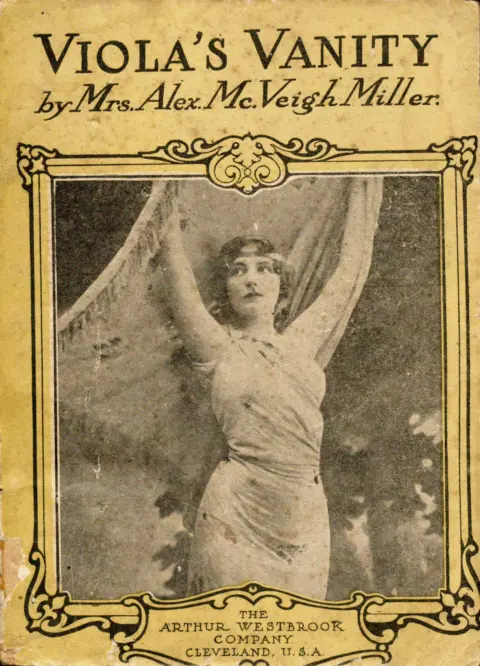
"Viola's Vanity: or A Bitter Expiation" by Mrs. Alex. McVeigh Miller is a novel written in the late 19th century. The story revolves around Viola Van Lew, a beautiful and capricious young woman who garners the affection of many suitors but plays with their hearts without truly understanding the consequences of her actions. This examination of youth, vanity, and the complexities of love sets the stage for a poignant exploration of maturity and the impact of fleeting decisions on lives. The opening of the novel introduces Viola as a society belle who jilted her fiancé to elope with a poor journalist, Rolfe Maxwell. As the narrative unfolds, it delicately portrays her thoughtless nature, juxtaposed against the deep feelings of those around her. During the early chapters, Viola's interactions with men, especially her artist fiancé Florian Gay and the more serious Professor Desha, showcase her struggle between love and flirtation. The repercussions of her actions come to a head when she unintentionally causes distress to others, leading to a moment of deep reflection and the eventual realization of her heart's true desires. As the story develops, themes of remorse and growth become pivotal, hinting at a transformative journey for the naïve young lady captivated by her charm and admiration.
Introduction adapted from the source catalogue; source summaries may be automatically generated.
Free to read · English · 55,560 words · No account needed
MAKE TIME FOR A GOOD BOOK
On by default. Untick to stop anonymous reading totals. Each page counts after 10 seconds in view. How this works.
Anonymous counting is on unless you have switched it off.
But his desire to conceal his own blunder and keep his promise to Viola, that she might give the world any explanation she chose, held him silent.
“I can not vindicate either Viola or myself, let the world say what it
will,” he concluded.
So the time flew by, and he heard of Viola’s critical illness and then her sudden widowhood. Perhaps a ray of hope for future days penetrated the sadness of his heart.
He heard with joy of her convalescence, and said to himself:
“Her twelve months of widowhood will soon pass, and when I come back to Congress next year--who knows?” not acknowledging to himself that he was glad Rolfe Maxwell was dead, yet feeling a new spring in life.
He knew that Florian Gay had returned to his studio work with renewed zest after his long play-spell, and a sudden fancy seized him one day to call and ask if he desired to have any more sittings on the portrait begun last year.
“We used to be such good friends, it seems a pity we should drift apart; though, of course, Florian had terrible provocation to hate me,” he thought; but pursuing his plan of reconciliation, he presented himself at the studio.
Florian received him coldly and with reserve, secretly resenting the
visit.
He was working very busily, and he did not conceal from his caller that it was Viola’s portrait he was finishing by the efficient aid of memory.
“Love, unperceived,
A more ideal artist he than all,
Came, drew his pencil from him, made those eyes
Darker than darkest pansies, and that hair
More black than ash-buds in the front of March.”
Desha gazed long and steadily at the picture, his heart throbbing with passion; but he made no sign, saying, with pretended calmness:
“It is an ideal head and a good likeness. Memory stands you in good stead. But how about mine? Has it fared as well?”
Florian flushed up to his brow, and answered, evasively:
“No; it did not please me somehow, and I preferred not to finish it. So I painted out what I had begun.”
Desha understood, but he felt that he had no fault to find. He changed
the subject by saying:
“Have you any curios to show me? Anything new from abroad?”
“Yes, there, behind that curtain. Pray examine them at your leisure, and excuse me for going on with my work. It is one of my days of inspiration.”
He seized his brush and went doggedly to work on Viola’s portrait, while Desha retired behind the curtain, somewhat discomfited by his cool reception, and thinking:
Your reading position is saved on this browser. Take it to another device with a library code. Reading pages adapt to text, rather than matching a printed edition.
Alex. McVeigh, Mrs. Miller
Alex. McVeigh, Mrs. Miller
Alex. McVeigh, Mrs. Miller
Alex. McVeigh, Mrs. Miller
BEHIND THE BOOK
This eBook is for the use of anyone anywhere in the United States and most other parts of the world at no cost and with almost no restrictions whatsoever. You may copy it, give it away or re-use it under the terms of the Project Gutenberg License included with this eBook or online at www.gutenberg.org. If you are not located in the United States, you will have to check the laws of the country where you are located before using this eBook. Read the source licence.
The original source file, including credits and licence, is retained by this library. Request an original-format copy at no charge. Please include the book title and Project Gutenberg identifier #74796.
KEEP YOUR CURIOSITY GOING
Coulson Kernahan

Maurice Baring
Frances Wright
Cécile Tormay

Frederic Jesup Stimson

W. H. P. (William Henry Pope) Jarvis