THE CLASSIC COLLECTION✦Vanished Halls and Cathedrals of FranceCLASSIC FREE BOOKS
Vanished Halls and Cathedrals of France
George Wharton Edwards
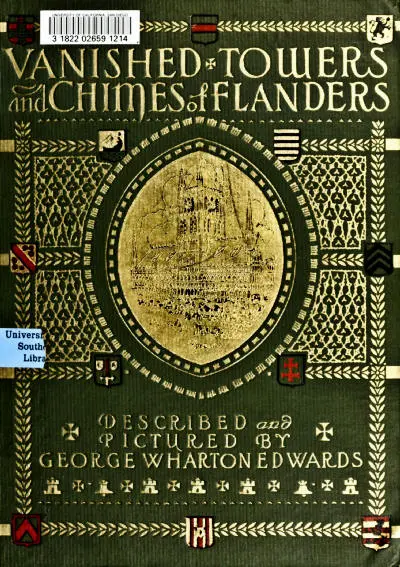
THE CLASSIC COLLECTION · 1916
"Vanished Towers and Chimes of Flanders" by George Wharton Edwards is a historical account written in the early 20th century. The focus of the text is on the once-vibrant region of Flanders, particularly its architectural marvels, the social landscape of its towns, and the melodious chimes from the bells that marked the lives of its people. The author reflects on the cultural significance of these towers and bells, especially in the light of the destruction they faced during the war. At the start of the work, Edwards provides a foreword that illustrates the plight of the Flemish people, their little-known heritage, and the beauty of their towns, especially the architectural grandeur of the belfries and cathedrals. He recounts his observations on the nature of the Flemish culture, characterized by their artistic achievements and deep-seated Catholic faith. The opening chapters not only highlight the historical richness of towns like Malines and Ypres but also introduce us to their iconic structures and the unique sounds of their bells, which poignantly resonate with the reader as symbols of a past now marred by war. The narrative sets a tone of nostalgia and loss, as the author laments the destruction of this exquisite heritage.
Introduction adapted from the source catalogue; source summaries may be automatically generated.
Free to read · English · 35,428 words · No account needed
MAKE TIME FOR A GOOD BOOK
On by default. Untick to stop anonymous reading totals. Each page counts after 10 seconds in view. How this works.
Anonymous counting is on unless you have switched it off.
His younger brother, Luc, was born 1616. He remained with his father, working in his studio until he was admitted to the Gild, when he went to Paris, where he painted portraits of members of the Court, enjoying considerable renown and favor. He returned finally to Malines, where he died in April, 1681.
Frans Hals (The Great), was born either here in Malines, or at Antwerp, in 1584. Accounts differ. His parents were citizens of Malines, at any rate. He had the honor and glory of introducing into Holland the "procede magistral" of Rubens and his school. His works are too well known to need description here. He established himself at Haarlem, where he died in great poverty in 1666. Not even his burial place is now known.
Jean le Saive of Namur, son of Le Saive the Elder, was born in the commencement of the seventeenth century. He painted animals, landscapes, and historical subjects. In the latter genre he is inferior to his father; his color is drier, and his drawing less correct. The date of his death is not recorded.
George Biset, painter-decorator, entered the studio of Michel Coxie (Third) in 1615. He lived throughout his life at Malines, and died 1671.
His son, Charles Emmanuel, born 1633, was an excellent portrait painter, enjoying much appreciation at the Court of France. He became Burgess of Antwerp in 1663, and was elected a Director of the Academy. He died at Breda in 1685.
Martin Verhoeven was elected to the Gild in 1623. He painted flowers and fruit pieces which enjoyed great celebrity.
His brother Jean was known as a portraitist of great ability. In late life he produced some good sculptures.
David Herregouts, born 1603, was elected to the Gild in 1624. Examples of his work are rare. He died at Ruremonde. His son Henri was a pupil of his father. David went to Italy, residing at Rome. After traveling in Germany he returned to Malines, and died at Antwerp at an advanced age.
Jacques de (or Van) Homes, painter in distemper, was a pupil of Gregoire Berincx (Second) and executed much work in "cisele" under the direction of Fayd'herbe. He died in 1674.
Jean Philippe Van Thieleu, born 1618, was an eminent flower and still-life painter, under the guidance of Daniel Zeghers. He was patronized by the King of Spain, and died in 1674.
Ferdinand Elle, born 1631, according to some; in 1612, say other accounts, painter of portraits, went to Paris, where he remained until his death in 1660(?).
Gilles (or Egide) Smeyers, historical painter, was born in 1635, and studied under his father Nicholas, later under Jean Verhoeven. In friendship for his companion and master Luc Franchoys the younger, he finished many of the latter's incompleted works after his death.
Your reading position is saved on this browser. Take it to another device with a library code. Reading pages adapt to text, rather than matching a printed edition.
BEHIND THE BOOK
This eBook is for the use of anyone anywhere in the United States and most other parts of the world at no cost and with almost no restrictions whatsoever. You may copy it, give it away or re-use it under the terms of the Project Gutenberg License included with this eBook or online at www.gutenberg.org. If you are not located in the United States, you will have to check the laws of the country where you are located before using this eBook. Read the source licence.
The original source file, including credits and licence, is retained by this library. Request an original-format copy at no charge. Please include the book title and Project Gutenberg identifier #28288.
KEEP YOUR CURIOSITY GOING
Wilfrid Scawen Blunt
Wilfrid Scawen Blunt

E. W. (Edgar Watson) Howe

David Patterson (Spirit) Hatch

David Patterson (Spirit) Hatch

David Patterson (Spirit) Hatch