THE CLASSIC COLLECTION✦An outlaw’s diary: the CommuneCLASSIC FREE BOOKS
An outlaw’s diary: the Commune
Cécile Tormay
THE CLASSIC COLLECTION · 1908
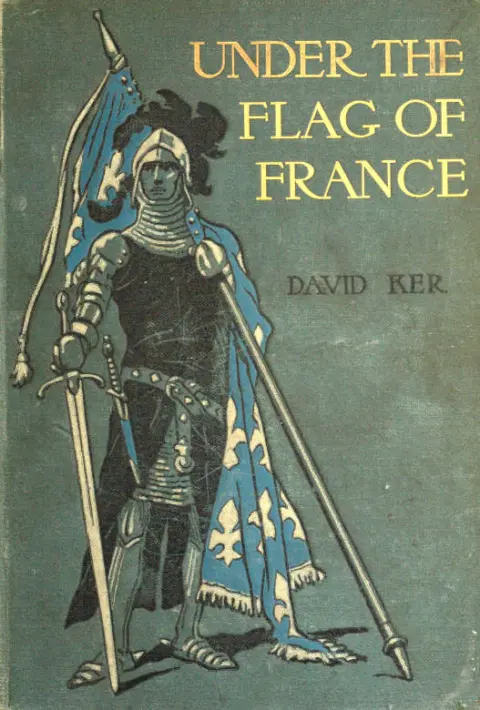
"Under the Flag of France: A Tale of Bertrand du Guesclin" by David Ker is a historical novel written in the early 20th century. The book centers around Bertrand du Guesclin, a young boy from Brittany in the 14th century, who faces ridicule due to his physical appearance but is destined for greatness. The narrative explores themes of heroism, destiny, and the struggles of the underdog as it unfolds during a tumultuous period marked by conflict between France and England. The opening of the tale introduces readers to a fourteen-year-old Bertrand, who is grappling with feelings of despair over his perceived ugliness and his longing for acceptance. Set against a serene backdrop of the Breton countryside, Bertrand's emotional turmoil leads to an inner confrontation as he expresses a wish for death due to his family's disdain. However, his fortunes begin to shift when he encounters a beautiful song that resonates deeply with him, followed by a fateful encounter where he demonstrates great valor by saving a simpleton from a wolf attack. This moment establishes Bertrand's character and foreshadows the greater legacy that awaits him as a defender of the weak. Additionally, the presence of Brother Michael, a holy monk who assures Bertrand of his destined greatness, paints a vivid picture of Bertrand's journey from a tormented youth to a future champion of France.
Introduction adapted from the source catalogue; source summaries may be automatically generated.
Free to read · English · 85,354 words · No account needed
MAKE TIME FOR A GOOD BOOK
On by default. Untick to stop anonymous reading totals. Each page counts after 10 seconds in view. How this works.
Anonymous counting is on unless you have switched it off.
“Sir Knight,” said he to the black warrior, “it were shame to let so good a champion be overborne by odds. I will meet thee with equal arms, man to man, and if I overcome thee, thou shalt yield to my mercy, but if thou hast the better, thou shalt pass free, under the knightly pledge of Sir Nicholas Dagworth. Art thou agreed?”
In our day it would greatly amaze every one to see two generals fight a duel on their own account in the midst of a battle, while their men looked on; but in that age such a thing was an everyday matter.
“Most willingly do I agree, good Sir Nicholas,” said the unknown, courteously; “and if it be my hap to be overthrown, I grudge thee not what small fame may be won by vanquishing Bertrand du Guesclin.”
“Du Guesclin!” echoed Dagworth, as a murmur of mingled wonder and admiration buzzed along the English ranks. “Then am I more highly favoured than I weened. I pray you of your courtesy, fair sir, to let me touch that victorious hand in friendship ere we fall to.”
And the two men joined hands in a warm, brotherly clasp, as a fitting preface to doing their best to cut each other’s throats!
Just then the city gate (through which Huon and the warlike jester had just passed) poured forth a gallant band of horsemen, led by De Kerimel himself. But when the rescuers saw what was going on, they drew rein at once, and looked on in silence, for one of the strictest rules of that age was never to interfere with a fair fight.
“I presume not to ask thee to fight on foot, noble sir,” said Du Guesclin, hesitatingly, “but thou seest I have no horse, and——”
“Nay, if that be all, it is soon mended,” cried Sir Nicholas. “Ho there! bring hither quickly my brown destrier” (war-horse).
The steed was brought, Bertrand mounted, and the knights hurtled together like contending whirlwinds.
Both spears flew crashing in a thousand splinters, and both steeds were thrown back on their haunches; but the riders kept saddle and stirrup, though it seemed to the lookers-on as if Dagworth, good knight as he was, had been rudely shaken.
Sir Nicholas took a new lance from his esquire, and Du Guesclin cried to the nearest English man-at-arms—
“Lend me thy lance, good fellow. I promise thee I will not shame it.”
“Take it and welcome, good sir,” said the stout spearman, heartily; “and wert thou fighting any but an Englishman, I would wish thee good speed!”
Bertrand laughed good-humouredly, and, wheeling his horse, dashed at
his foe once more.
Your reading position is saved on this browser. Take it to another device with a library code. Reading pages adapt to text, rather than matching a printed edition.
BEHIND THE BOOK
This eBook is for the use of anyone anywhere in the United States and most other parts of the world at no cost and with almost no restrictions whatsoever. You may copy it, give it away or re-use it under the terms of the Project Gutenberg License included with this eBook or online at www.gutenberg.org. If you are not located in the United States, you will have to check the laws of the country where you are located before using this eBook. Read the source licence.
The original source file, including credits and licence, is retained by this library. Request an original-format copy at no charge. Please include the book title and Project Gutenberg identifier #46855.
KEEP YOUR CURIOSITY GOING
Cécile Tormay

Moritz Busch
Coulson Kernahan
John L. Ransom

Maurice Baring
Frances Wright