THE CLASSIC COLLECTION✦An outlaw’s diary: the CommuneCLASSIC FREE BOOKS
An outlaw’s diary: the Commune
Cécile Tormay
THE CLASSIC COLLECTION · 1908
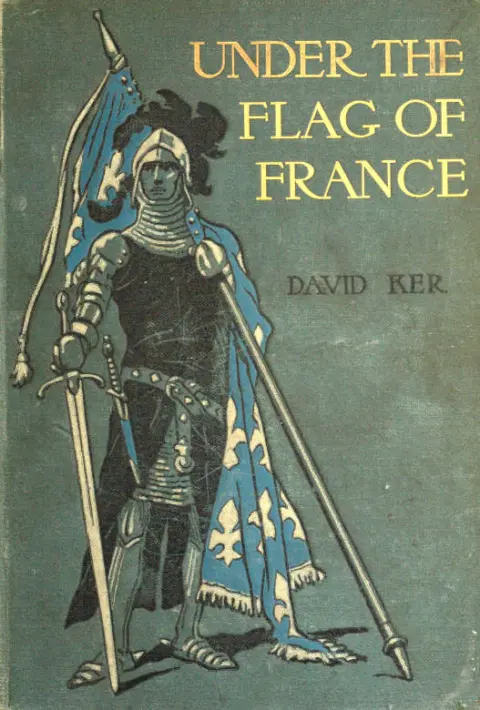
"Under the Flag of France: A Tale of Bertrand du Guesclin" by David Ker is a historical novel written in the early 20th century. The book centers around Bertrand du Guesclin, a young boy from Brittany in the 14th century, who faces ridicule due to his physical appearance but is destined for greatness. The narrative explores themes of heroism, destiny, and the struggles of the underdog as it unfolds during a tumultuous period marked by conflict between France and England. The opening of the tale introduces readers to a fourteen-year-old Bertrand, who is grappling with feelings of despair over his perceived ugliness and his longing for acceptance. Set against a serene backdrop of the Breton countryside, Bertrand's emotional turmoil leads to an inner confrontation as he expresses a wish for death due to his family's disdain. However, his fortunes begin to shift when he encounters a beautiful song that resonates deeply with him, followed by a fateful encounter where he demonstrates great valor by saving a simpleton from a wolf attack. This moment establishes Bertrand's character and foreshadows the greater legacy that awaits him as a defender of the weak. Additionally, the presence of Brother Michael, a holy monk who assures Bertrand of his destined greatness, paints a vivid picture of Bertrand's journey from a tormented youth to a future champion of France.
Introduction adapted from the source catalogue; source summaries may be automatically generated.
Free to read · English · 85,354 words · No account needed
MAKE TIME FOR A GOOD BOOK
On by default. Untick to stop anonymous reading totals. Each page counts after 10 seconds in view. How this works.
Anonymous counting is on unless you have switched it off.
A Case of Conscience
The duke’s herald was at once admitted by the old commandant, to whom he announced himself as the bearer of a message to Du Guesclin from the Duke of Lancaster.
“Thou wouldst speak with Messire Bertrand thyself?” asked De Penhoën, with the ghost of a smile flickering over his iron face.
“Even so,” said the herald, with a dignity befitting his office, then one of the most important in existence.
“Go down there and thou wilt find him,” said the old Breton, pointing to the courtyard with a grin that puckered his hard visage till it looked like the carved spout of a cathedral.
Down went the herald, to find himself amid a throng of rough-looking, bare-armed fellows, who were chopping up one of the captured carts to replenish their scanty stock of firewood. After looking in vain for any sign of Du Guesclin among the ragged, dirty gang, he was fain to apply to a short, sturdy, phenomenally ugly man in a greasy leathern jerkin (with his head and left arm bandaged), who, while directing the labours of the rest, seemed himself to work as hard as any one.
“I pray thee, good fellow,” said he condescendingly, “tell me where I may find Sir Bertrand du Guesclin; I have to speak with him.”
“Speak on, then,” said the wood-chopper, wiping his face; “I am he.”
“Thou?” echoed the herald, recoiling. “Thou the great Du Guesclin? So help me St. George, thou look’st more like a robber!”
“Dar’st thou call our Bertrand a robber, malapert knave?” roared one of the wood-cutters. “Say it again, and we will strip off those gay plumes of thine, and thy own jackass hide to boot.”
“Hold, lads! a herald is sacred,” said Bertrand, with a jovial laugh. “And, in sooth, he has hit the mark in calling me robber, since I plundered his master’s camp last night. If thou believe me not, Sir Herald, look if this be like one of Du Guesclin’s blows.”
And one blow of his axe cut in two, as easily as if slicing a ripe pear, a log as thick as the herald’s own thigh.
Convinced at last that this ugly, clumsy, grimy dwarf was really the great leader he sought, the crestfallen herald gave his message (to which Bertrand replied with a knightly courtesy that, with all his soldier-like bluntness, never failed him on occasion), and retired much abashed, and not a little scandalized, to find the greatest captain of an age famous for ostentatious splendour dressed worse than a scarecrow.
Your reading position is saved on this browser. Take it to another device with a library code. Reading pages adapt to text, rather than matching a printed edition.
BEHIND THE BOOK
This eBook is for the use of anyone anywhere in the United States and most other parts of the world at no cost and with almost no restrictions whatsoever. You may copy it, give it away or re-use it under the terms of the Project Gutenberg License included with this eBook or online at www.gutenberg.org. If you are not located in the United States, you will have to check the laws of the country where you are located before using this eBook. Read the source licence.
The original source file, including credits and licence, is retained by this library. Request an original-format copy at no charge. Please include the book title and Project Gutenberg identifier #46855.
KEEP YOUR CURIOSITY GOING
Cécile Tormay

Moritz Busch
Coulson Kernahan
John L. Ransom

Maurice Baring
Frances Wright